
Following the October 24, 1990 elections, Mian Muhammad Nawaz Sharif took the oath as Prime Minister on November 6, 1990. Upon assuming office, the jihadi establishment, who had felt orphaned after General Zia-ul-Haq’s death, believed they had found a new Zia in Nawaz Sharif. They saw in him the spirit of Zia, a continuation of his mission. Both military and non-military jihadi factions considered Nawaz Sharif to be Zia’s political heir, sent to complete the general’s unfinished objectives. In political rallies, Sharif repeatedly pledged to carry forward Zia’s mission.
At the time, Maulana Abul A’la Maududi’s ideological legacy was invoked by the jihadis, portraying Zia as the spiritual torchbearer of Islam. They believed that, having defeated the Soviet Union, they could now target the entire non-Muslim world, including the United States, and this vision could only be realized under Pakistan’s Islamic champions—General Zia’s spiritual son, Muhammad Nawaz Sharif.
Prime Minister Benazir Bhutto had already rejected an ISI-proposed, Kargil-style operation in Kashmir. The earlier Jalalabad operation, carried out despite her opposition, had ended in complete failure. For the generals, Bhutto’s opposition was the reason for these failures, not their own incompetence. Consequently, her liberal, Western-oriented government was deemed a threat to Islam and a security risk to the country. According to the jihadi logic of the time, removing Bhutto from power was the start of a new global Islamic era.
The world, according to jihadi reasoning, was in the midst of monumental change. The Berlin Wall had fallen, Eastern European socialist regimes were collapsing, and the Soviet Union was gasping its last. Pakistani jihadis credited these global transformations to the Afghan jihad and the vision of Pakistan’s generals. They believed the time had come to launch a new Islamic era, or “Second Shah,” through Nawaz Sharif, General Hamid Gul, and Qazi Hussain Ahmad.
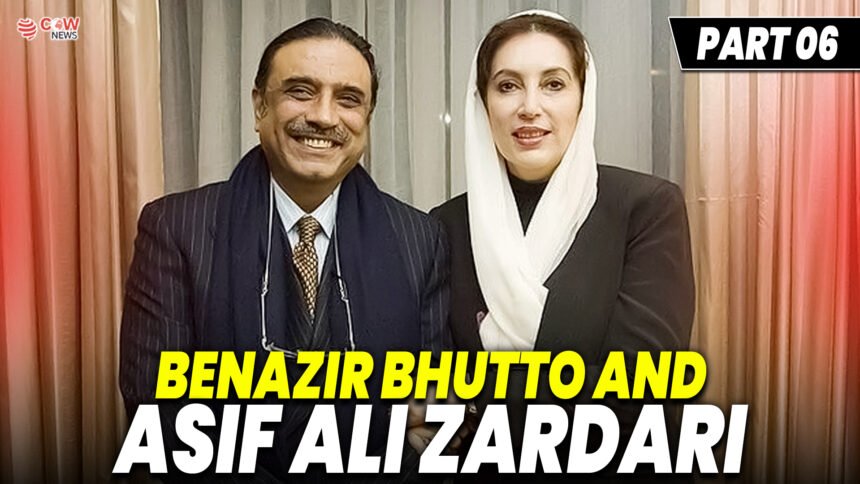
On one hand, Nawaz Sharif’s backers had a global jihadi agenda, which required the suppression of liberal elements in Pakistan. On the other, Benazir Bhutto symbolized liberal thought, making her a target. To please his military and jihadi patrons, Nawaz Sharif continued to target Asif Ali Zardari, Bhutto’s husband, as a warning to others. A relative from Qatar, Saif-ur-Rahman, was brought to Pakistan and made head of the accountability cell. Zardari was moved between various prisons, including Attock Fort, and subjected to torture, yet he consistently refused to betray Bhutto or compromise her position. As a result, the severity of his treatment intensified over time.
During the first few months of Nawaz Sharif’s tenure in late 1990, key power centers in Pakistan—the Prime Minister’s House, the Presidency under Ghulam Ishaq Khan, GHQ under Aslam Beg and Hamid Gul, the ISI headquarters in Islamabad, and the JI headquarters in Lahore’s Mansurah—were effectively aligned on the same page. What seemed like a prolonged honeymoon period was abruptly disrupted by global events.
In August 1990, Iraq invaded Kuwait, declaring it part of its territory. The seizure of Kuwait alarmed the monarchies of Saudi Arabia, the UAE, Qatar, and other Gulf states, who feared regional destabilization. These secular Gulf monarchs sought American assistance against Saddam Hussein. Britain and the United States seized the opportunity to form a 42-country coalition against Iraq, receiving UN approval for military intervention.
Pakistan, maintaining a special diplomatic relationship with Saudi Arabia, joined this U.S.-led coalition of 42 nations against Iraq, despite its limited direct involvement. The military operation, named Operation Desert Storm, was headquartered in Saudi Arabia. In January 1991, the U.S. commenced extensive bombing of Iraq.
As footage of these massive attacks aired live on CNN and other Western media, a wave of anti-American sentiment and sympathy for Iraq emerged in Pakistan. Although Pakistan was not directly involved in combat, its participation in the UN-approved coalition put additional pressure on the government.
Army Chief General Aslam Beg began publicly opposing U.S. actions against Iraq, diverging from Prime Minister Nawaz Sharif’s policies. This created diplomatic complications for Pakistan and raised questions about Sharif’s authority and credibility at the international level.
The U.S.-led attack on Iraq strained the relationship between Nawaz Sharif and Aslam Beg. Yet, General Hamid Gul, Zia’s favored protégé, continued to see hope in Sharif. Gul believed Nawaz Sharif could not become Prime Minister without his assistance, and therefore the Prime Minister should remain indebted to him. However, this assumption soon proved to be entirely mistaken.
(To be continued.