
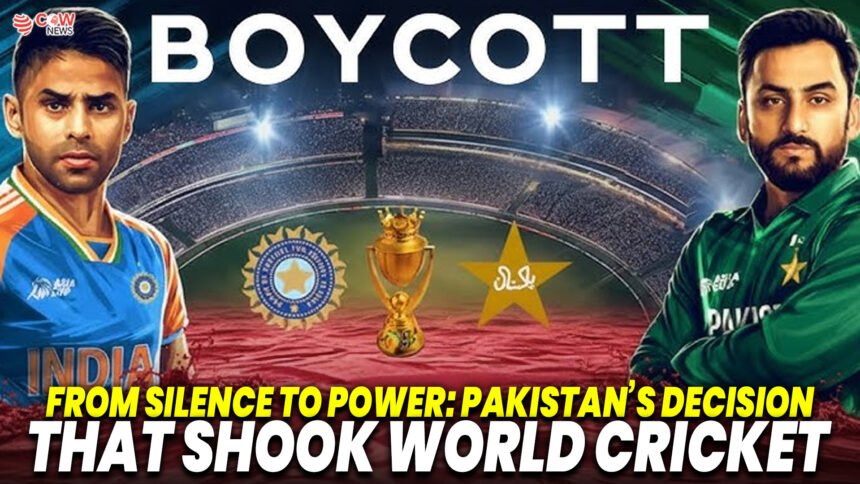
When Pakistan announced its decision not to play the ICC T20 World Cup matches in India, it was far more than a routine scheduling matter. The move represented a deliberate political, diplomatic, and principled stance that sent shockwaves through international cricket. What followed was a debate that transcended sport, highlighting how deeply geopolitics and commercial interests are intertwined with modern cricket.
A Decision That Changed the Conversation
India’s immediate response was to propose Sri Lanka as an alternative venue, suggesting flexibility and compromise. On the surface, the offer appeared conciliatory. However, behind the scenes, the situation was shaped by commercial pressure, broadcasting interests, and concerns about the financial viability of the tournament.
Read More:
- Maria B Makes History with Grand Debut in Bangladesh
- CENTCOM Warns Iran’s Revolutionary Guards Against Unsafe Acts
- Pakistan’s Silence Spoke Loudly and World Cricket Felt the Shock
Pakistan chose restraint over reaction. Rather than issuing an immediate acceptance or rejection, officials stated that the proposal would be reviewed. This period of silence drew intense global attention. Media outlets, cricket boards, sponsors, and fans closely watched Pakistan’s next move, aware that the implications would extend far beyond one match.
The Economic Weight of Pakistan vs India
The Pakistan–India match is widely regarded as the centerpiece of any ICC tournament. It consistently delivers record-breaking viewership, advertising revenue, and broadcasting value. The absence of this fixture has the power to disrupt the financial framework of an entire World Cup.
Broadcasters, sponsors, and commercial partners all had significant stakes in ensuring the match took place. During this time, Pakistan faced various forms of pressure, including diplomatic messaging and indirect appeals. Despite this, Pakistan avoided emotional or rushed decisions.
This silence was strategic. It signaled that the final outcome would be guided by principles and national autonomy rather than short-term financial considerations.
Pakistan’s Clear and Unambiguous Stance
Pakistan eventually announced its position with clarity. The team would participate fully in the T20 World Cup and play against all other nations. However, it would not play against India, regardless of the venue.
The announcement immediately disrupted tournament planning. Financial projections, broadcast schedules, and commercial agreements built around the Pakistan–India match were thrown into uncertainty. The situation revealed how heavily the global cricket economy depends on a small number of high-profile rivalries.
A Shift in Power Dynamics
This moment marked a turning point. A cricketing nation often perceived as operating under pressure demonstrated its influence over the broader system. Pakistan’s decision forced international cricket authorities to confront uncomfortable realities about economic dependence and competitive balance.
Bangladesh’s separate decision not to tour India further strengthened the regional context. While independent, it added moral and diplomatic weight to Pakistan’s position and reinforced the idea that concerns about touring India were not isolated.
Beyond Emotion: A Long-Standing Context
Pakistan’s refusal was neither impulsive nor emotional. It was the outcome of prolonged experiences, historical grievances, and years of unilateral decisions that affected sporting relations. The move signaled that continued silence was no longer viable.
It is also important to acknowledge that the politicization of cricket did not begin with this decision. On multiple occasions, the sport has been used as a tool of pressure, impacting its spirit and straining relationships. Pakistan’s stance can therefore be seen as a response to a broader pattern rather than a single incident.
Pakistan’s decision transformed silence into influence. It demonstrated how principles, when combined with strategic restraint, can reshape power structures in global sport. The episode serves as a reminder that modern cricket is no longer governed solely by bat and ball, but by diplomacy, economics, and national resolve.