
Pakistan’s political landscape, for decades, has been marked by fervent loyalty, polarized rhetoric, and an often-blind devotion to charismatic leaders. The recent episode surrounding former Prime Minister Imran Khan’s eye condition is a striking illustration of this dynamic, revealing both the inherent flaws in his political party, Pakistan Tehreek-e-Insaf (PTI), and the broader challenges facing political maturity and public discourse in the country.
PTI’s response to Khan’s health concerns exemplifies the party’s traditional impulsiveness and lack of political sophistication. Fueled by rumor, exaggeration, and outright falsehoods, the party’s supporters have elevated Khan to a near-divine status, treating every unverified report about his health as a matter of life and death. The resulting hysteria has real-world consequences, with party-driven protests blocking roads and disrupting daily life—an outcome that, ironically, undermines PTI’s political credibility, even in its strongholds like Khyber Pakhtunkhwa. The February 8 protests in this province, which failed to galvanize significant public support, stand as a recent testament to the party’s miscalculations.
Exaggeration and the Politics of Perception
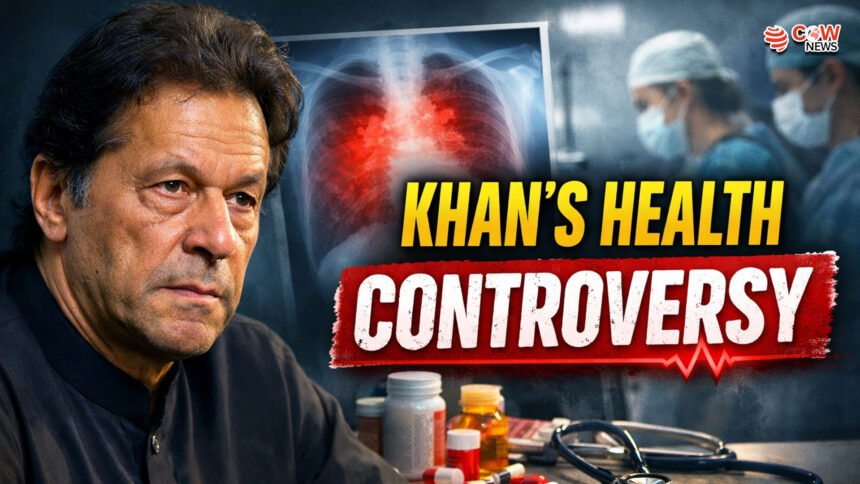
The immediate cause of PTI’s uproar is a claim made by Khan’s legal representative regarding his eye health—not a formal diagnosis from a certified ophthalmologist. Imran Khan, known for occasional exaggerations and dramatizations, reportedly claimed an 85 percent loss of vision. Whether this statement reflects reality or hyperbole is unclear, yet PTI supporters have treated it as a national emergency. This pattern mirrors previous incidents in which the party propagated false reports about Khan’s health or even his death, only for these claims to be disproven later.
Read More:
- Deadly Islamabad Attack Highlights Pakistan’s Regional Challenges
- Pakistan’s Silence Spoke Loudly and World Cricket Felt the Shock
- From Silence to Power: Pakistan’s Decision That Shook World Cricket
The party’s insistence on immediate action, including road blockages and public protests, demonstrates a dangerous disregard for verified medical opinion and public welfare. By prioritizing theatrics over substantive engagement, PTI risks alienating ordinary citizens whose daily lives are disrupted, and in doing so, the party undermines its own political standing.
PTI’s Political DNA
To understand PTI’s persistent lack of political maturity, one must consider its historical and ideological roots. PTI is, in many ways, a political heir to the legacy of General Zia-ul-Haq, whose regime in the 1980s promoted non-political, anti-intellectual, and ideologically rigid social structures. While other political actors, such as Nawaz Sharif, managed to separate themselves from Zia’s influence and build structured political platforms, Khan remained deeply embedded in the military-intelligence nexus, nurtured in a milieu that valued loyalty and charisma over civic responsibility or political acumen.
Khan’s upbringing within the ISI’s sphere of influence shaped him into a leader whose priorities have often skewed toward self-interest, personal comfort, and public adulation rather than disciplined governance or democratic engagement. His political persona draws heavily on his former status as a charismatic cricketer—a man admired for athletic prowess and personal charm rather than policy expertise.
The Cult of Personality
Khan’s personal appeal has created a distinct and largely uncritical following. Among his admirers, women constitute a significant proportion, often idolizing him for his physical appearance, charisma, and personal magnetism. These supporters may have little engagement with Pakistan’s complex socio-political realities; their devotion is primarily emotional, rooted in admiration of Khan as an idealized figure rather than an informed evaluation of his policies or governance.
Male supporters, particularly young Pashtun men, are also captivated by Khan’s persona. Attributes such as his surname “Khan,” his athletic build, clothing style, and anecdotal tales of bravery amplify the mythos surrounding him. Another important segment comprises older citizens who have followed Khan since his cricketing days. For them, loyalty is a lifelong habit, informed more by nostalgia and admiration for his sporting career than by an understanding of contemporary politics.
Across these groups, Khan’s statements are treated as final, his gestures and smiles as defining markers of life and purpose. This blind devotion renders critical thinking and political literacy largely irrelevant. While these followers may be sincere and passionate, they remain largely uninformed about policy issues or the strategic realities facing Pakistan.
The Dark Side of Idolization
Ironically, this fervent loyalty masks the more self-serving and ruthless aspects of Khan’s character. Followers often fail to recognize that a leader, especially one whose priorities are personal comfort and public admiration, may make decisions that sacrifice supporters’ interests for his own ends. This paradox highlights the psychological and sociological dimensions of personality cults: the devotion of the many can shield the actions of the few, regardless of their consequences.
Khan’s devotees are so invested in the image of their leader that even potentially scandalous or compromising associations fail to diminish their reverence. This phenomenon has broader implications for Pakistani politics, demonstrating how personality-driven politics can undermine accountability, rational debate, and effective governance.
Political Maturity and Social Awareness
The reaction to Khan’s eye condition also illuminates the severe deficit in political maturity within PTI’s ranks and supporters. Public demonstrations, road blockages, and sensational claims indicate a superficial understanding of political processes. Rather than engaging with verified information or considering broader societal impacts, the party operates in a cyclical pattern of emotional mobilization, propaganda, and performative action.
This lack of civic sophistication is deeply tied to the ideological legacy of Zia-ul-Haq, whose policies encouraged depoliticized thinking, valorization of authority, and religiously framed narratives of struggle. Over the past 30-35 years, these policies have generated a politically immature citizenry, deeply susceptible to populist messaging and cultish leadership. The current dynamics around Khan’s health, with supporters elevating private medical matters into public crises, are a direct reflection of this structural and cultural deficit.
A Personal Lens on Health
Drawing from personal experience, one can contextualize the medical concerns surrounding Khan. Eye disorders, particularly in older adults, are often manageable and not inherently life-threatening. The columnist recalls his mother’s struggle with a similar condition. Diagnosed with age-related vision impairment compounded by diabetes, she received laser treatments and periodic injections to stabilize her eye health. While her vision problems caused discomfort, they were not the primary threat to her life; other chronic health issues, such as kidney failure, were ultimately fatal.
This personal anecdote underscores an important point: while health conditions, including eye disease, can be serious and deserve attention, they are rarely as immediately catastrophic as mass political reactions might suggest. Responsible public discourse requires balancing empathy with reasoned judgment, rather than converting private medical matters into instruments of political theater.
Implications for Public Policy and Society
The episode also highlights broader societal implications. Pakistan’s political culture, heavily influenced by military and religious elites, has fostered a citizenry that often prioritizes symbolism, rhetoric, and spectacle over substantive policy discussion. Health crises, governance failures, and public welfare challenges are routinely politicized, creating cycles of misinformation and reactionary politics.
PTI’s conduct, in this context, reflects both opportunity and risk. The party’s ability to mobilize followers demonstrates organizational strength and charismatic appeal. Yet the reliance on rumor, exaggeration, and performative action undermines credibility, alienates broader constituencies, and diminishes the potential for constructive political engagement.
Media, Messaging, and Public Perception
Media coverage of Khan’s health has amplified the issue, reflecting both the appetite for sensationalism and the centrality of personality politics in Pakistan. Outlets frequently report unverified claims or reframe private medical details as national crises. This dynamic fuels a feedback loop: party followers react emotionally, media amplifies the reaction, and public discourse becomes increasingly polarized. The result is a political environment in which governance, policy, and strategic thinking are secondary to image management and public theatrics.
Lessons from History
Understanding the historical context is crucial. Pakistan’s political trajectory over the past four decades has been shaped by the interplay of military authority, religious ideology, and weak institutional frameworks. Leaders nurtured within these structures, like Khan, inherit not only personal charisma but also systemic incentives that reward spectacle over substance.
While other political actors, including Nawaz Sharif and Asif Ali Zardari, have cultivated party structures and policy platforms, PTI’s model has emphasized loyalty, performance, and personality. This divergence explains both the party’s ability to mobilize and its chronic vulnerability to internal and external critique.
Looking Ahead
The current crisis surrounding Khan’s eye health offers several key lessons for Pakistan’s political and civic life:
- Need for Political Literacy: Citizens must develop critical thinking skills to evaluate claims, particularly those concerning public figures. Blind idolization, while emotionally gratifying, undermines governance and societal well-being.
- Responsible Leadership: Political leaders must balance charisma with accountability, avoiding rhetoric that exaggerates personal or national crises.
- Institutional Role: Courts, media, and civil society should act as stabilizing forces, prioritizing verified information and public welfare over political theatrics.
- Healthcare Awareness: Public discussions about health must respect privacy and medical expertise, emphasizing responsible reporting over sensationalism.
Conclusion
The frenzy surrounding Imran Khan’s eye condition is more than a political spectacle—it is a mirror reflecting Pakistan’s deeper societal and political challenges. From the enduring legacy of Zia-ul-Haq’s ideological framework to the cultivation of personality cults, the episode exposes a citizenry both emotionally invested and politically immature. The resulting chaos, amplified by media and partisan mobilization, underscores the urgent need for political literacy, institutional accountability, and a more reasoned public discourse.
As the country grapples with these challenges, one lesson is clear: sustainable democracy and effective governance cannot coexist with blind devotion to personalities. Pakistan must move beyond the spectacle, fostering informed citizenship, accountable leadership, and a culture that values truth over theatrics. Only then can political crises—whether medical, social, or strategic—be navigated with wisdom, restraint, and foresight.
The story of Imran Khan’s eye condition, while deeply personal, thus serves as a case study in the intersections of health, politics, society, and ideology. It reminds Pakistanis that political maturity, civic responsibility, and reasoned discourse are essential for national progress, public welfare, and the protection of democratic norms.