
Gold has never been merely a metal in our society. It has been security wrapped in beauty, dignity shaped into ornament, and hope stored in a small velvet box. For generations across Pakistan, gold symbolized more than wealth; it represented stability in uncertain times. In homes where incomes were modest and opportunities limited, gold functioned as an invisible safety net — silent, reliable, and unquestioning.
When a daughter was born, mothers quietly began collecting small pieces of jewelry. A pair of earrings one year, a thin bangle the next. It was never an extravagant project, but a gradual accumulation shaped by patience and sacrifice. In times of crisis — a medical emergency, a failed crop, a sudden debt — these ornaments transformed into lifelines. They were sold without paperwork, without humiliation, without the long lines outside banks. Gold did not demand guarantees; it simply offered relief.
Today, that quiet assurance is fading.
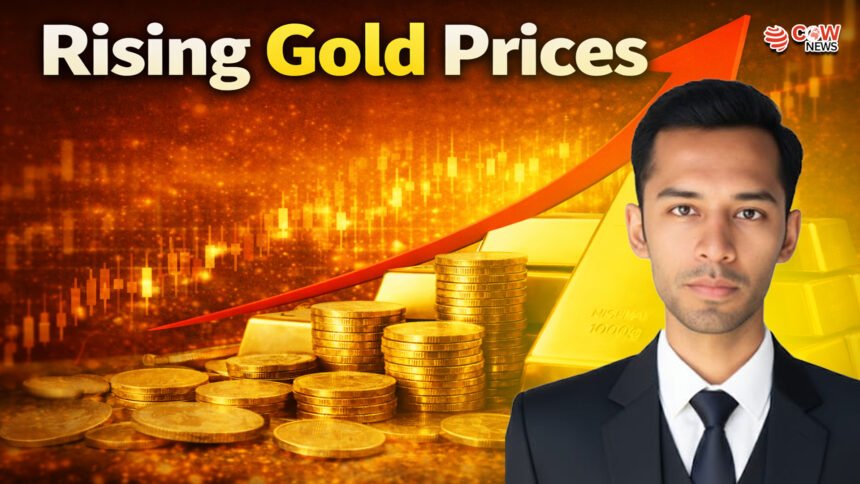
In recent years, gold prices in Pakistan have climbed to historic highs. What was once accessible to the middle class is now drifting beyond its reach. The steady rise in prices has changed not only purchasing power but also social psychology. Gold, once viewed as a practical form of savings, is increasingly seen as a luxury reserved for the affluent.
The shift has been gradual but profound.
A few decades ago, despite inflation and economic instability, buying gold was not considered impossible. Salaried individuals saved small portions of their monthly income to commission simple jewelry. In rural areas, when crops were sold and farmers received seasonal payments, a part of the earnings often went into gold. Bonuses, windfalls, and even modest profits from small businesses were frequently converted into ornaments. Gold belonged not only to the wealthy but also to the striving middle class.
It was not an indulgence; it was prudence.
At weddings, the bride’s jewelry was seen as both tradition and protection. It was less about display and more about future security. Families believed that if financial storms arrived — and they often did — the gold would serve as a cushion. It provided reassurance in a country where social safety nets are fragile and formal financial systems remain inaccessible to many.
But today’s reality paints a different picture.
In the bustling jewelry markets that once thrived on eager buyers, a new pattern has emerged. Sellers now outnumber purchasers. Families are not commissioning new sets; they are parting with heirlooms. The gold that once symbolized stability is being liquidated to pay electricity bills, school fees, medical expenses, and daily groceries.
This change is more than economic — it is psychological.
When a society begins selling its accumulated savings to sustain basic needs, it signals deep structural stress. Inflation continues to erode purchasing power. The Pakistani rupee’s depreciation against the dollar has made imported commodities more expensive. Global uncertainties, geopolitical tensions, and fluctuations in international bullion markets further push prices upward. Gold, being priced globally in dollars, becomes costlier locally whenever the currency weakens.
For investors, gold remains a safe haven. During periods of inflation and financial instability, it traditionally performs well. Those with surplus capital often turn to gold as a hedge against currency devaluation. In their portfolios, it represents security and strategic foresight.
For the average citizen, however, the story is starkly different.
The household struggling to balance flour, electricity, gas, and school expenses cannot think in terms of investment strategy. For such families, gold has shifted from being a shield against uncertainty to a distant dream. The gap between those who can invest in gold and those who must sell it reflects widening economic inequality.
Weddings illustrate this divide vividly.
In Pakistani culture, gifting gold at weddings is not merely tradition; it has become a social expectation. Parents feel obligated to present their daughters with jewelry, both for cultural reasons and for the sense of security it provides. Yet when the price of a single tola reaches levels unimaginable a few years ago, even modest jewelry becomes financially burdensome.
Fathers who have spent a lifetime earning modest incomes now face mounting pressure. To fulfill societal expectations, many resort to loans, informal borrowing, or rotating savings committees. What should be a joyful celebration transforms into a source of anxiety. Financial strain overshadows happiness.
This burden is not evenly distributed. Wealthier households adjust to price increases without dramatic lifestyle changes. For them, gold’s appreciation even represents profit. But for lower- and middle-income families, each price hike intensifies stress.
The consequences extend beyond immediate affordability.
Gold has traditionally acted as a form of decentralized financial security. In countries where trust in institutions fluctuates and formal savings mechanisms are limited, tangible assets like gold offer comfort. As gold becomes inaccessible, families lose a critical buffer against emergencies. Without savings instruments they trust and can afford, vulnerability deepens.
The broader economic landscape compounds the issue. Persistent inflation has diminished real wages. While commodity prices climb rapidly, income growth lags behind. The rupee’s volatility further complicates planning. Political uncertainty and global conflicts add layers of unpredictability to financial markets.
Gold responds to these conditions in predictable ways: it rises when uncertainty rises. International investors pour money into bullion during crises. As global demand strengthens, local markets feel the ripple effects. Thus, the very forces that make gold attractive for investors simultaneously make it unattainable for ordinary citizens.
This paradox defines the present moment.
On one side, gold shines brighter than ever in financial markets. On the other, it dims in household budgets.
The cultural implications are significant. In many communities, jewelry once symbolized intergenerational continuity. Pieces were passed from mothers to daughters, carrying emotional weight along with material value. When economic pressure forces families to sell inherited ornaments, the loss is not merely financial; it is sentimental.
Moreover, the act of selling savings alters perceptions of stability. A family that once felt secure because it possessed gold may now experience anxiety about future shocks. Without that reserve, any unexpected expense becomes a potential crisis.
Economists argue that over the long term, gold remains a sound hedge against inflation. Historically, it has preserved purchasing power when currencies weaken. That assessment is technically accurate. However, it assumes disposable income — the ability to allocate funds beyond daily survival. For households navigating rising utility costs and stagnant wages, long-term investment strategies feel detached from lived reality.
The widening wealth gap becomes more visible through the gold market. A small segment continues accumulating assets, diversifying portfolios, and benefiting from price appreciation. Meanwhile, another segment liquidates possessions to maintain basic living standards. The divergence underscores structural imbalances within the economy.
If current trends persist — continued currency weakness, sustained inflation, and global instability — gold prices may rise further. Such an outcome would amplify existing disparities. The metal that once functioned as a shared form of security could become exclusively associated with privilege.
Yet the issue is not gold itself.
Gold simply reflects economic conditions. Its rising price is a symptom of deeper challenges: fiscal instability, dependency on imports, limited industrial productivity, and fragile investor confidence. Addressing gold affordability requires addressing these foundational issues.
Stabilizing the currency would ease upward pressure. Controlling inflation would restore purchasing power. Strengthening domestic production could reduce vulnerability to external shocks. Expanding access to reliable savings instruments might offer alternatives to gold as a primary hedge.
In the absence of such reforms, households will continue adapting in whatever ways they can. Some will scale back wedding expectations. Others will turn to artificial jewelry or symbolic gifts. Cultural practices may gradually evolve under economic pressure.
But adaptation does not eliminate the underlying strain.
For many families, gold represented more than ornamentation. It was quiet reassurance — a tangible promise that if hardship struck, relief was within reach. As that promise becomes harder to secure, uncertainty grows.
The rising price of gold therefore tells two stories at once. It signals confidence among global investors seeking stability. And it signals insecurity among ordinary citizens watching a once-attainable safeguard drift beyond their grasp.
In the end, the metal remains unchanged. Its color, weight, and luster are the same as they have been for centuries. What has changed is the economic landscape surrounding it — a landscape where opportunity and access are no longer evenly distributed.
Whether gold will continue climbing depends on global markets and domestic policies. But whether families can reclaim a sense of financial security depends on something deeper: restoring stability, narrowing inequality, and rebuilding trust in the future.
Until then, gold’s brilliance may continue to illuminate investment portfolios — while casting longer shadows across the lives of those who once relied on it as their silent guardian.
By Laeeq Abid Ali