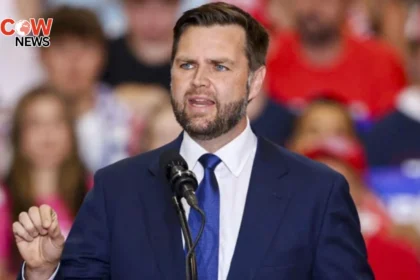


PESHAWAR( Naimat Ullah) Pakistan Tehreek-e-Insaf (PTI) leader Muhammad Sohail Afridi was elected the new Chief Minister of Khyber Pakhtunkhwa on Monday after a volatile session of the provincial assembly that saw opposition lawmakers stage a walkout and party supporters clash with security personnel outside the chamber.
The provincial assembly convened under the chairmanship of Speaker Babar Saleem Swati to elect a successor following the resignation of Ali Amin Gandapur. In a ruling before the vote, the Speaker accepted Gandapur’s resignation — saying it had been tendered on October 8 and again formally communicated to the Speaker on October 11 — and declared the seat vacant in accordance with Article 130(8) of the Constitution. With the resignation accepted, the house proceeded to choose the new leader of the house.
Despite a dramatic start to the proceedings, the election concluded with Sohail Afridi securing 90 votes. Opposition parties boycotted the ballot, and none of the rival candidates — Maulana Lutfur Rehman of Jamiat Ulema-e-Islam (F), Sardar Shahjahan Yusuf of Pakistan Muslim League-N, or Arbab Zark Mad of the Pakistan Peoples Party — received any votes amid the walkout.
Tension spilled into the assembly corridors and entrances as a large number of PTI activists attempted to enter the hall. Security personnel initially closed the main door to the chamber, prompting party workers to pound on the gates and clash with guards before being allowed inside. Once inside, the supporters staged loud slogans and chants, creating a boisterous atmosphere as the formalities continued.
Dr. Amjad, a PTI member of the provincial assembly, addressed the house and condemned what he described as recent mistreatment of Tehreek-e-Labbaik activists, calling for collective prayers for the martyrs. The comments heightened passions on the floor and in the galleries.
Speaker Swati — who oversaw parliamentary procedure during the session — defended his ruling on the acceptance of Gandapur’s resignation as entirely constitutional. He told the assembly that the resignation had been submitted twice and formally notified to the governor on October 11, and therefore he considered the seat duly vacated. “The post of chief minister is an administrative office,” the Speaker said, asserting that no extra-constitutional condition was required to accept a resignation. He added that the matter had been handled strictly within legal bounds and that the election process would proceed accordingly.
As the voting began, government members assembled in the designated lobby and cast their ballots for Sohail Afridi. The counting announced Afridi as the victor with 90 votes; PTI MPA Asif Mehsud was absent from the vote due to being abroad and therefore did not participate in the ballot. Members from the PTI caucus embraced and congratulated the newly elected chief minister as the vote results were formally declared.
In his maiden address to the assembly, Chief Minister Afridi offered an impassioned, at times personal, speech that touched both on his humble background and his allegiance to the PTI leadership. Afridi thanked party chairman Imran Khan and described himself as a grassroots worker from a tribal, middle-class background who had risen on merit. “I am not a scion of Zardari or Bhutto; I reached this position by my own toil,” he said, stressing that he carried the pride of his tribal roots and a commitment to serve the province.
Afridi pledged to dedicate his administration’s efforts to the release of PTI’s detained leadership. He declared himself a “champion of protest politics” for the cause of his party’s chairman and vowed to mobilize actions to secure his leader’s freedom. He also expressed gratitude to media personnel and activists who, he said, had sacrificed careers in pursuit of truth.
The new chief minister addressed a series of local grievances and policy promises. Afridi criticized long-standing governance mindsets that he said had marginalized tribal communities for decades and promised more inclusive policies for Khyber Pakhtunkhwa’s tribal districts. He also vowed to review the federal government’s policy toward Afghan refugees and residents who had lived in Pakistan for decades, arguing that forcibly pushing them out was neither humane nor practical. Afridi singled out bureaucratic measures such as the classification of individuals into schedule lists and the ban on certain local movements, promising to discuss these points with the federal government.
On questions of security and counterterrorism, Afridi warned that his administration would not tolerate attacks against the province’s citizens. He called for measured, constitutional responses and said that operations and anti-terror measures should involve local elders and community leaders to avoid alienation of the populace.
The session was punctuated by both fervent support and sharp criticism. With opposition benches empty, some political observers noted that the lack of cross-party participation deprived the election of broader legitimacy in the eyes of dissenting parties; supporters of the new chief minister, however, hailed the quick transition as a demonstration of democratic continuity.
Following the vote, the Speaker reiterated that the assembly had followed constitutional norms and urged parties to abide by the law. He appealed to members to maintain decorum, even as chants and slogans continued despite repeated orders from the chair.
The new chief minister’s selection marks a notable moment in Khyber Pakhtunkhwa politics. Afridi’s emphasis on tribal inclusion and pledge to prioritize his leader’s release — coupled with his pledge to confront security challenges and review refugee policies — sets a clear policy agenda for the coming months. His ability to govern effectively, build cross-party consensus, and address the province’s security and social challenges will be tested immediately.
For now, the PTI’s show of strength in the assembly and on the streets underscores the party’s robust organizational capacity in the province — a capacity that will be closely watched by political rivals, provincial stakeholders, and the federal government in Islamabad as the new administration takes office.