

Islamabad(The COW News Digital)Exploring the depths of the ocean remains one of the most challenging frontiers for humankind, often proving more difficult than traveling to space. Despite humanity’s fascination with the seas for thousands of years, only a fraction of the ocean floor has been mapped or studied. According to the National Oceanic and Atmospheric Administration (NOAA), less than 20 percent of the ocean’s vast depths have been documented with precision.
Few adventurers have experienced the extremes of deep-sea exploration firsthand. Only a handful of people have visited the wreckage of the Titanic, resting some 3,800 meters below the Atlantic surface. These trips, often organized by specialized tourism and research companies like OceanGate, are expensive and highly exclusive. A single eight-day journey to the Titanic’s resting place can cost travelers around $250,000.
Niko Anzezio, owner of corporate exploration firm Tara Inc., explains, “We’ve observed that wealthy individuals often prioritize unique experiences over money itself. These trips offer memories that last a lifetime.” However, reaching such depths requires more than financial resources; extensive knowledge of underwater conditions, navigation, and safety protocols is essential.
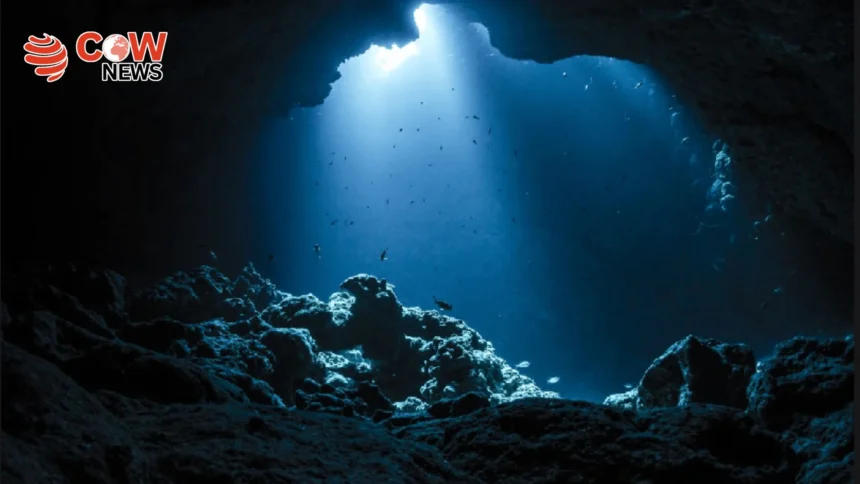
Scientists and researchers say the physical challenges of the deep sea surpass even space travel in some respects. For instance, as divers descend, water pressure increases dramatically with depth, posing immense structural and physiological risks. The ocean is also engulfed in near-total darkness beyond a few hundred meters, with sunlight unable to penetrate more than roughly 1,000 meters. Temperatures drop significantly, and navigation becomes difficult without advanced sonar and lighting technologies.
Read More:
- Pakistan’s Silence Spoke Loudly and World Cricket Felt the Shock
- From Silence to Power: Pakistan’s Decision That Shook World Cricket
- Deadly Islamabad Attack Highlights Pakistan’s Regional Challenges
In contrast, humans have spent hundreds of hours in space and on the moon, and yet the detailed mapping of lunar and Martian surfaces exceeds that of Earth’s own deep oceans. Woods Hole Oceanographic Institution highlights that while 12 astronauts have collectively spent over 300 hours on the moon, only three explorers have ever spent significant time at extreme ocean depths.
The history of deep-sea exploration dates back to the 17th century, when Dutch engineer Cornelis Drebbel built the first submarine in 1620. It took centuries of innovation, including sonar technology following the Titanic disaster, for scientists to begin understanding the ocean’s hidden landscapes. Today, only a handful of trained divers have reached the planet’s deepest trenches, underscoring the extreme difficulty of underwater exploration compared to outer space.
The ocean remains a mysterious and largely inaccessible frontier, reminding humanity that some of Earth’s own secrets are far harder to reach than those of distant worlds.