
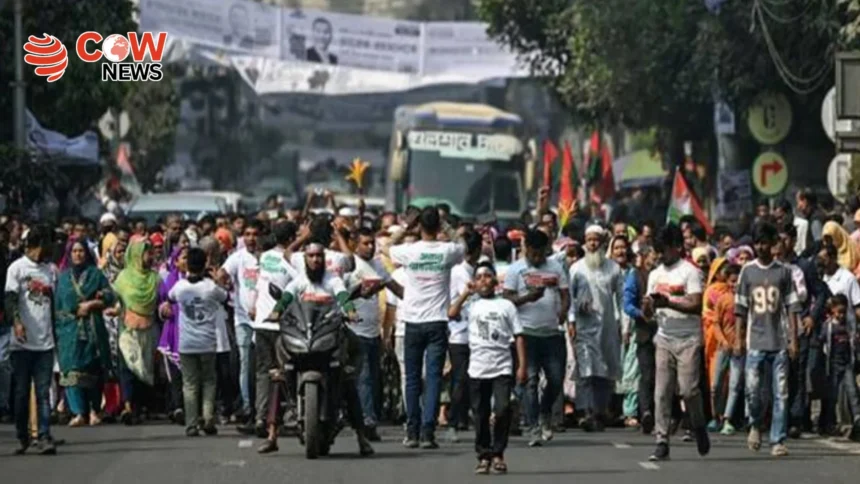
Bangladesh (The COW News Digital)Bangladesh is set to hold its general elections on Thursday, with security heightened as the government deploys the army across the country. In addition, a nationwide motorcycle ban has been imposed from midnight for three consecutive days to ensure smooth and secure voting.
The elections will fill all 300 parliamentary seats, with the ruling party needing a minimum of 151 seats to secure a majority. A total of 1,981 candidates are contesting, representing major parties including the Bangladesh Nationalist Party (BNP), Bangladesh Jamaat-e-Islami, the National Citizens Party, and the Jatiya Party.
This election marks the first parliamentary vote since former Prime Minister Sheikh Hasina resigned and left the country in August 2024. Nobel laureate Dr. Muhammad Yunus briefly served as head of the interim government during this transitional period, overseeing preparations for the upcoming elections.
Read More:
- Deadly Islamabad Attack Highlights Pakistan’s Regional Challenges
- Pakistan’s Silence Spoke Loudly and World Cricket Felt the Shock
- Trump Hopes Iran Talks Succeed, Warns Against Midnight Hammer
Dhaka, along with other major and smaller cities, saw the final day of campaigning on Wednesday, with strict enforcement of security protocols. Officials emphasized that the army deployment and transport restrictions aim to maintain order, prevent election-related violence, and ensure voter safety.
Recent public opinion polls indicate a tight race between the two main political alliances. The BNP-led coalition is projected to receive approximately 44.1% of the vote, while an alliance led by Bangladesh Jamaat-e-Islami, comprising 11 political parties, is estimated to secure around 43.9%. Analysts suggest that the outcome could hinge on minor parties and voter turnout, highlighting the competitiveness of the elections.
Election authorities have urged citizens to comply with security measures, including the motorcycle ban, and to participate in the democratic process responsibly. Observers also noted that international monitors will closely watch the elections to ensure fairness and transparency, given the high stakes and historical significance of the vote.
Political analysts believe the results will shape Bangladesh’s governance and policy direction for the coming years, influencing economic, social, and foreign policy decisions. The close contest between major alliances suggests potential negotiations and coalition-building may be required post-election.
With tight security measures, a high number of candidates, and an engaged electorate, Bangladesh’s 2026 general elections are being closely observed both domestically and internationally as a critical test of the country’s democratic processes.