
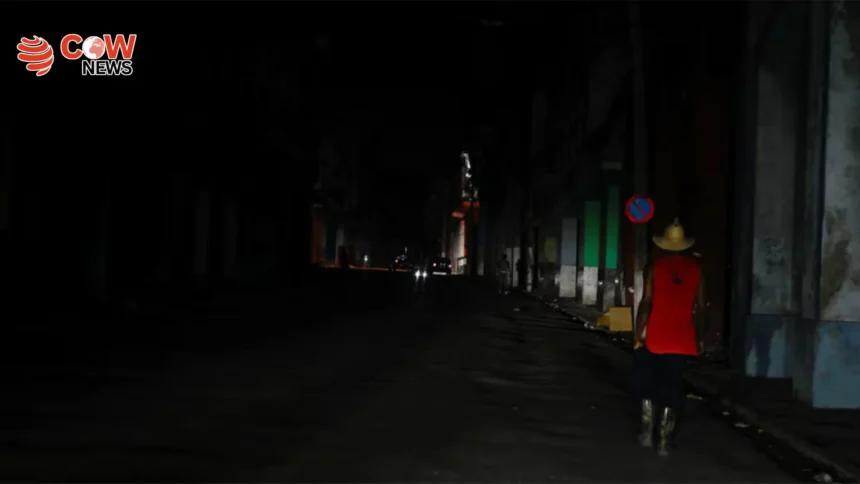
World ( The cow news digital ) Havana — Cuba is grappling with a nationwide electricity blackout that has plunged over 10 million homes into darkness, according to local authorities. The crisis comes as former US President Donald Trump issued statements threatening to seize control of the Caribbean nation, calling it “a weak country” and suggesting that Cuba could be either liberated or brought under US control.
The situation has created widespread concern both domestically and internationally. Union Nacional Electrica confirmed that the national grid has completely failed, with electricity restored in only about five percent of Havana, primarily to hospitals and critical services. This marks the third major blackout in the past four months, intensifying public frustration.
Reports indicate that Cuba has not received any significant oil shipments since January 9, a shortage exacerbated by US threats to countries supplying the island with fuel. While Cuba produces roughly 40 percent of its oil needs domestically, this is insufficient to meet the country’s overall demand, leaving it vulnerable to energy disruptions.
The blackout has worsened an already dire economic and political situation. The island nation is experiencing severe energy shortages, economic instability, and mounting political pressure, while US threats have heightened tensions and uncertainty among citizens and regional observers.
read more
- China Urges Global Support for Sustainable Sudan Solution
- US Envoy Backs Israel’s Claim to Wider Middle East
Social media speculation surged after the blackout, with many questioning whether the US had launched a military strike on Cuba. However, authorities have confirmed that no military action has taken place and that the crisis is rooted in energy shortages and infrastructure challenges.
International media reports highlight the fragility of Cuba’s energy system and warn that continued shortages could disrupt essential services, including healthcare and food distribution. Analysts suggest that the US statements, though not followed by military action, are likely to intensify diplomatic tensions in the region.
The Cuban government has not immediately responded to Trump’s statements. Officials are prioritizing hospital and emergency services while attempting to restore electricity gradually. The situation underscores the island’s dependence on imported fuel and the vulnerability of its energy infrastructure amid geopolitical pressures.