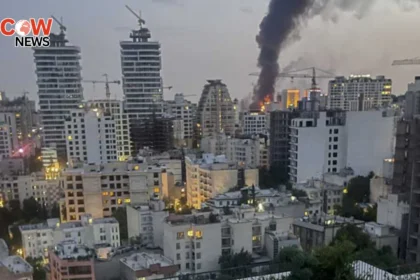


Newyork(The COW News Digital)Global powers came face to face at the United Nations Security Council as an emergency meeting was held to discuss the rapidly deteriorating situation in Iran, triggering a heated debate among major international stakeholders, including the United States, Russia, and Pakistan.
The session focused on Iran’s internal unrest, human rights concerns, regional security implications, and the risk of escalating tensions. Representatives presented sharply differing views, reflecting deep divisions within the international community over how to respond to developments inside Iran.
Addressing the council, the US envoy said Washington stands firmly with what he described as the “brave people of Iran.” He cited reports of widespread protests and accused Iranian authorities of using excessive force to suppress dissent. Referring to a recent incident involving the killing of a woman for not wearing a head covering, the US representative said the case symbolized systemic violence and repression, warning that such actions have serious consequences for international peace and security.
The American envoy emphasized that President Donald Trump believes in action rather than rhetoric. He accused Tehran of financing armed groups such as Hezbollah and Hamas, alleging that Iran’s regional policies have contributed to instability across the Middle East. According to the US delegation, the Iranian government has grown increasingly weak and is relying on coercion to retain power.
Read More:
- Trump Warns Iran, Says Response Does Not Mean Troop Deployment
- Curfew Imposed in Nepal After Mosque Attack Sparks Unrest
- White House Says Military Option Open for Greenland
The envoy further claimed that millions of Iranians are protesting against the government, arguing that while Tehran publicly signals willingness to negotiate, its actions contradict diplomatic norms. He asserted that the global community is fully aware that Iran is currently facing one of its most vulnerable political moments.
Russia’s representative, however, urged restraint and warned against external interference, stressing the importance of respecting state sovereignty and avoiding steps that could further destabilize the region. The Russian envoy cautioned that politicizing internal issues could lead to unintended consequences and undermine prospects for dialogue.
Pakistan’s permanent representative highlighted the broader regional implications, stating that a peaceful and stable Iran is essential not only for Pakistan but for the security of the entire region. He called for de-escalation, dialogue, and adherence to international law, emphasizing that confrontation would only worsen humanitarian and security challenges.
The meeting underscored the growing international concern over Iran’s internal situation and its potential spillover effects. Diplomatic observers noted that the sharp exchange of views reflects a wider geopolitical struggle, with major powers divided over accountability, intervention, and the future course of action.
As tensions persist, the Security Council remains under pressure to find a balanced approach that addresses human rights concerns while preventing further instability in an already volatile region.