

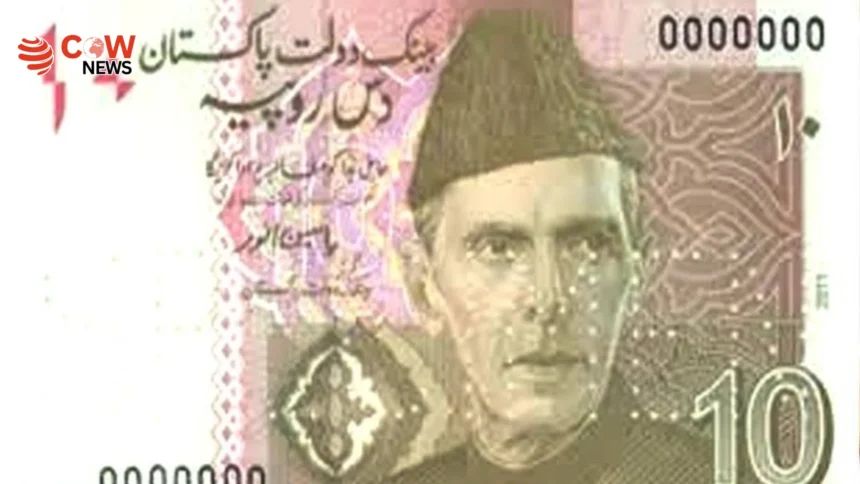
ISLAMABAD(The COW News Digital) The federal government is considering phasing out the Rs10 paper currency note as part of broader efforts to streamline currency management and reduce printing costs.
A high-level committee, chaired by the finance minister, has submitted a detailed currency management report to the federal cabinet. The report, prepared in collaboration with the State Bank of Pakistan and the Security Papers Limited, concludes that the Rs10 banknote is no longer economically viable.
According to the findings, the average lifespan of a Rs10 paper note ranges between six to nine months due to frequent circulation and wear and tear. In contrast, a metallic coin of the same denomination can remain in circulation for 20 to 30 years, significantly reducing replacement costs over time.
Read More:
- China Urges Global Support for Sustainable Sudan Solution.
- Deadly Islamabad Attack Highlights Pakistan’s Regional Challenges
- Imran Khan and the Politics of Idolization
Officials noted that Rs10 notes account for nearly 35 percent of the total annual currency printing volume. The production and administrative management of these notes are estimated to cost between Rs8 billion and Rs10 billion annually. The report suggests that replacing paper notes entirely with coins could result in net savings of Rs40 to Rs50 billion over the next decade.
While the initial manufacturing cost of coins is higher compared to paper notes, the committee emphasized that their durability makes them a more cost-effective long-term option. The proposal recommends gradually halting the printing of new Rs10 notes once cabinet approval is secured, while simultaneously increasing the supply of Rs10 coins across the country.
Financial experts say the move aligns with international trends, where several countries have replaced low-denomination paper currency with coins to improve efficiency and reduce recurring expenses. However, they also point out that public acceptance and ease of circulation will be key factors in determining the success of the transition.
If approved by the cabinet, the phase-out would be implemented in stages to ensure smooth adaptation by banks, businesses and consumers. Existing Rs10 notes would likely remain legal tender until they are naturally withdrawn from circulation.
The final decision now rests with the federal cabinet, which is expected to review the recommendations in its upcoming session.