
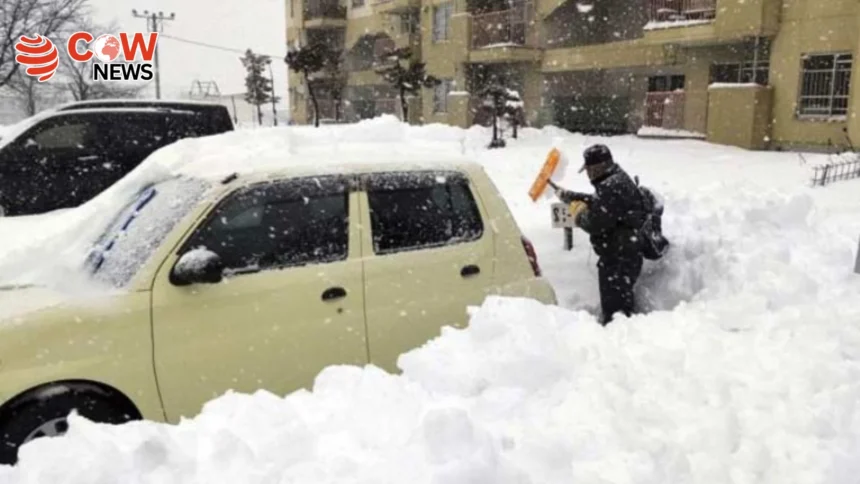
Tokyo(The COW News Digital) Severe snowfall across large parts of Japan has claimed at least 28 lives and left more than 300 people injured, as extreme winter weather continues to disrupt daily life and transportation systems. Authorities have urged residents to remain indoors as conditions remain hazardous in several regions.
According to local media reports, relentless snowstorms have forced the suspension of public transport services, while hundreds of domestic and international flights have been cancelled due to poor visibility and unsafe runway conditions. Major road networks in northern and western Japan have also been closed, stranding commuters and affecting supply chains.
In Aomori city, officials confirmed that snowfall levels have broken an 81-year-old record, highlighting the intensity of the current weather system. Northern parts of Japan reportedly received up to 5 feet and 5 inches of snow, overwhelming snow removal operations and emergency services. Municipal authorities said the accumulation occurred over a short period, leaving little time for preparation.
Read More:
- Trump Warns Iran, Says Response Does Not Mean Troop Deployment
- Maria B Makes History with Grand Debut in Bangladesh
- Curfew Imposed in Nepal After Mosque Attack Sparks Unrest
The Niigata region has also been severely affected, particularly in rural areas where snowfall has ranged from 20 centimetres to nearly one metre over the past several days. Harsh weather conditions have triggered widespread power outages, leaving thousands of households without electricity. Emergency crews are working to restore power, but continued snowfall has slowed recovery efforts.
Hospitals across affected regions are treating hundreds of people for injuries linked to falls, traffic accidents, and roof-clearing incidents. Many of the reported fatalities are believed to be weather-related, including exposure to extreme cold and accidents during snow removal.
The Japan Meteorological Agency has warned that the severe winter conditions are expected to persist, especially along the Sea of Japan coast. Officials cautioned that additional snowfall could worsen the situation, increasing the risk of avalanches, infrastructure damage, and further disruptions.
Government authorities have issued advisories urging citizens to avoid unnecessary travel, stock essential supplies, and follow safety guidelines. Elderly residents and those living in remote areas have been identified as particularly vulnerable, prompting local governments to conduct welfare checks.
Japan is accustomed to heavy winter snowfall, especially in northern regions, but experts say the scale and intensity of the current storm are exceptional. Climate specialists note that changing weather patterns may be contributing to more frequent and extreme winter events.
As emergency teams remain on high alert, officials continue to stress public safety as the top priority. The coming days will be critical as Japan braces for further snowfall and works to recover from one of the most disruptive winter storms in recent years.