
Iran(The COW News Digital)Iran has announced that countries expelling American and Israeli ambassadors will be granted unrestricted access through the strategically critical Strait of Hormuz. The statement, issued by the Islamic Revolutionary Guard Corps (IRGC), marks a new escalation in Tehran’s ongoing tensions with the United States.
The IRGC spokesperson emphasized that nations taking a stand against Washington and Tel Aviv would gain freedom of navigation through the vital oil chokepoint starting immediately. “Security in the region will either be ensured for all or for none,” the spokesperson said, underlining Iran’s firm position.
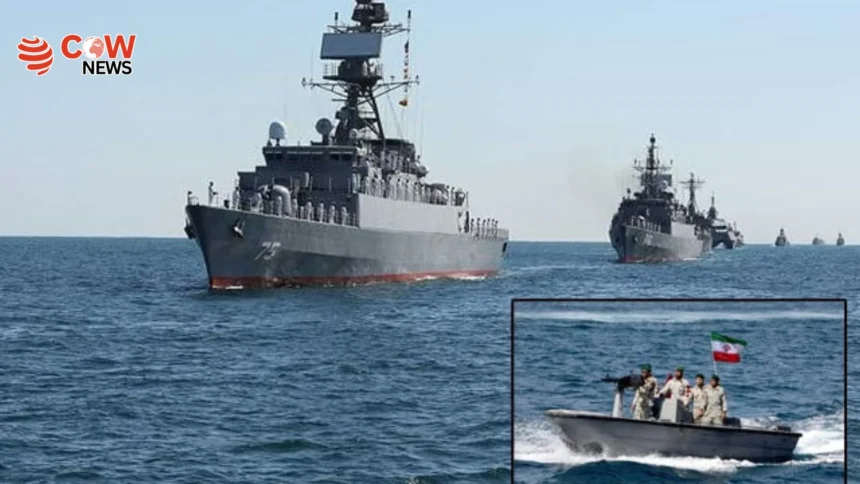
This announcement comes amid heightened rhetoric from U.S. President Donald Trump. Speaking at the Republican Conference, Trump warned that the U.S. Navy would intervene to protect commercial vessels in the Strait of Hormuz if necessary. Earlier, he indicated that American naval forces could be deployed alongside merchant ships should the situation escalate.
Responding to Trump’s statements, the IRGC issued a direct challenge, asserting that if the U.S. dares, it should deploy warships to guard oil tankers in the strait. The Iranian officials also made it clear that any continued aggression against Iran could result in a complete halt of oil exports from the region, a critical threat to global energy supplies.
Analysts note that the Strait of Hormuz is a vital maritime route, with nearly a fifth of the world’s oil passing through it daily. Iran’s statements signal that it is leveraging this strategic advantage in its ongoing geopolitical standoff with the U.S. and Israel.
While the U.S. has pledged naval protection for commercial shipping, the IRGC’s statements underscore Tehran’s determination to maintain control over the strait and deter foreign intervention. The escalating rhetoric raises concerns over potential disruptions to global oil markets and the broader security environment in the Persian Gulf.
Observers also point out that Iran’s move could encourage other nations to reconsider their diplomatic ties with the U.S. and Israel, potentially reshaping alliances in the Middle East. The IRGC has framed the policy as both a reward for nations that challenge American influence and a warning to any power attempting to pressure Iran militarily.
The international community continues to watch the situation closely, as any miscalculation could have significant ramifications for regional stability and the global energy supply chain.