

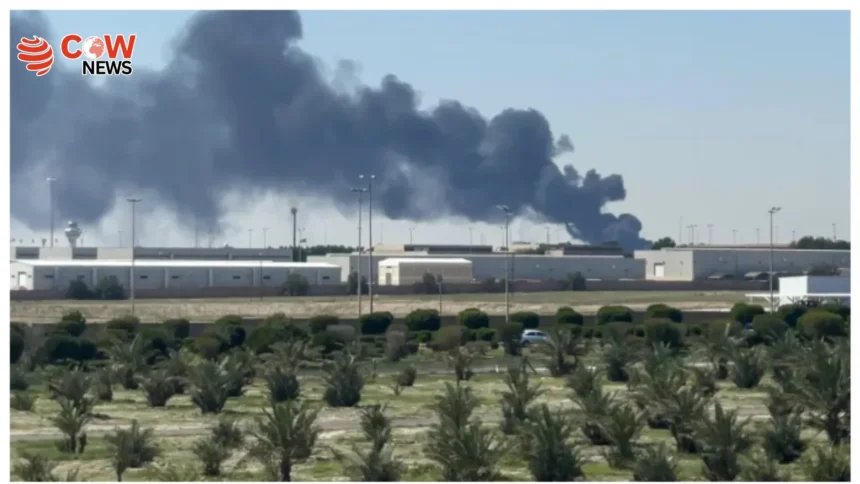
World ( The cow news digital ) Kuwait’s Ministry of Defense has reported that Iran launched multiple aerial attacks on the country over the past 24 hours, significantly escalating tensions in the Gulf region.
According to official statements, at least four missiles and 42 drones were fired toward Kuwaiti territory. The attacks reportedly targeted critical infrastructure, including petroleum facilities and power plants, raising serious concerns about energy security and regional stability.
Kuwaiti authorities did not immediately disclose the extent of the damage or casualties, but confirmed that defense systems were actively engaged to intercept incoming threats. The situation remains under close monitoring as emergency measures have been implemented across key sectors.
In a related development, Qatar also reported attempted attacks, stating that seven ballistic missiles and several drones were launched toward its territory earlier in the week. Qatari officials confirmed that their air defense systems successfully intercepted the threats, preventing damage.
The escalation has prompted swift diplomatic engagement. Pakistan’s Foreign Minister Ishaq Dar held a telephone conversation with his Kuwaiti counterpart Salem Abdullah Al-Jaber Al-Sabah to discuss the evolving situation. Both leaders expressed deep concern over violations of the ceasefire and emphasized the importance of maintaining stability in the region.
During the call, the two ministers stressed the need for full adherence to the ceasefire agreement and highlighted ongoing violations, including those reported in Lebanon. They underscored that sustained peace can only be achieved through restraint and continued diplomatic efforts.
The Kuwaiti foreign minister welcomed the initial ceasefire arrangements and acknowledged Pakistan’s role in facilitating dialogue during a critical period. Observers note that Islamabad’s diplomatic engagement has gained increasing recognition amid efforts to de-escalate tensions between regional and global powers.
Meanwhile, the Gulf Cooperation Council has previously condemned similar attacks, describing them as dangerous and provocative actions that threaten regional security. The latest developments are expected to further strain relations and complicate ongoing diplomatic initiatives.
Security analysts warn that continued attacks on vital infrastructure could disrupt global energy supplies and intensify geopolitical instability. As tensions rise, the international community is closely watching for further developments and urging all parties to avoid actions that could lead to a broader conflict.