
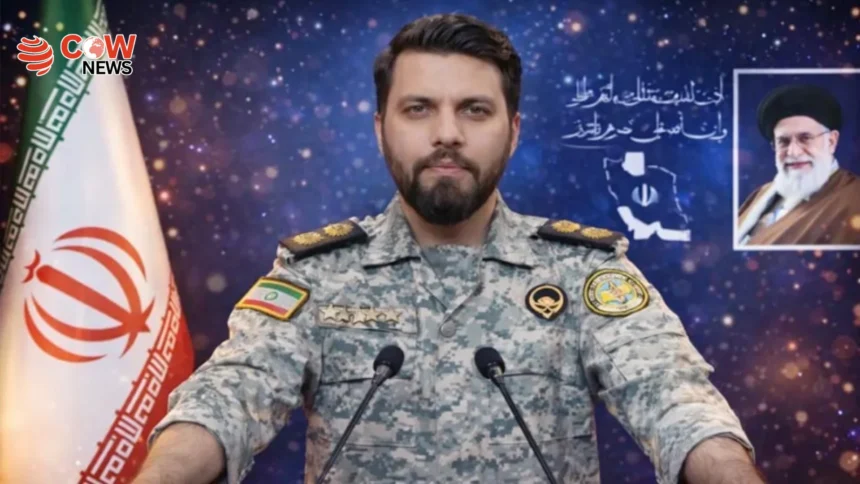
World ( The cow news digital ) Tehran – Iran’s Revolutionary Guards have strongly rejected claims made by former U.S. President Donald Trump regarding potential negotiations, sending a firm message to Washington. Lieutenant Colonel Ibrahim Zolfaghari, spokesperson for the Guards, stated that America should not label its failures as agreements.
In a detailed statement, Zolfaghari criticized internal divisions in the United States, suggesting that these conflicts are driving Washington to negotiate unilaterally. “Trump should not call his failures a deal. Iran’s position has always been clear, and without our consent, old oil prices and the previous system will not return,” he emphasized.
Zolfaghari further warned that any notion of taking action against Iran is futile. “Iran’s stance is straightforward. We will not compromise or reach any understanding with the United States, now or in the future. People like us will never walk alongside people like you,” he said.
This statement comes amid circulating reports of possible U.S.-Iran talks, which continue to remain unconfirmed and conflicting. Tensions in the region remain high as both sides navigate complex diplomatic and geopolitical challenges.
Earlier, Donald Trump had claimed that Iran is willing to forego nuclear weapons, suggesting that a new leadership in Tehran was prepared to negotiate. Trump also stated that Iran is engaging in talks with reason and has offered significant concessions in energy resources, including oil and gas.
READ MORE
- Imran Khan and the Politics of Idolization
- China Urges Global Support for Sustainable Sudan Solution
However, the Iranian military’s response underscores the country’s firm resistance to what it views as external pressure. The Revolutionary Guards’ clear rejection indicates that Tehran intends to maintain a hardline stance in international negotiations, especially with the United States.
Analysts note that the conflicting narratives between Washington and Tehran could further strain regional stability. While U.S. officials have repeatedly expressed hopes for dialogue, Iran’s rejection emphasizes that any meaningful diplomatic engagement would require Tehran’s full participation and agreement, something it currently shows no inclination to provide.
As the situation unfolds, international observers continue to monitor statements from both sides closely, noting that misunderstandings or misrepresentations could have far-reaching consequences for Middle Eastern geopolitics and global energy markets.