

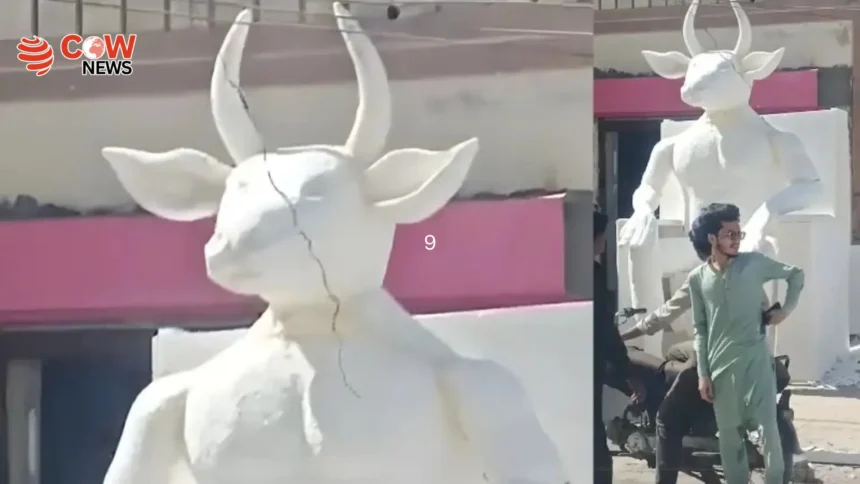
Karachi ( the cow news digital ) Authorities in Karachi have clarified the mystery surrounding a controversial statue that recently sparked debate on social media. The statue, reportedly depicting “Baal,” had appeared outside a shop and quickly gained attention after a video showing it circulated widely online.
The viral clip prompted strong reactions from social media users, many of whom demanded an investigation into why such a statue had been placed in a public area. Responding to the public concern, local police took swift action and seized the statue to determine its origin and purpose.
Following an initial inquiry, police officials revealed that the statue was not made from traditional materials but was instead constructed from thermocol. According to investigators, the piece was created by a local sculptor identified as Imran. Authorities recorded his statement as part of the investigation into the circumstances surrounding the statue’s creation and display.
During questioning, the sculptor reportedly stated that he had been commissioned to create the statue by a man identified as Allama Shabbir Zaidi. According to the explanation provided to police, the statue had been prepared as part of a symbolic protest planned for Quds Day, an event observed annually in several countries to express solidarity with Palestinians.
read more
- China Urges Global Support for Sustainable Sudan Solution
- Imran Khan and the Politics of Idolization
Police officials said Zaidi told investigators that the plan was to burn the statue during a Friday program marking Quds Day. The act was intended as a symbolic demonstration rather than a permanent installation. However, before the planned event could take place, videos of the statue were recorded and shared online, causing the situation to attract widespread attention.
Once the video spread across social media platforms, speculation and criticism quickly followed, leading authorities to intervene to avoid potential misunderstandings or public unrest. Police confirmed that the statue had been removed and that statements from the involved individuals had been recorded.
Officials emphasized that the investigation aimed to clarify the purpose of the statue and prevent misinformation from spreading online. They noted that the viral video had created confusion among the public, prompting authorities to act quickly in order to verify the facts and maintain order.
The case highlights how viral social media content can rapidly amplify local incidents, sometimes leading to widespread public reaction before the full context becomes clear.