

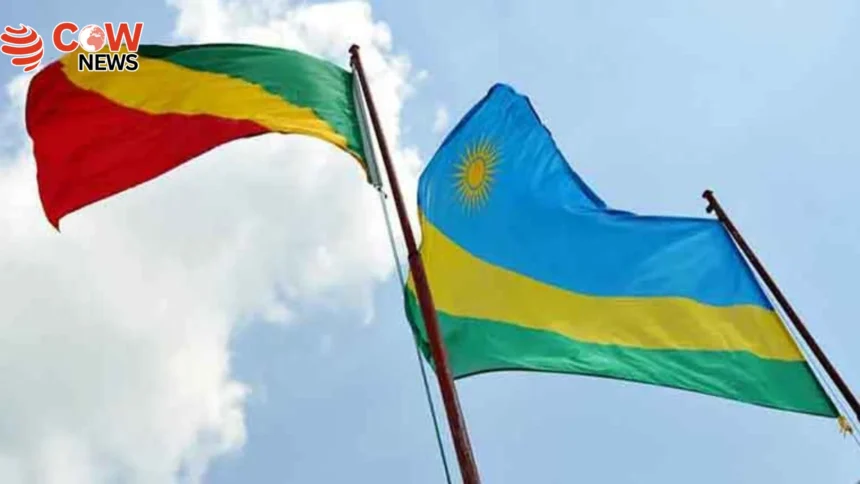
Rwanda (The COW News Digital)Rwanda and the Democratic Republic of Congo (DRC) have signed a landmark peace agreement in Washington, D.C., marking what many observers view as a significant diplomatic achievement for Africa’s Great Lakes region. The ceremony, held at the United States Institute of Peace, was attended by U.S. President Donald Trump, who praised the deal as a “major success for regional stability and global development.”
The agreement follows months of negotiations between senior leaders from Kigali and Kinshasa, mediated with U.S. diplomatic support. The deal seeks to end years of conflict, border tensions, and proxy warfare that have destabilized mineral-rich eastern Congo and triggered multiple humanitarian crises. The conflict has resulted in millions of displaced persons, disrupted trade, and fuelled repeated armed insurgencies that have drawn in regional actors.
Read More:
- Trump Threatens Kabul Over Bagram Airbase Control
- Late-Night Dinners Linked to Higher Blood Sugar Risk
President Trump, speaking at the signing, called the moment historic for Africa’s future. He said the peace accord signaled a “new era of cooperation, prosperity, and hope” between the two nations, whose relations have long been strained by mutual accusations over rebel support and resource exploitation. Trump credited the leaders of both countries for demonstrating political courage, saying their commitment to dialogue provided a model for conflict resolution worldwide.
“The peace agreement between Rwanda and Congo is a major achievement for the region,” Trump said. “A peaceful Africa is essential not only for regional security but for global economic progress. The United States fully supports every effort that brings stability, resilience, and opportunity to the African continent.”
The U.S. leader emphasized that diplomacy, not force, remains the cornerstone of lasting peace. He argued that nations must invest in negotiations, trust-building, and compromise if they hope to achieve durable outcomes. “The world moves forward through dialogue, not through conflict,” Trump stated. “We will continue to support peace-building efforts across Africa.”
Leaders from Rwanda and DRC expressed confidence that the agreement would pave the way for joint security operations, demobilization of armed groups, and increased cross-border trade. The understanding also includes mechanisms for dispute resolution and international monitoring, with the expectation that donor states will provide technical and development support.
Analysts say the success of the agreement will depend on implementation, political will, and sustained international involvement. While optimism remains high, longstanding mistrust, competing economic interests, and fragile security conditions pose serious challenges.
Still, diplomats contend that the accord represents a rare opportunity to reset relations and address one of Africa’s most complex conflicts. If maintained, it could foster regional integration and unlock significant economic potential.