
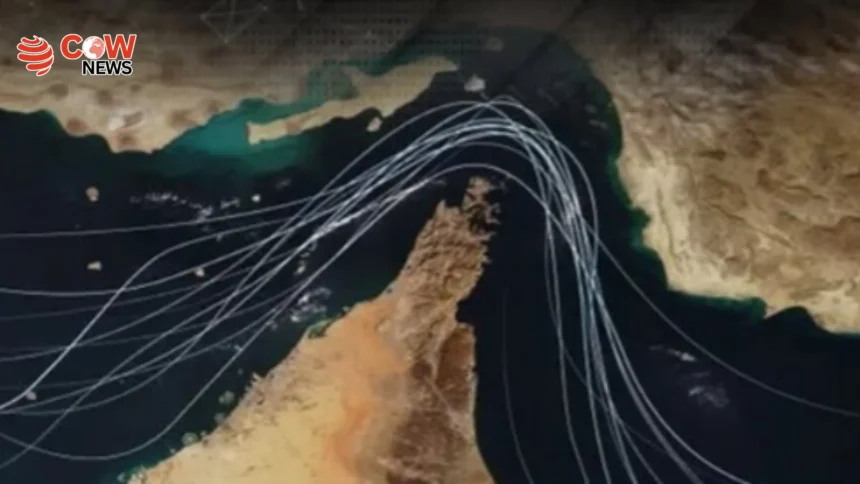
World ( The cow news digital ) Rising tensions in the Middle East have intensified after reports indicated that Iran has announced the complete closure of the Strait of Hormuz, a key maritime route for global energy supplies. The move is said to be driven by growing security concerns, including fears of underwater threats and potential sabotage in the region.
The Strait of Hormuz plays a crucial role in the global economy, as nearly 20 percent of the world’s oil shipments pass through this narrow passage each day. Any disruption to this route is likely to have immediate and significant consequences for international energy markets. Experts warn that even a short-term closure could push oil prices sharply higher, placing additional pressure on countries already dealing with inflation and economic uncertainty.
According to sources familiar with the situation, Iranian authorities have cited increasing regional instability as the primary reason behind the decision. Efforts are reportedly underway to establish alternative and safer shipping routes, but analysts remain skeptical about their ability to handle the same volume and efficiency as the Strait of Hormuz.
Global financial markets reacted quickly to the announcement, with oil prices rising and investor sentiment turning cautious. The shipping industry is also facing heightened risks, as insurance costs for vessels operating in the region are expected to increase. Countries that rely heavily on oil imports from the Gulf are now preparing contingency plans to manage potential supply disruptions.
International leaders and organizations have expressed serious concern over the development. Diplomatic channels are likely to be activated in an attempt to de-escalate tensions and restore stability in the region. Ensuring the safe and uninterrupted flow of energy supplies remains a top priority for major economies.
Security analysts warn that a prolonged closure could extend beyond energy markets, affecting global trade routes, increasing transportation costs, and further escalating geopolitical tensions. The situation remains uncertain, with developments being closely monitored worldwide.
As the crisis unfolds, attention is now focused on diplomatic efforts and strategic responses aimed at preventing a wider economic impact.