
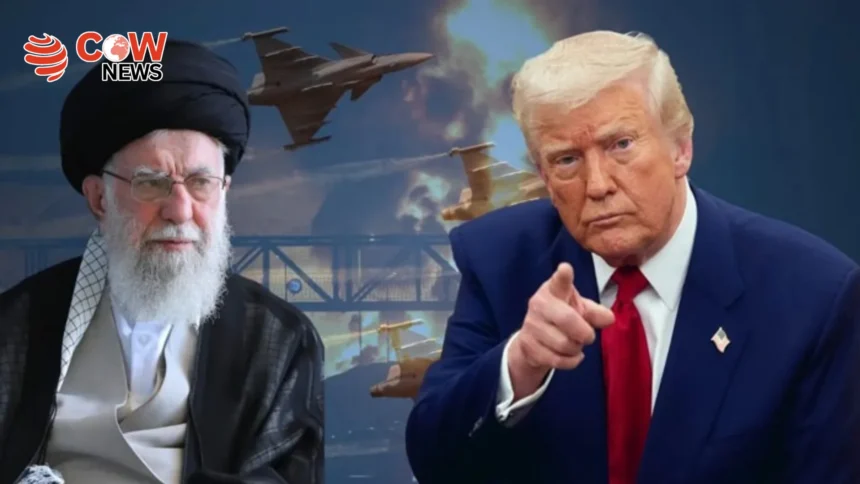
U.S. President Donald Trump has warned that Washington may deploy a second naval fleet to the Middle East if negotiations with Iran fail, signaling a potential escalation in the region. Speaking to American media, Trump said a second round of talks between the two nations is expected next week.
“Iran is engaging more seriously this time because it has realized the extent of U.S. military power,” Trump stated. “This is why they are now willing to negotiate.” He recalled that in the past, Iran did not take discussions seriously and overestimated its position, which ultimately led to consequences. “However, this round of negotiations is of a completely different nature,” he added.
Trump emphasized that failure to reach an agreement could compel the U.S. to take “very strong measures.” In that scenario, he indicated that an additional naval fleet could be deployed to prepare for potential military action in the region.
Read More:
- Trump Hopes Iran Talks Succeed, Warns Against Midnight Hammer
- Deadly Islamabad Attack Highlights Pakistan’s Regional Challenges
- Pakistan’s Silence Spoke Loudly and World Cricket Felt the Shock
According to U.S. media reports, a senior American official confirmed consultations regarding the deployment of a second aircraft carrier strike group to the Middle East. Currently, the USS Abraham Lincoln and its strike group, which includes warplanes, Tomahawk missiles, and multiple naval vessels, are already stationed in the region.
During past conflicts, such as the Gaza war, the United States had also deployed two aircraft carriers for extended periods to maintain a strategic presence. Analysts suggest that Trump’s warning underscores a dual approach of diplomacy backed by credible military pressure.
The President’s remarks come amid growing global attention on Iran’s nuclear program and regional security concerns. While the second round of talks is seen as an opportunity for peaceful resolution, Trump’s statements make it clear that the U.S. is prepared to respond with force if negotiations break down.
Experts note that this move could escalate tensions in the Middle East, affecting not only Iran but also neighboring countries and international energy markets. “The deployment of additional naval assets is both a signal of seriousness and a deterrent against potential provocation,” said a defense analyst familiar with U.S. military strategy.
As negotiations approach, the world watches closely, balancing hopes for a diplomatic solution against the possibility of increased military activity in the region.