
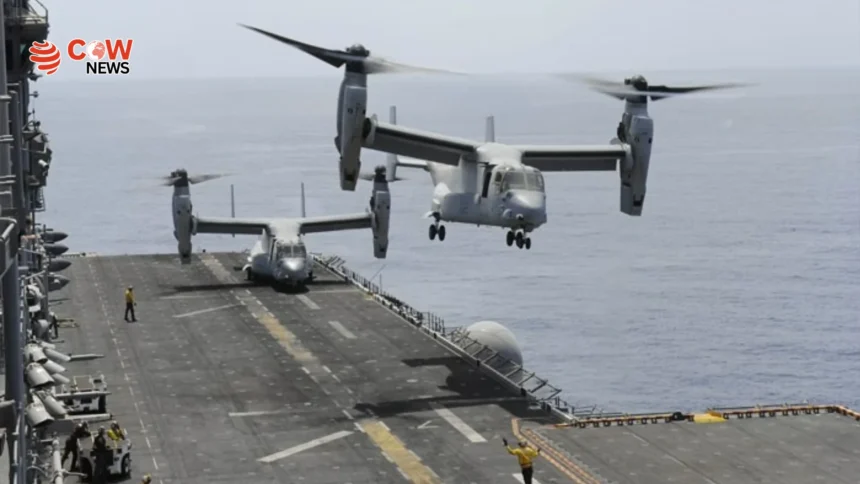
Washington(The COW News Digital) US President Donald Trump is reportedly considering a limited military strike against Iran as part of efforts to pressure Tehran into accepting a renewed nuclear agreement, according to a report published by The Wall Street Journal.
The newspaper cited sources indicating that discussions within the US administration have included the possibility of targeting specific Iranian military or government sites. The objective of such a strike, the report said, would be to compel Iran to return to negotiations and agree to terms that would curb its nuclear program.
According to the report, the proposed action would be designed as a calibrated and restricted operation rather than the start of a broader conflict. However, officials are said to have acknowledged that if Iran refuses to comply or escalates in response, the confrontation could widen into a more extensive military engagement.
Trump has repeatedly stated that he prefers diplomacy in addressing concerns over Iran’s nuclear ambitions. Nevertheless, he has also maintained that military options remain on the table if diplomatic efforts fail. His position reflects a longstanding US policy objective of preventing Iran from acquiring nuclear weapons capability.
Read More:
- From Silence to Power: Pakistan’s Decision That Shook World Cricket
- Deadly Islamabad Attack Highlights Pakistan’s Regional Challenges
Speaking at a recent meeting of the Gaza Board of Peace, Trump warned that Iran would face serious consequences if it declined to reach an agreement. He emphasized that the United States would not permit Tehran to possess nuclear weapons under any circumstances.
Iran has consistently denied seeking nuclear arms, insisting that its nuclear activities are for peaceful purposes. Tensions between Washington and Tehran have fluctuated in recent years, particularly following the US withdrawal from the 2015 nuclear accord and the reimposition of economic sanctions.
Analysts note that any limited strike could carry significant risks, including retaliation by Iran or its regional allies, as well as potential disruption to global energy markets. The Middle East remains a highly sensitive geopolitical arena, and even targeted military actions can have far-reaching consequences.
While no final decision has been announced, the report underscores the pressure facing policymakers as they weigh diplomatic engagement against the potential use of force. The coming weeks may prove critical in determining whether negotiations resume or tensions escalate further.