

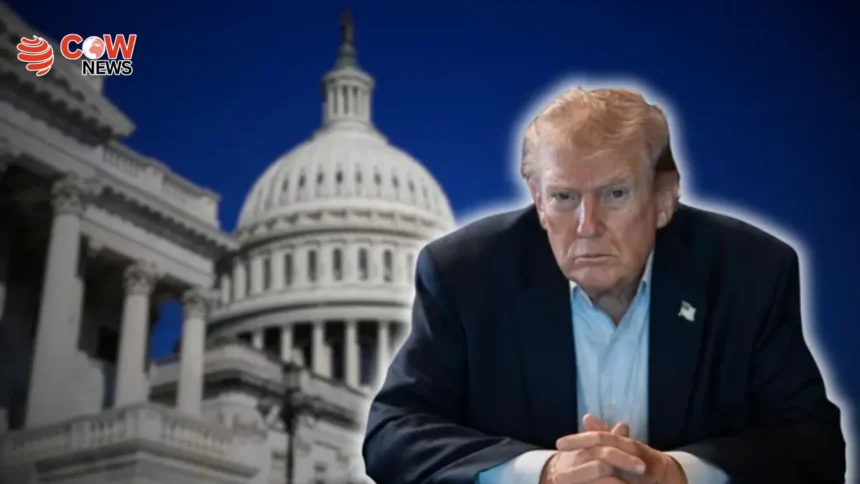
Washington(The COW News Digital)The U.S. Senate has rejected a resolution aimed at limiting President Donald Trump’s military powers and preventing unilateral action against Iran without congressional approval. The measure sought to require congressional authorization for any military operations targeting Iran and to halt airstrikes pending legislative consent.
On Wednesday, the Senate voted 53-47 against the resolution. Most Republican senators opposed it, while nearly all Democratic senators supported the measure. The resolution was introduced by Democratic lawmakers, along with a few Republican co-sponsors, to restrict the president’s authority in deploying U.S. forces abroad.
Supporters argued that under the U.S. Constitution, only Congress has the authority to declare war, and that this power should be actively enforced. They warned that ongoing military actions without oversight could set a dangerous precedent and undermine democratic checks and balances.
read more
- Pakistan, Taliban, and Afghanistan: The Complex Triangle of Influence
- Imran Khan and the Politics of Idolization
Opponents, however, contended that President Trump, as commander-in-chief, acted within his constitutional powers to authorize limited military operations to protect the United States. Critics argued that requiring congressional approval in this situation could endanger U.S. troops and embolden Iranian forces.
Democratic Senator Tim Kaine addressed the Senate, emphasizing that the situation constitutes a war. He stated that repeated military operations give the impression that the president believes he is not bound to seek congressional approval before engaging in hostilities abroad.
A similar resolution regarding Trump’s war powers over Iran is expected to be voted on in the House of Representatives on Thursday. House Republican Speaker Mike Johnson expressed confidence that the measure would fail there as well, reiterating that such resolutions could jeopardize U.S. military personnel and strengthen Iran’s resolve.
Even if the resolution had passed both the Senate and the House, President Trump could have vetoed it, requiring a two-thirds majority in both chambers to override the veto—a scenario that currently appears unlikely.
The ongoing U.S. and Israeli military operations against Iran have contributed to increasing civilian casualties in Iran and Lebanon, raising international concern over the escalation of hostilities. As the debate continues in Washington, lawmakers, military officials, and the public remain divided over the scope of presidential war powers and the role of Congress in authorizing military action abroad.