

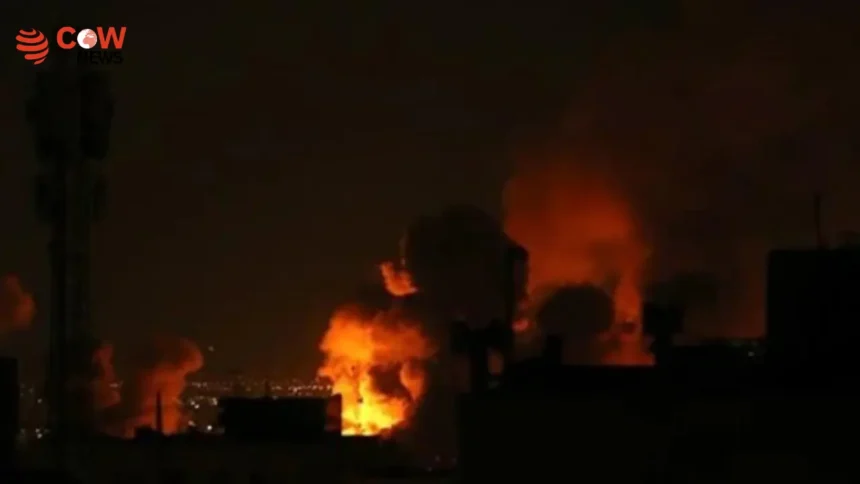
Washington(The COW News Digital) The conflict in the Middle East has entered its eighth day as the United States Central Command (CENTCOM) said nearly 200 targets were struck across Iran during the past 72 hours.
According to CENTCOM, the strikes were part of ongoing military operations aimed at weakening Iran’s strategic military infrastructure. The announcement came as reports indicated that the death toll in Iran from combined U.S. and Israeli attacks had risen to 1,332.
CENTCOM Commander Brad Cooper briefed reporters on the latest developments, saying the operations had focused primarily on ballistic missile launch sites and other key military assets. He stated that Northrop B-2 Spirit stealth bombers were used to carry out precision strikes, deploying bunker-buster bombs against deeply buried ballistic missile launch facilities.
Cooper said dozens of hardened missile launchers located underground had been destroyed in the strikes. He added that the operation had significantly disrupted Iran’s ability to carry out missile attacks.
“Since the first day of the operation, Iranian ballistic missile launches have decreased by nearly 90 percent,” Cooper said during the briefing.
CENTCOM also claimed that more than 30 Iranian naval vessels had been sunk since the start of the military campaign. The strikes have targeted multiple military installations believed to be linked to Iran’s missile and naval capabilities.
read more
- Pakistan, Taliban, and Afghanistan: The Complex Triangle of Influence
- US Envoy Backs Israel’s Claim to Wider Middle East
Military officials said the operation is entering a new phase in which the focus will shift toward dismantling Iran’s missile production capacity. According to CENTCOM, the next stage of the campaign aims to target facilities involved in manufacturing ballistic missiles and other advanced weapon systems.
Officials said the objective of these operations is to limit Iran’s ability to rebuild its military capabilities and reduce potential security threats in the region.
Meanwhile, the conflict has continued to escalate amid growing concerns about regional stability. Analysts warn that the ongoing hostilities could further destabilize the Middle East if diplomatic efforts fail to contain the crisis.
International observers have also expressed concern over the rising human toll and the potential humanitarian consequences of the continuing strikes.
Despite the intensifying military campaign, calls for de-escalation and negotiations have been growing from several countries and international organizations seeking to prevent a wider regional conflict.