

ISLAMABAD:( The COW News Digital)-The Pakistan Bureau of Statistics (PBS) has released its latest weekly inflation report, revealing a continued increase in the country’s inflation rate. According to the report, consumer prices rose by 0.49% over the past week, pushing the annual inflation rate to 4.57%.
The weekly review highlighted that 24 essential commodities became more expensive, while 8 goods recorded price reductions, and 19 items remained unchanged.
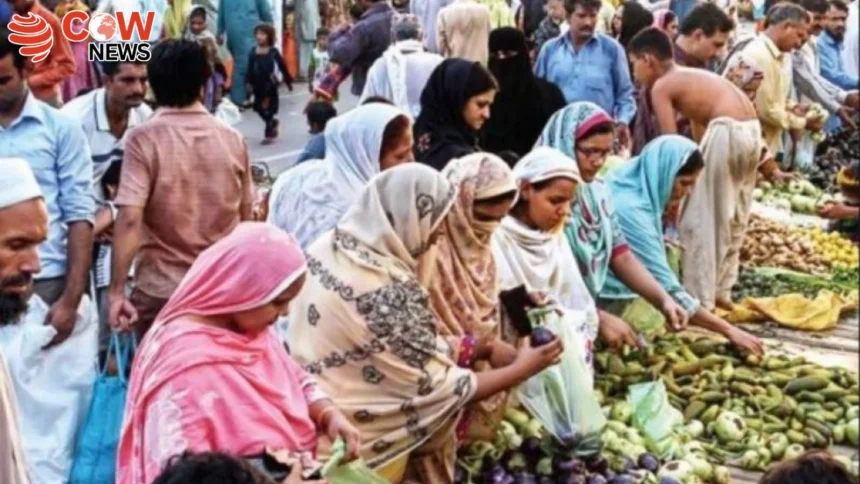
Among the most notable price hikes, tomatoes surged by 33.20%, onions increased by 8.70%, eggs by 2.18%, and flour by 1.42%. Other staples including sugar, ghee, cooking oil, garlic, and potatoes also saw significant increases.
The report attributed the rise in vegetable prices to seasonal fluctuations and supply constraints, while the increase in staples like sugar and cooking oil reflects rising global commodity prices and local supply-demand pressures.
Despite the overall upward trend, some commodities became cheaper. Chicken prices fell by 6.38%, bananas dropped by 4.70%, and petrol, diesel, lentils, and rice saw minor reductions. Analysts note that these decreases are not sufficient to offset the impact of rising prices on households, especially for daily essentials.
Economic experts warned that continued inflationary pressures could affect low- and middle-income families the most, as they spend a larger share of their income on food and basic necessities. The PBS report serves as an early indicator for policymakers to monitor price volatility and take necessary measures to stabilize essential goods.
Consumers are advised to monitor market prices carefully and plan their purchases accordingly, particularly for items like vegetables and cooking essentials that are experiencing sharp week-to-week fluctuations.
The government and relevant authorities are expected to review the report and consider interventions such as price controls, subsidies, or import adjustments to mitigate the impact of rising prices on vulnerable populations.
With inflation remaining a key concern, the latest data underscores the ongoing challenges faced by Pakistani households in managing the costs of daily living, especially amidst global supply chain disruptions and local market fluctuations.