
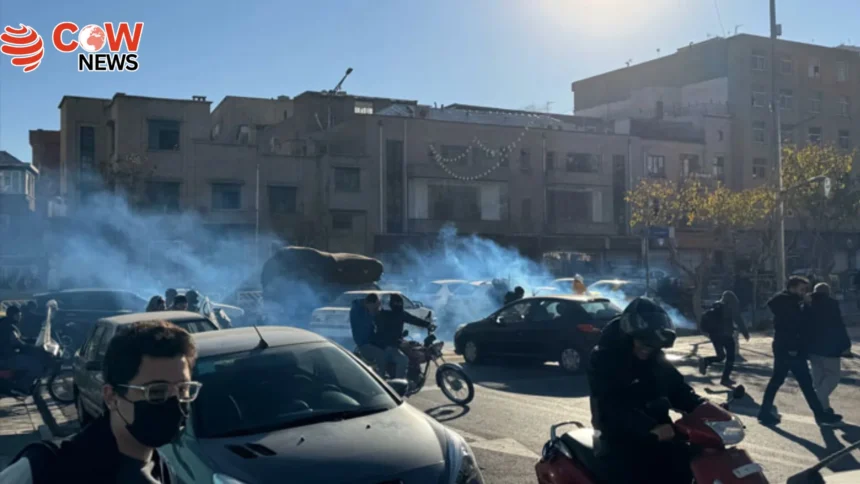
Tehran(The COW News Digital)Widespread protests against soaring inflation and the sharp decline of Iran’s national currency have turned violent, leaving at least six people dead in clashes between demonstrators and security forces, according to Iranian media reports.
The protests, which initially began in the capital city of Tehran, have rapidly spread to several other cities, reflecting growing public anger over the deteriorating economic situation. Demonstrations were reported in Lorestan province as well as in the cities of Fasa and Azna, where confrontations escalated into serious unrest.
Eyewitness accounts and local media reports indicate that protesters gathered to voice frustration over rising prices of basic goods, unemployment, and the continued fall of the Iranian rial. As tensions intensified, some demonstrators reportedly attacked government buildings, attempted to set fire to police stations, and damaged public property.
Read More:
- Late-Night Dinners Linked to Higher Blood Sugar Risk
- Trump Threatens Kabul Over Bagram Airbase Control
- Late-Night Dinners Linked to Higher Blood Sugar Risk
Security forces responded by deploying tear gas, firing rubber bullets, and conducting aerial firing in an effort to disperse the crowds. The clashes resulted in the deaths of six individuals, including at least one member of the security forces, while dozens of others sustained injuries. Authorities have confirmed that several people accused of participating in violent acts have been arrested during the unrest.
Iranian officials have not released detailed information about the identities of those killed, but state-linked media described the situation as “tense” and “unprecedented” in several urban areas. Emergency services were reportedly placed on high alert as protests continued into the night in some regions.
The unrest highlights the growing economic strain faced by ordinary Iranians. The national currency has lost significant value in recent months, pushing inflation to record levels and eroding purchasing power. Prices of food, fuel, and household necessities have risen sharply, placing additional pressure on low- and middle-income families.
Analysts note that Western economic sanctions continue to play a major role in Iran’s financial instability, limiting foreign trade and access to international banking systems. Combined with internal economic challenges, the sanctions have contributed to rising living costs and widespread public dissatisfaction.
Despite increased security presence, reports suggest that protests may continue if economic conditions fail to improve. Observers warn that prolonged instability could further strain Iran’s social fabric, as citizens demand relief from inflation and meaningful economic reforms.