
Although the no-confidence motion against the PPP government in November 1989 was defeated by parliamentary democratic forces, it was clear that the power of the military boot and Article 58(2)(b), wielded by Ghulam Ishaq Khan—whom Jamiat Ulema-e-Islam’s Hafiz Hussain Ahmad mockingly called “the giant sitting in the presidency”—was determined to strike the fragile government.
After the no-confidence attempt, the government was breathing on borrowed time. Punjab’s powerful but shy and soft-spoken Chief Minister, Muhammad Nawaz Sharif, was also in an aggressive mood. One evening in December 1989, I was seated at a guesthouse in Islamabad’s F-8 sector with a few friends. Among us was a member of the National Assembly from Gujranwala, likely Rana Nazir Ahmad, belonging to the IJI. During the conversation, when Rana Sahib casually remarked that they were advising Mian Nawaz Sharif to prepare to become Prime Minister, I was taken aback. It was unimaginable to me that someone as apolitical and reserved as Nawaz Sharif—who, in my eyes, at that time showed no qualities of a leader—could even become Prime Minister. I had assumed that Zia-ul-Haq and the intelligence agencies had artificially elevated him, as he was unfit even for the position of Punjab Chief Minister. My bias and impression led me to mock Rana Nazir Ahmad and debate him vigorously—but time proved how wrong I was.
Later, I had the opportunity to observe Mian Nawaz Sharif closely, particularly in 2006 during the signing of the Charter of Democracy in London. His demeanor, conduct, and conversation reflected that of a thoughtful and responsible leader. During this occasion, PPP’s Rehman Malik tried a small maneuver, but Nawaz Sharif remained unperturbed. When it came time to sign the Charter, Malik insisted that the signing occur at his modest flat, located behind Edgware Road in central London. In reality, Malik intended to humiliate Nawaz Sharif, as in the 1990s, Sharif’s government had imprisoned him. Since Madam Bhutto did not have a residence in London and Malik did not want her to visit Nawaz Sharif’s home, it was agreed that the signing would take place at Malik’s flat. Sharif accepted this gracefully, despite the cramped conditions and the crowd of onlookers standing outside while the signing took place.
As Prime Minister, Benazir Bhutto’s hands were tied, yet despite all constraints, she wanted to do something for the public and her impoverished party workers who had suffered during General Zia’s era. However, the demand far exceeded the resources available. She employed hundreds of unemployed youth, but many party workers remained dissatisfied and faced a variety of issues.
At that time, people from all over the country came to Islamabad expecting that a revolution had arrived. Yet, on arrival, many felt disappointed. Thousands from remote areas of Khyber Pakhtunkhwa, Sindh, and Punjab arrived seeking a new dawn, spending entire days chasing ministers and assembly members, returning to their temporary lodgings disappointed, only to rise the next day with renewed hope.
My office was located in Islamabad’s F-6 sector, across the road from the present Islamabad Press Club. Next to my office was a small thatched hotel. Exhausted and overheated friends often came by for tea or simple meals, delivered on credit from the hotel. Sometimes, I would drink as many as one hundred cups of tea in a single day. My monthly salary was about four thousand rupees, but the hotel bill often exceeded it, so the two years I spent in Islamabad passed in a continuous struggle to settle the hotel debt.
During this period, I got married, but my wife worked in Peshawar. Although we had a home in Islamabad, there was uncertainty about how long we would stay there. Therefore, my wife stayed in Peshawar at the home of our professor, Iqbal Tajik. I had a government car, and every Friday she would take a GTS bus to Islamabad, where I would pick her up on Monday morning. We also made multiple copies of our house keys for friends who came to Islamabad chasing ministers and stayed at our home. Our house was often full, and if I returned home late, I had to navigate past several comrades sleeping in the corridor and lounge to reach my bed.
Evenings in Islamabad were sometimes spent in gatherings with personalities like Mano Bhai, Mahmood Sham, Ahmed Faraz, Professor Nisar Safdar, Ghulam Muhammad Qasir, and Habib Jalib.
Most PPP ministers were powerless, while some misused authority for personal gain and neglected the people in their constituencies. Benazir Bhutto had entrusted party matters and the resolution of worker grievances to her political secretary, Naheed Khan, and her husband, Safdar Abbasi. They helped the people, but complaints still persisted.
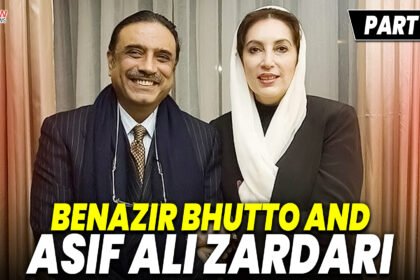
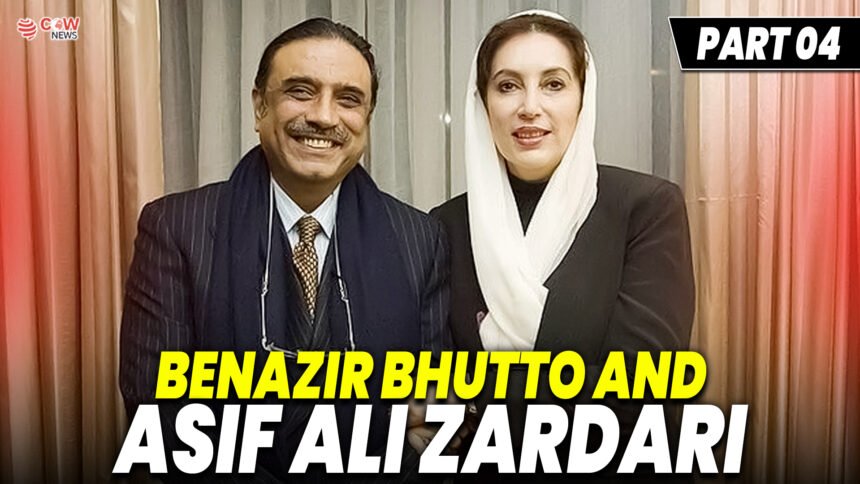
Although Prime Minister Bhutto was fighting battles on multiple fronts, she made every effort to stay in touch with the workers and the public. She kept Asif Ali Zardari away from government affairs because propaganda against him was at its peak. Agencies would provide the Prime Minister with reports on her husband’s alleged corruption, aiming to create misunderstandings between the couple.
During this period, while Benazir Bhutto handled political, diplomatic, and administrative matters as Prime Minister, Asif Zardari engaged in behind-the-scenes maneuvering, working through political negotiations to protect his wife’s government. Zardari was not a man of the masses, but he was a master of political deals. However, he faced the full might of the military establishment and its entrenched jihadi mindset.
The establishment assumed that the inexperienced and naive Bhutto would be easily knocked out by palace conspiracies. Yet, despite all the military’s power, resources, and dirty tactics, the failure of the no-confidence motion was unexpected and unacceptable for the generals. They realized that Asif Ali Zardari—a seemingly ordinary, indulgent man who happened, by chance, to marry a leader like Benazir Bhutto—was in fact a chess player whose loyalty could not be bought with money or power. From that day forward, “Get Zardari” became the mission, which commenced with the dismissal of the government on August 6, 1990.
(To be continued.