
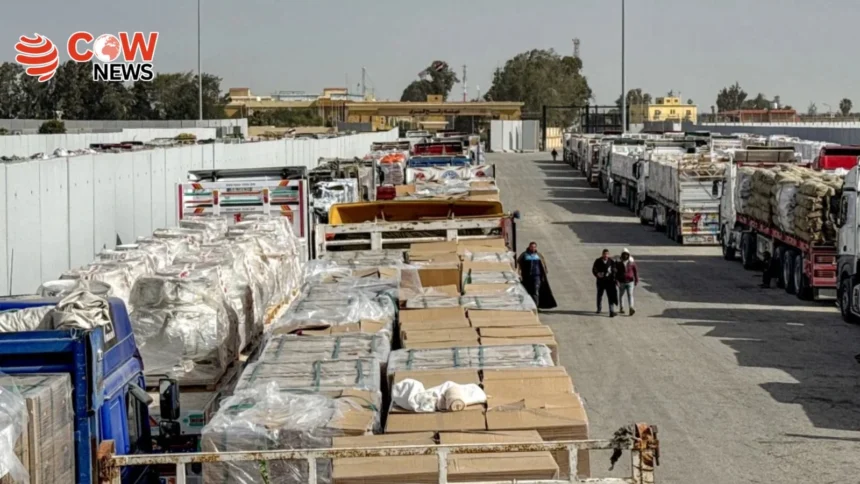
TEL AVIV (The COW News Digital) In a significant development, the Israeli military announced on Sunday, February 1, that the Rafah border crossing with Gaza will be partially opened in both directions. The move, aimed at facilitating limited movement for residents, comes under a framework consistent with existing ceasefire agreements and political directives.
Read More:
According to an official statement, the crossing will operate under tight security coordination, allowing residents to enter and exit Gaza only after obtaining prior clearance from Israeli authorities. The European Union mission will oversee initial identification and screening procedures, ensuring orderly and safe transit. This mechanism mirrors procedures implemented in January 2025.
The announcement stressed that movements from Egypt into Gaza will be permitted solely in cooperation with Egyptian authorities and will only include individuals who fled Gaza during the recent conflict. Entry will also require pre-approved security clearance from Israel. Additional identification checks and security screenings will take place at checkpoints within Israeli-controlled areas, using advanced security systems.
The decision follows calls from Hamas on Friday, pressing intermediaries to urge Israel to open the Rafah crossing. The crossing remains the only accessible route connecting Gaza’s residents to the outside world. In a statement, Hamas highlighted the urgency of halting ongoing hostilities and requested that the border be opened immediately for both directions. They also emphasized the need to enable Gaza’s National Committee to resume operations, particularly in rebuilding war-damaged infrastructure.
Israeli officials indicated that the partial reopening is a humanitarian measure intended to ease the movement of civilians while maintaining security. The European Union’s involvement is aimed at ensuring transparency and adherence to international standards during the transit process.
Analysts suggest that the reopening of Rafah could serve as a critical step toward de-escalation in the region, providing temporary relief to residents who have faced restricted movement for extended periods. However, the full reopening will depend on ongoing coordination between Israeli and Egyptian authorities and compliance with security requirements.
As the situation develops, residents of Gaza and neighboring regions are expected to closely monitor the flow through Rafah, which has historically served as a lifeline for supplies, medical evacuations, and essential travel.