
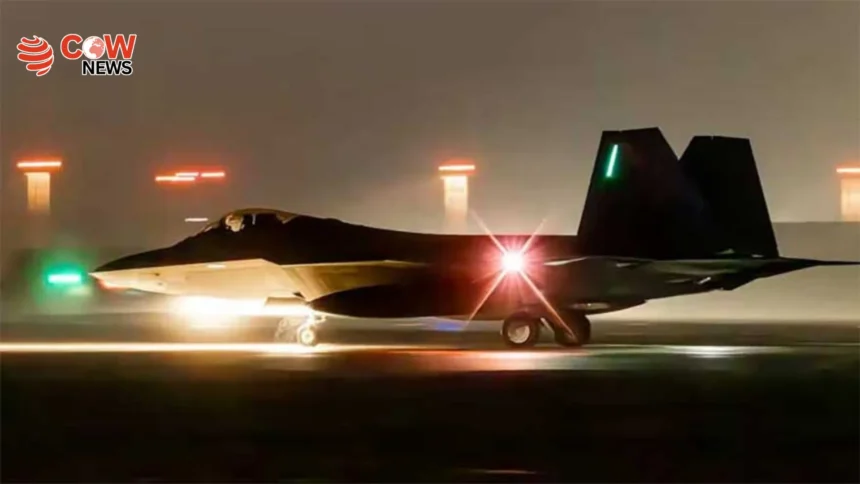
Washington(The COW News Digital) The US military has rapidly increased its presence near Iran, shifting more than 150 aircraft to bases in Europe and the Middle East since a second round of nuclear talks between the United States and Iran ended without a breakthrough on Feb. 17, according to publicly available flight tracking data and satellite imagery reviewed by The Washington Post.
The current presence of U.S. military forces in the region is among the largest in more than two decades, since before the Iraq War in 2003. The buildup comes after President Donald Trump threatened to attack Iran unless a deal can be reached to restrict Iran’s nuclear program, although he has not indicated the goals of such an attack.
Iranian officials have said a deal is possible but that reaching one will take time.
Experts who reviewed the deployment said it has surpassed the military buildup that was seen before the U.S. strikes against the Iranian nuclear program in June of last year. They said the assets being assembled are indicative of a multiday campaign without a ground invasion.
Dozens of additional planes are aboard the warship USS Gerald R. Ford, which was spotted off the coast of the Greek island of Crete on Monday. The Ford is the second aircraft carrier sent to the Middle East, and its arrival means roughly a third of all active U.S. ships are now in the region.
“The massive level of force amassed means the U.S. military can execute on whatever Trump decides — anything from a sustained, highly kinetic campaign to more targeted, limited strikes,” said Dana Stroul, a former deputy assistant secretary of defense for the Middle East who is now a research director with the Washington Institute, a think tank focused on American foreign policy in the Middle East.
If the administration is planning for an extended, weekslong air campaign, even more military assets will be needed, said Mark Cancian, a senior adviser at the Center for Strategic and International Studies.
Defense officials acknowledged the major flow of U.S. forces into the Middle East but declined to comment on the specifics, citing operational security.