

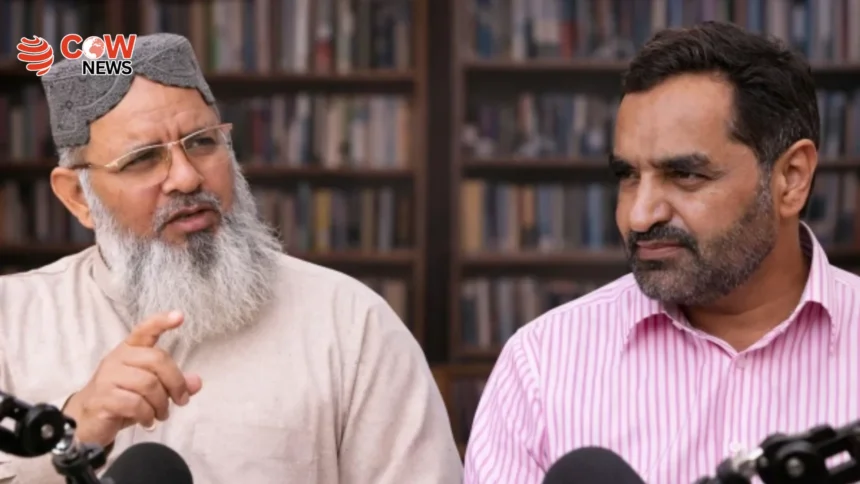
Lahore(The COW News Digital) Chairman of the Council of Islamic Ideology and head of Jamia Naeemia, Raghib Hussain Naeemi, has stressed that Muslims must exercise caution while distributing charity and ensure that Zakat reaches those who are genuinely eligible under Islamic teachings.
In an interview, Naeemi explained that while both Zakat and voluntary charity (Sadaqah) serve the purpose of helping the needy, the two are fundamentally different in Islamic law. According to him, Zakat is a mandatory obligation for eligible Muslims, and the categories of its recipients are clearly defined in Islamic jurisprudence.
He noted that the recipients of Zakat have been specified in the Holy Qur’an, which outlines eight categories of people entitled to receive it. These include the poor, the needy, those burdened by debt, and individuals striving in the path of God. Naeemi emphasized that Zakat funds must only be distributed among these groups to fulfill the religious obligation correctly.
Explaining the concept of Sadaqah, Naeemi said it is voluntary charity given solely for the pleasure of God and can be offered in any amount. He added that Sadaqah is not limited to financial assistance; it may also include donating clothes, providing essential household items, purchasing books for students, or even helping someone start a livelihood by providing tools or equipment.
Naeemi also warned that charitable acts performed with wealth obtained through unlawful means are not accepted in Islam. He said if a person gives charity or Zakat from income earned through prohibited sources, it does not bring spiritual reward and instead may lead to further accountability.
Highlighting another growing concern, he said some people accept financial assistance simply because it is being offered free of cost, even though they may not truly qualify as beneficiaries. Such practices, he noted, undermine the true spirit of charitable giving.
Naeemi urged donors to carefully verify the financial condition of recipients before distributing Zakat. He advised Muslims to identify genuinely deserving individuals, particularly those who maintain dignity and avoid asking for help despite their hardships.
He further stated that financially stable individuals should refrain from receiving Zakat, though they may accept voluntary charity if circumstances require it. At the same time, he advised people to avoid giving money to professional beggars and instead direct their assistance toward deserving members of society who are in genuine need.