
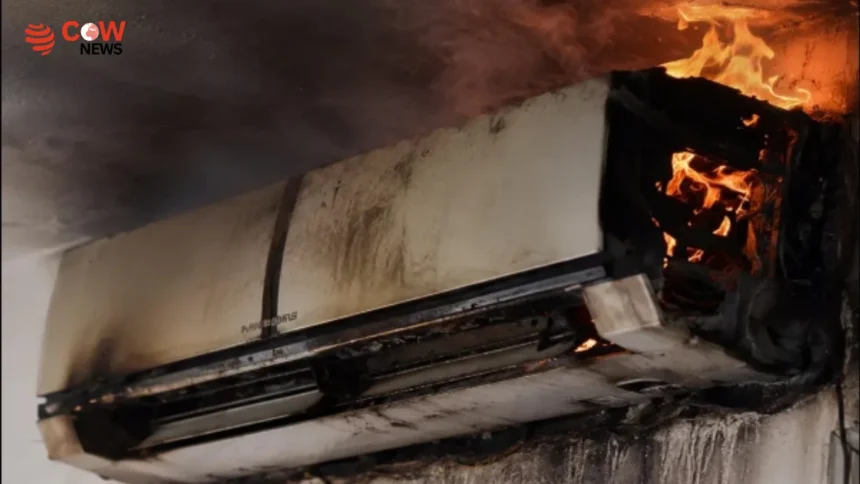
World ( The cow news digital ) With rising summer temperatures, many households opt for older or used air conditioners to save money. However, HVAC experts warn that aging units can pose severe safety risks, including electrical short circuits, structural fires, and heavy financial losses if minor faults are left unaddressed.
Experts highlight that older units frequently suffer from deteriorated wiring, worn-out electrical components, motor malfunctions, and chronic overheating. Ignoring early warning signs can quickly lead to hazardous accidents.
Key warning signs that require immediate action include:
- Burning Odor: A smell of burning insulation or melting plastic upon turning on the unit indicates compromised internal wiring or motor damage, presenting an immediate fire hazard.
- Unusual Noises: Rattling, grinding, or buzzing sounds point to damaged fans, compressor failure, or loose internal components that can severely damage the system if left unfixed.
- Excessive Overheating: If the unit becomes unusually hot during operation, it signals malfunctioning electrical parts that dramatically increase short-circuit risks.
- Reduced Cooling Efficiency: A sudden drop in cooling performance often stems from refrigerant leaks, compressor failure, or clogged filters, indicating an urgent need for professional servicing.
- Visible Electrical Sparks: Sparks appearing near voltage stabilizers or power cables represent an acute hazard caused by frayed wiring or loose connections, requiring instant shutdown.
HVAC technicians strongly advise shutting down the air conditioner immediately upon observing any of these symptoms and consulting a certified technician. Furthermore, experts recommend replacing frequently malfunctioning units with modern, energy-efficient models rather than incurring continuous repair costs, ensuring both safety and long-term savings.