

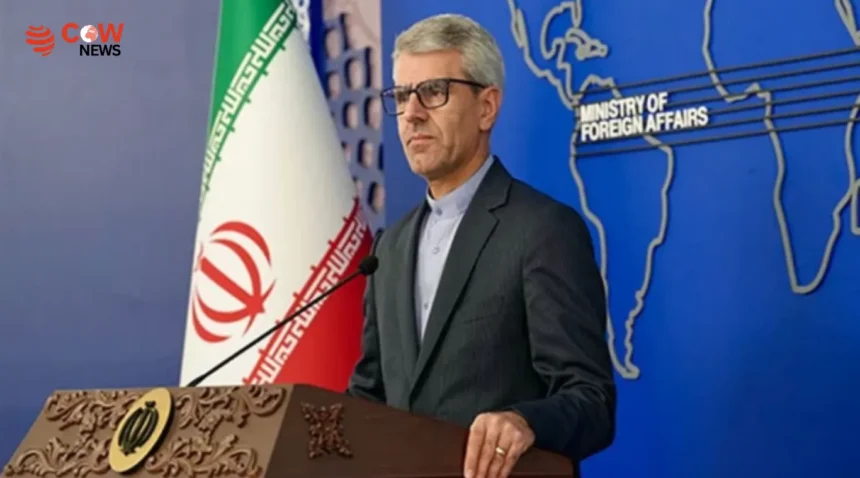
Islamabad (The COW News Digital)Iran has accepted a proposal for a four-nation meeting in Tehran put forward by Pakistan’s Chief of Army Staff, Field Marshal Asim Munir, Iranian Foreign Ministry spokesperson Esmaeil Baghaei said.
According to Baghaei, Iran is hosting high-level delegations from Saudi Arabia, Pakistan and Türkiye in Tehran as part of diplomatic efforts aimed at addressing escalating tensions and discussing pressing regional security challenges.
The proposed meeting brings together representatives of four countries to discuss developments affecting the Middle East and the wider region. The talks are expected to focus on Israel’s regional policies, the ongoing conflict involving Iran and Lebanon, and broader concerns about regional stability.
Baghaei described the discussions as part of efforts to reduce tensions and explore diplomatic approaches to the region’s ongoing conflicts. He said Iran remained prepared to respond to different possible scenarios but had not closed the door to diplomacy.
The spokesperson’s remarks suggested that Tehran intends to maintain diplomatic engagement even as regional tensions remain high. The meeting could provide an opportunity for participating countries to exchange views on security concerns and explore possible avenues for de-escalation.
Baghaei also addressed diplomatic contacts between Iran and the United States, confirming that messages continued to be exchanged through intermediaries. He highlighted Pakistan’s role in facilitating communication between the two sides.
Pakistan has maintained diplomatic contacts with regional and international stakeholders amid growing concerns over conflict and instability. Its involvement in communication between Tehran and Washington could provide an important channel for conveying positions and exploring possible diplomatic solutions.
However, Baghaei criticised Washington’s demands, describing them as unilateral from Tehran’s perspective. He said Iran would not accept what he characterised as complete surrender to American demands.
His comments underscored the significant differences that continue to complicate diplomatic engagement between Iran and the United States. Despite these disagreements, the continuation of indirect communications indicates that diplomatic channels remain active.
The Iranian spokesperson further said the meeting involving representatives of countries associated with the Mecca Joint Defence Agreement would address regional security and issues connected to the ongoing conflict.
The gathering is significant because it brings together countries with shared interests in regional stability at a time of heightened geopolitical uncertainty. Discussions among Iran, Saudi Arabia, Pakistan and Türkiye could help clarify their respective positions on security challenges and identify areas where diplomatic coordination may be possible.
Nevertheless, the extent to which the meeting can produce concrete outcomes remains uncertain. Any progress is likely to depend on the willingness of participating countries to narrow differences and agree on practical steps to reduce tensions.
Baghaei also responded to a question about elections in Israel, saying their outcome would not affect Iran’s position and held no particular significance for Tehran.
His remarks indicated that Iran’s regional calculations would not be determined by the results of Israeli elections, reflecting Tehran’s stated focus on broader strategic and security considerations.
As regional tensions continue to shape diplomatic discussions, the four-nation meeting could offer an important platform for dialogue. The participation of Pakistan, Saudi Arabia and Türkiye alongside Iran highlights continuing efforts to engage regional powers in discussions about conflict, security and diplomatic solutions.
The meeting’s eventual impact will depend on the issues raised, the positions adopted by the participating delegations and whether the discussions lead to further diplomatic engagement.