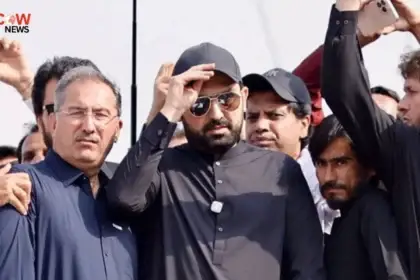

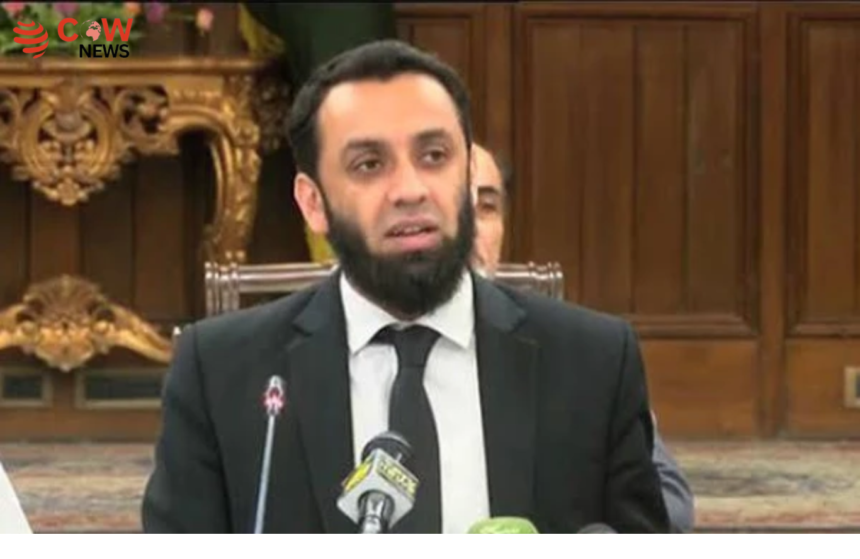
Islamabad (The COW News Digital) Federal Minister for Information and Broadcasting Attaullah Tarar has criticised Pakistan Peoples Party (PPP) Chairman Bilawal Bhutto Zardari, questioning the party’s position in the ruling coalition while simultaneously presenting itself as part of the opposition.
Responding to Bilawal’s recent remarks about Pakistan’s political system and governance, Tarar said that both the PPP and other political parties had been part of the country’s political system for decades and could not distance themselves from its weaknesses and shortcomings.
Tarar questioned whether enjoying the benefits of being in government while acting as an opposition party was not an obvious contradiction. He argued that political parties sharing responsibility for the existing system should also accept their role in addressing its problems.
The information minister said good governance remained a major public concern, adding that citizens wanted an effective government capable of providing better facilities and services. He described accountability to the public, improved governance and public welfare as fundamental requirements.
Responding to Bilawal’s criticism of accountability institutions, Tarar said it was difficult to understand why the PPP was now blaming the National Accountability Bureau (NAB) after previously introducing reforms to the institution itself.
He maintained that political parties could not use political differences as a reason to avoid accountability, adding that the public and the law would not accept attempts to place anyone beyond scrutiny.
Tarar said there was no justification for seeking exemption from accountability under the pretext of politics. He stressed that accountability should remain part of the country’s legal and democratic framework.
The minister also addressed the debate over provincial matters, saying discussions concerning the provinces could not simply be stopped. He described continued debate on provincial issues as a democratic and constitutional requirement.
He added that good governance and institutional reforms should remain priorities for all governments, regardless of political differences.
In a further challenge to Bilawal’s position, Tarar asked why political leaders did not directly seek the public’s opinion on the country’s political arrangements.
He said a referendum was the best way to determine public opinion, suggesting that political questions should be decided by consulting the people.
The exchange reflects continuing differences between the ruling coalition and the PPP leadership over governance, accountability, institutional reforms and the role of political parties.
Bilawal has recently called for a political reset, arguing that Pakistan needs democratic reforms, an end to political victimisation and greater public confidence in state institutions. Tarar’s response has focused on the PPP’s own role in the existing system and its position within the government.
The debate highlights growing political disagreements over responsibility for institutional weaknesses and the direction of governance reforms in Pakistan.