


Australia (The COW News Digital ) Former Australia opener Cameron Bancroft has reignited the Sandpapergate controversy by claiming that the entire Australian team knew about the ball-tampering plan during the 2018 South Africa tour. Bancroft says he withheld important details during Cricket Australia’s investigation and now feels betrayed by Pat Cummins‘ public denial of knowledge.
Australia’s cricketing community is facing renewed controversy over the infamous Sandpapergate scandal after former opening batter Cameron Bancroft publicly challenged the version of events that emerged following the 2018 Cape Town Test.
Bancroft has claimed that the ball-tampering incident was not limited to three players, insisting that members of the wider Australian team were aware of what was happening during the tour of South Africa. His latest comments have reignited questions about the extent of players’ knowledge, the investigation conducted by Cricket Australia and whether some individuals escaped accountability.
The former Australian opener says he did not provide a complete account during the original investigation. He now admits that important details about when the use of sandpaper began, how long the practice continued and who knew about it were left out of his testimony.
His decision to speak publicly comes after recent comments from Australian captain Pat Cummins, who reportedly denied knowing about the ball-tampering plan. Bancroft says Cummins’ statements left him feeling angry, betrayed and isolated, prompting him to revisit the events that dramatically changed his cricketing career.
Bancroft has made one of the most significant claims in the renewed Sandpapergate debate, saying the incident was not simply a matter involving himself, Steve Smith and David Warner.
According to Bancroft, awareness of the plan extended beyond the three players who became the central figures in the scandal. He has alleged that the wider Australian team knew about the use of sandpaper to alter the condition of the cricket ball during the South Africa tour.
His statement directly challenges the public understanding of the incident that followed the dramatic footage from Cape Town in March 2018.
At the time, Bancroft was caught using sandpaper on the ball during the third Test against South Africa. The incident triggered an international backlash, a Cricket Australia investigation and severe disciplinary action against the players involved.
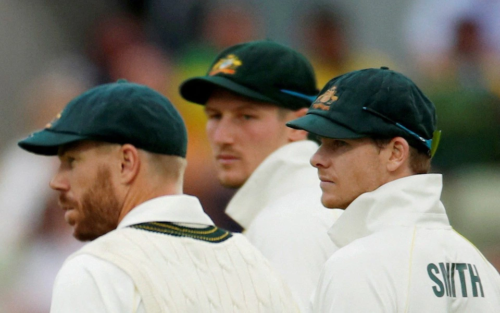
For years, the controversy was largely associated with Bancroft, then captain Steve Smith and vice-captain David Warner. Bancroft’s latest account, however, suggests that the story may have involved a broader level of awareness within the dressing room.
The claim has placed Australian cricket under renewed pressure, with former players, supporters and commentators questioning whether the original investigation uncovered the complete picture.
Bancroft’s allegations remain his account of events, and claims about the knowledge or involvement of other players have not been independently established in the material available.
Bancroft says Pat Cummins’ recent press conference was the decisive moment that convinced him to speak openly about Sandpapergate.
Cummins, who is now Australia’s Test captain, reportedly denied having prior knowledge of the ball-tampering plan. His comments have become a central point of disagreement as former players revisit the incident and offer different accounts of what happened during the 2018 South Africa tour.
Bancroft says he was deeply affected by Cummins’ public statements because they did not match his own recollection of the events.
In his account, the press conference brought back years of frustration and memories of the consequences he faced after the scandal. He said he felt angry, betrayed and alone, believing that the public narrative continued to place responsibility on a small group of players while overlooking what others may have known.
The disagreement has exposed a growing divide within Australian cricket, with the controversy no longer focused solely on the original act of ball tampering. Instead, the debate is increasingly centred on transparency, accountability and whether former players are willing to reveal everything they remember.
Cummins’ position and Bancroft’s allegations have created competing narratives about the scandal. The latest developments are likely to intensify scrutiny of the players who were part of Australia’s touring squad in South Africa.
One of the most striking parts of Bancroft’s latest statement is his admission that he did not provide a complete and truthful account when questioned by Cricket Australia.
The former batter says he withheld information during the investigation, including details about the timing of the sandpaper use, the period over which it allegedly occurred and the awareness of other individuals.
Bancroft claims his decision was motivated by a desire to protect the investigation and avoid implicating people around him. However, he now appears to believe that remaining silent contributed to an incomplete understanding of what happened.
His admission raises questions about the original investigation and the information available to Cricket Australia when it decided the disciplinary cases against the players.
The controversy also highlights the difficulties investigators face when dealing with incidents involving multiple people, particularly when players are reluctant to provide information that could affect teammates or their own professional relationships.
Bancroft’s latest comments could further fuel calls for a clearer account of the events in Cape Town. However, his admission that he previously withheld information also means that his new claims will likely face scrutiny from supporters, critics and cricket authorities.
The central issue remains whether his latest account can establish exactly who knew about the plan, when they became aware of it and whether any additional individuals played a role.
The renewed controversy has gathered momentum following the release of Usman Khawaja’s autobiography, Sabr, which reportedly revisits the events surrounding the 2018 ball-tampering scandal.
Khawaja’s account has brought the issue back into public discussion and challenged the narrative that responsibility was limited to the three players who were punished.
The book reportedly claims that knowledge of the plan extended across the team. These claims have been supported by statements attributed to David Warner and former reserve bowler Chadd Sayers, while Pat Cummins has reportedly rejected the suggestion that he knew about the plan.
The differing accounts have created uncertainty over what happened behind the scenes during the South Africa tour.
For Australian cricket, the controversy is particularly sensitive because the original incident resulted in major disciplinary action, public apologies and significant reputational damage. The scandal became one of the most damaging episodes in modern Australian cricket history, affecting the careers and public standing of the players involved.
Khawaja’s book has now opened a fresh chapter in the debate, with Bancroft’s statement adding further weight to calls for a more complete account.
The disagreement is no longer simply about the use of sandpaper on the ball. It has become a debate about whether the original investigation accurately reflected the knowledge and involvement of everyone connected to the incident.
The Sandpapergate scandal erupted during Australia’s Test match against South Africa in Cape Town in March 2018.
During the match, television footage showed Bancroft using a piece of sandpaper to alter the condition of the ball. The footage quickly circulated internationally, triggering widespread criticism and questions about Australia’s conduct on the field.
The incident was particularly damaging because it involved deliberate interference with the cricket ball, an action that breached the rules and undermined the integrity of the game.
Following the footage, Steve Smith acknowledged that a plan to tamper with the ball had been discussed within the leadership group. David Warner and Bancroft were also implicated, and Cricket Australia launched an investigation into the incident.
The investigation resulted in substantial suspensions for the players at the centre of the controversy. Smith and Warner received 12-month bans, while Bancroft was suspended for nine months.
The sanctions sent a strong message about Cricket Australia’s response to the scandal. The players also faced significant criticism from fans, sponsors and the wider sporting community.
Although the disciplinary action appeared to bring the episode to a conclusion, questions about how widely the plan was known continued to surface over the years.
Bancroft’s latest statement has now reopened those questions, suggesting that the full story may not have been publicly disclosed at the time.
Steve Smith and David Warner were among the most prominent figures affected by the Sandpapergate scandal.
Smith, Australia’s captain at the time, was stripped of his leadership role and suspended for 12 months. Warner also received a 12-month suspension, while Bancroft was banned for nine months.
Warner was widely portrayed as a central figure in the planning of the ball-tampering incident. Smith admitted that the leadership group had discussed the plan, while Bancroft became the player directly caught on camera carrying out the act.
The punishments had a major impact on Australian cricket and the players’ careers. The scandal also raised questions about leadership, team culture and the responsibility of senior players to uphold the rules.
Bancroft now believes the three punished players were left carrying the consequences while other teammates who may have known about the plan remained outside the disciplinary process.
His latest comments are likely to bring renewed attention to the roles played by Smith and Warner, as well as the circumstances surrounding the investigation.
The former opener’s claims do not change the original bans, but they could influence how the episode is remembered and discussed within Australian cricket.
Bancroft has described Sandpapergate as an incident that destroyed his career, highlighting the lasting personal and professional consequences of the controversy.
The nine-month suspension interrupted his career at a crucial stage. The scandal also brought intense media attention, public criticism and pressure that extended well beyond the disciplinary period.
After returning from his ban, Bancroft struggled to regain the same position in Australia’s international cricket setup. According to the report, he played only two additional Test matches following the scandal and subsequently continued his career primarily in domestic cricket.
The incident remains a defining moment in his professional life.
Bancroft’s latest decision to speak openly may be an attempt to address the burden he says he has carried for years. He appears to believe that the public account of the scandal did not fully reflect his experience and that the responsibility was not shared as widely as it should have been.
His comments also underline the long-term impact of major sporting controversies. Even when suspensions have been completed and players return to competition, the consequences can remain part of their professional identity for years.
For Bancroft, the renewed debate is not only about cricketing rules. It is also about trust, responsibility and whether the people involved have been honest about what happened.
Cricket Australia is once again facing pressure as the Sandpapergate debate returns to the headlines.
Chief executive Todd Greenberg has reportedly announced plans for a forum where former players can share their experiences and discuss the events surrounding the scandal.
The proposed forum could provide an opportunity for former players to speak about the incident, clarify their accounts and address questions that have remained unanswered since the original investigation.
The initiative comes at a time when different versions of the events are emerging from former members of the Australian team.
Bancroft’s claims, Khawaja’s account and the responses attributed to other players have created a difficult situation for Cricket Australia. The organisation must deal with the renewed controversy while maintaining confidence in its original disciplinary process.
A forum may encourage discussion and provide an opportunity for players to explain their recollections. However, its success will depend on whether participants are willing to provide clear, detailed and consistent accounts of what happened.
Australian cricket supporters are likely to expect more than general statements. The renewed debate has created an appetite for answers about the original incident, the investigation and the extent of any wider knowledge within the team.
The latest Sandpapergate revelations have reportedly intensified divisions within Australian cricket, with former teammates offering conflicting accounts of events that took place nearly eight years ago.
Bancroft’s decision to challenge Cummins publicly has added another layer to the controversy. It has also raised questions about relationships between players who shared the dressing room during one of Australia’s most difficult cricketing periods.
The disagreement reflects the wider challenges of dealing with a major sporting scandal years after it happened. Players may have different recollections, interpretations and personal experiences, while the consequences of speaking publicly can affect reputations and relationships.
The controversy has also created a difficult position for current and former players who may be asked to respond to allegations about their knowledge of the incident.
For Australian cricket, the timing is significant. The team has spent years attempting to move beyond the scandal and rebuild its reputation. The latest statements have brought the episode back into focus, making it difficult to separate the original incident from the ongoing debate about accountability.
Whether the latest revelations lead to a clearer understanding or further disagreement remains to be seen.
Bancroft’s allegations have significantly changed the tone of the Sandpapergate debate, but the wider claims about team knowledge remain disputed.
His admission that he withheld information during the Cricket Australia investigation is important because it provides a new perspective on how the original inquiry was conducted. At the same time, his latest allegations will need to be examined carefully before conclusions can be drawn about the involvement or knowledge of other players.
The renewed controversy may encourage more former players to speak publicly. It could also lead to further scrutiny of the statements made during and after the 2018 investigation.
Cricket Australia has an opportunity to address the questions raised by the latest developments through its proposed forum. Whether that process will resolve the disagreements or simply expose additional differences remains uncertain.
The Sandpapergate scandal has already had a lasting impact on Australian cricket. Bancroft’s latest account shows that, nearly eight years later, the incident continues to affect the players involved and the wider sporting community.
His claims that the whole team knew about the ball-tampering plan, together with his criticism of Pat Cummins’ denial, have reopened one of cricket’s most controversial chapters.
For now, the central question remains unanswered: Was Sandpapergate truly limited to the three players who were punished, or did the original investigation leave important details undisclosed?
As former players revisit their experiences and Cricket Australia considers how to respond, the controversy is likely to remain a major talking point in Australian cricket.
The latest revelations have ensured that Sandpapergate is far from over.