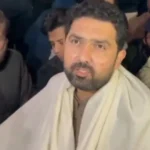


Islamabad(The COW News Digital)Opposition alliance leader Mahmood Khan Achakzai has voiced serious concern over the continued refusal of authorities to allow political leaders and visitors to meet Pakistan Tehreek-e-Insaf (PTI) founder Imran Khan. Speaking to media representatives, Achakzai questioned why access to the incarcerated former prime minister was being restricted and demanded transparency from the government.
“Why is Imran Khan not being allowed to meet people? What has he done that warrants such isolation?” Achakzai asked, stressing that democratic norms require openness, accountability, and respect for constitutional guarantees. He argued that parliamentary supremacy must remain at the center of all political processes, reiterating that only the parliament elected by 250 million Pakistanis has the mandate to make national decisions.
Read More:
- Asia Cup 2025 Super Four Tickets at Shocking Prices
- Trump Threatens Kabul Over Bagram Airbase Control
- US Slams Palestine Recognition as Empty Symbolism
Achakzai appealed directly to citizens, urging them to stand up for the constitution. Calling for nationwide civic engagement, he said, “I request the people of Pakistan—come out with us. We must raise our voice in this parliament.” He noted that constitutional rights, political fairness, and institutional balance must be protected if the country is to move toward stability.
PTI leader Asad Qaiser, who accompanied the opposition bloc, echoed Achakzai’s concerns. He said that the people of Haripur were deprived of their electoral rights, alleging that the mandate of voters had been “stolen.” Addressing the legal community, Qaiser questioned whether the current environment reflected the true respect owed to Pakistan’s constitution.
He urged all political parties to set aside personal ego for the sake of national unity, emphasizing that political polarization was weakening democratic institutions. Qaiser highlighted that Pakistan’s largest tribal jirga was held in Peshawar, yet its resolution—intended to promote political reconciliation and constitutional adherence—was largely ignored by authorities.
The opposition leaders’ statements have injected renewed momentum into debates surrounding political access, prisoners’ rights, and the transparency of the country’s judicial and electoral processes. Their remarks come amid deepening political tensions, with PTI continuing to allege widespread interference and suppression of both its leadership and supporters.
Achakzai’s call for citizens to mobilize in defense of constitutional order underscores the opposition’s broader strategy of challenging what it views as institutional overreach. As public pressure grows, observers note that the government will face increasing demands to justify its restrictions and ensure that fundamental rights— including access to detainees—are upheld.
The situation adds yet another layer to Pakistan’s already polarized political landscape, with opposition forces preparing to intensify their campaign both inside and outside parliament.