
“I need you in Pakistan. Come and help us with the election campaign.” This was the message that Madam Benazir Bhutto sent to me in November 2007, in response to my invitation for her to meet me during my Central Asia visit.
In December 2007, my daughter Saba Shiraz had come from London to meet me in Kazakhstan, where I was teaching journalism at a Western university. I told Saba that Benazir Bhutto had summoned me. Though Saba was very young, she said, “Papa, you should go to Pakistan.” I replied, “Okay, we’ll go and work with Madam Benazir Bhutto.” As our holidays were about to begin, I wrote to the university that I might not return.
There were no direct flights from where I was to Pakistan, but we learned that a chartered flight was heading to Pakistan on December 27, 2007. Saba and I decided to travel on it. We departed in the afternoon and arrived in Islamabad around 6 p.m. The airport was a scene of indescribable chaos. Soon, we realized what catastrophe had struck.
Even reaching home, I could not regain my composure. Madam Bhutto’s assassination left me deeply disappointed in Pakistan, much like the shock I felt on April 4, 1979, after the execution of Zulfikar Ali Bhutto. How could any nation justify such heinous acts against its benefactors? The tragedy also affected Saba deeply. After about three weeks in Pakistan, we returned to England.
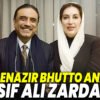
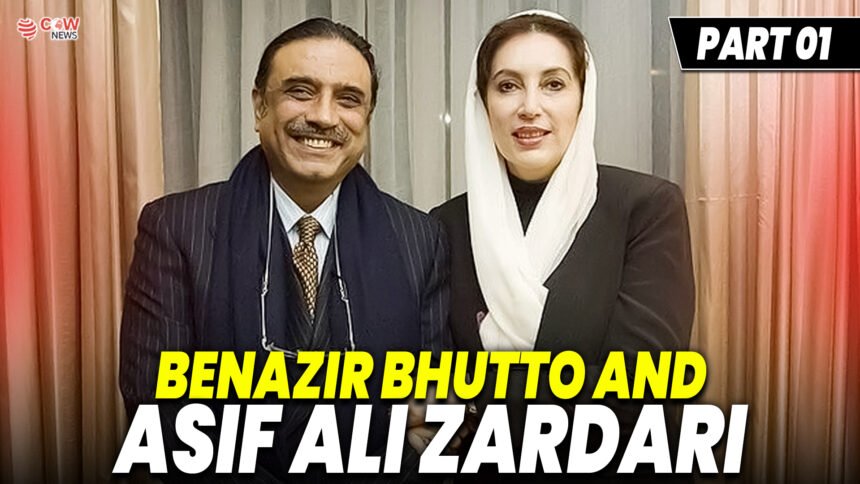
Eighteen years have passed since Madam Benazir Bhutto’s assassination, yet the wounds remain fresh. Her killers have not been apprehended, and some cruel elements even tried to blame Asif Ali Zardari, her companion, for her murder. On the anniversary of her death, I am writing about Benazir Bhutto and Asif Ali Zardari. This piece may span several installments. My focus will be on understanding why so many people in Pakistan dislike Asif Ali Zardari, and why he is often perceived as a villain without knowing him personally. But before delving into this analysis, I want to share my introduction to Madam Bhutto and my first encounter with Mr. Zardari through her.
My relationship with Madam Benazir Bhutto was built on respect. On April 10, 1986, when she returned to Pakistan after exile, like millions of others, I witnessed her historic reception. I remember on the way to Lahore, we protested against Yousaf Raza Gillani, who at the time was Federal Railway Minister in Prime Minister Mohammad Khan Junejo’s cabinet. Since we considered him part of General Zia’s team, we disembarked from the train at a station and shouted slogans against Gillani and Zia’s regime.
My first personal meeting with Madam Bhutto was on April 21, 1986, in Islamabad. At that time, I was a university student. Meeting her was considered a great honor, as even many senior leaders of the PPP did not get personal access to her.
By mid-1986, I had started my journalistic career with Daily Jang and joined its Peshawar office. I immediately began efforts to interview Madam Bhutto, which for a young and inexperienced reporter in Peshawar seemed like a dream. The environment was hostile—under General Zia, Urdu newspapers were largely controlled by pro-Jamaat-e-Islami journalists. These individuals viewed Madam Bhutto as a young, beautiful, and isolated woman who posed a threat to the military regime and its jihadist projects in Pakistan and Afghanistan.
Despite these challenges, with the help of Naheed Khan, I managed to secure her first interview for Daily Jang, which might have been her first for any Urdu newspaper. This exclusive became a major journalistic scoop and established a personal connection with Madam Bhutto that lasted until her final days.
Now coming to Asif Ali Zardari. As mentioned earlier, for a young, unmarried woman like Madam Bhutto, navigating politics in General Zia’s Pakistan—against dominant forces that had executed her father Zulfikar Ali Bhutto—was extremely difficult. Various PPP leaders were considered potential companions for her, including Makhdoom Khaliq-uz-Zaman from Sindh and Faisal Saleh Hayat from Punjab, with even some speculating on Maulana Fazlur Rehman.
Madam Bhutto’s unmarried status had been used as a political weapon by opponents. The public assumed that a Western-educated and modern-minded woman like her would choose a progressive, enlightened partner of her own choice. However, supporters were shocked when they learned that she had married a relatively obscure man, Asif Ali Zardari—a decision endorsed by her mother, Begum Nusrat Bhutto.
The announcement and subsequent public appearances of Mr. Zardari astonished both opponents and PPP supporters. Many party activists considered him too ordinary and unsuitable for the “princess-like” Benazir Bhutto. Simultaneously, the Zia regime began spreading false narratives about Zardari’s character and past. From the very beginning, Zardari faced strong opposition and resistance from within the PPP as well as external elements.
(To be continued )