
Within just a few weeks of the PPP government taking office, the remnants of General Zia’s regime began working to realize their unfinished dream of turning Afghanistan into a de facto province of Pakistan. In 1989, despite the Prime Minister’s objections, ISI Chief General Hamid Gul launched covert adventures in Afghanistan and another region that inflicted severe damage on Pakistan.
In January 1989, when General Hamid Gul formally presented a plan for an attack on Jalalabad to the Prime Minister and claimed its imminent success, Benazir Bhutto opposed the plan and forbade it. Nevertheless, Chief of Army Staff General Aslam Beg and General Hamid Gul were deeply invested in the Jalalabad operation.
In March 1989, General Hamid Gul attempted to seize Jalalabad with the support of rebellious Afghan General Shah Nawaz Tanai, who was serving as the Defense Minister under Afghan President Dr. Najibullah. The Afghan army, led by Dr. Najibullah, successfully thwarted the attack, subjecting Pakistan to humiliation.
Prime Minister Benazir Bhutto, deeply frustrated with General Hamid Gul’s rogue jihadi projects and his hostility toward democracy and public welfare, seized the opportunity after Jalalabad’s failure. In May 1989, she removed General Hamid Gul from his position as Director General of the ISI. The humiliation suffered at Jalalabad rendered General Aslam Beg powerless to prevent this change. To my recollection, Hamid Gul was then reassigned as Corps Commander in Multan.
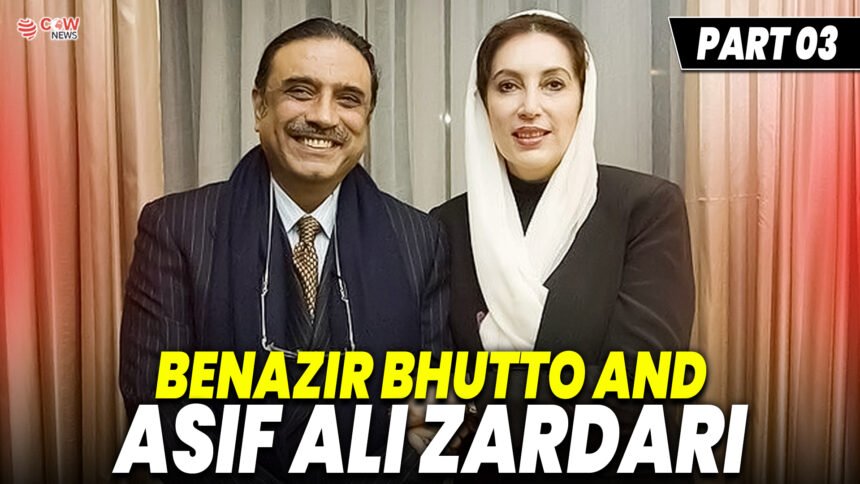
Hamid Gul’s removal from the ISI, Benazir Bhutto’s efforts to establish diplomatic relations with India, and her attempt to forge a new progressive image of Pakistan on the world stage became unforgivable “crimes” in the eyes of certain powerful elements. A plan was hatched to punish her, first by attempting to manipulate Asif Ali Zardari through bribery against his wife. However, Zardari remained the Prime Minister’s shield, prompting those plotting against Bhutto to target him first, assuming he was her weakness.
Suddenly, journalists like Kamran Khan and Saleh Zafar, among dozens of others, began spreading fabricated stories about Zardari enjoying lavish privileges. Mujeeb-ur-Rehman Shami was reportedly present when the nickname “Mr. Ten Percent” was coined for Asif Ali Zardari, which then became widely circulated. Zardari was labeled a king of corruption, with false stories about his graft piled sky-high. His habit of remaining silent and not addressing allegations reinforced these lies. Thus, a man born into wealth, with a silver spoon in his mouth, became depicted as a greedy, avaricious, unseen, money-hungry, thieving, and utterly corrupt person—simply because he was protecting Benazir Bhutto.
Despite being a liberal and champion of women’s rights, Madam Bhutto loved her husband like any devoted Eastern woman. Throughout her life, she gave her heart to no one else. Her enemies never managed to create even a shadow of scandal regarding Zardari because her first love was always her public political mission and the legacy of her father, Zulfikar Ali Bhutto. In her personal life, her world revolved around Asif Ali Zardari and their children. I was in Islamabad during those years and recall the typical stories of jealousy circulated about Madam Bhutto’s attachment to Zardari. Female journalists and diplomats were closely watched, especially if they were suspected of having an interest in Zardari.
The PPP government was not angelic, but corruption had already existed at every level even before its rise to power. For instance, at that time, I worked in the Ministry of Narcotics Control in Islamabad (formerly Pakistan Narcotics Control Board), where most officials were part of the drug mafia. American and other Western diplomats had been tracing this network since the days of the Afghan jihad because the jihad had been funded, in part, by drug money.
Once, after spending several weeks in Karachi and visiting tribal areas, I prepared an investigative report on Pakistan’s drug mafia. It outlined the involvement of the military, intelligence agencies, police, bureaucracy, politicians, and foreign diplomats, though only at an initial level. When I submitted this report to my minister, what followed is a story for another article.
In October and November 1989—just eleven months into the PPP government—a new front was opened against the Prime Minister in the form of a no-confidence movement. Generals Aslam Beg and Hamid Gul initiated Operation Midnight Jackal, employing ISI officers such as Brigadier Imtiaz, known as “Billa,” and Major Amir, who were jihadist officers.
I was recently surprised to learn that many respected journalists and politicians attended the wedding of Major (Retired) Amir’s daughter at his lavish farmhouse along the Indus River in Sawabi. Alarmingly, the Governor of Khyber Pakhtunkhwa from the PPP, Faisal Karim Kundi, also attended—despite allegations that Major Amir had conspired against their party leader. Although Kundi is a non-ideological and practical politician, the event highlights the enduring influence of Major Amir and his brother. Their reach was such that figures ranging from General Ashfaq Parvez Kayani to Hamid Mir and Najam Sethi attended without questioning the source of the family’s wealth, power, and influence.
Prior to the no-confidence motion, Punjab Chief Minister Nawaz Sharif orchestrated horse-trading among assembly members. This marked the beginning of political horse-trading in Pakistan. Allegedly, financial support from Osama bin Laden was also used to buy votes to remove the Bhutto government.
In November 1989, the no-confidence motion against the Prime Minister was tabled but failed. It was a severe blow to Ghulam Ishaq Khan and Aslam Beg, who realized that the very person who had undermined their schemes was Asif Ali Zardari. His political acumen and negotiation skills had turned the tide. This also marked the beginning of a strong friendship between Maulana Fazlur Rehman and Zardari. Zardari worked quietly in the background, ensuring his wife’s government survived a lethal attack from extremely powerful actors.
This no-confidence attempt also taught Zardari that confronting wealthy capitalists like Nawaz Sharif—and other corrupt elements who entered Pakistani politics through the non-party 1985 elections—could not be done solely through PPP’s grassroots, humble, and loyal workers. By 1986, following Benazir Bhutto’s return to Pakistan, many wealthy and traditional families had joined the PPP. At Zardari’s insistence, the party opened its doors to anyone with money who could contest elections under the banner of wealth and influence.
To be continued