
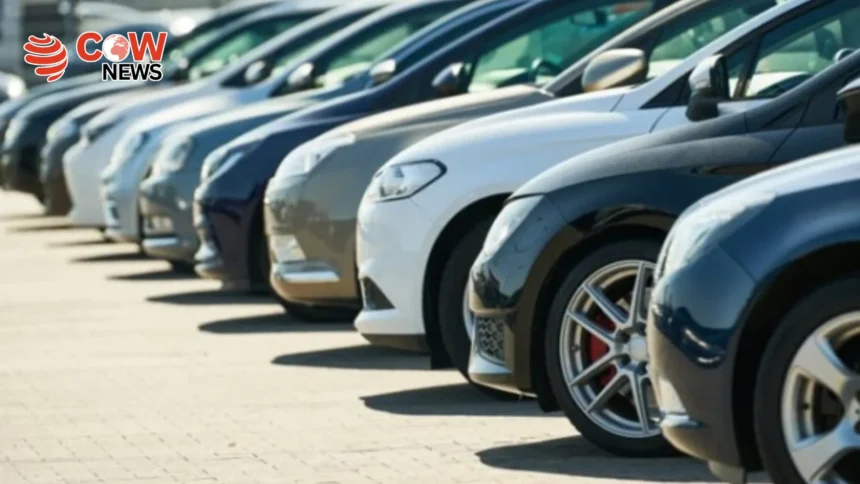
Islamabad( The COW News Digital) The government has announced strict measures on imported cars in a bid to protect Pakistan’s struggling local auto industry. The new steps include a complete ban on the import of accident-damaged vehicles and a 40% additional tax on the commercial import of used cars.
The announcement was made by Joint Secretary of the Ministry of Commerce, Muhammad Ashfaq, during a joint session of the Senate Standing Committees on Finance and Industry. He stated that the measures would come into effect from next month as part of commitments made under the International Monetary Fund (IMF) program, aimed at granting “40% additional protection” to local manufacturers.
Currently, Pakistan does not allow commercial imports of cars, and vehicles are mostly brought in through transfer of residence, baggage, and gift schemes. These imports account for nearly one-fourth of the country’s auto market, as consumers often prefer lightly accidented foreign cars over locally assembled vehicles.
Under IMF conditions, Pakistan is required to gradually liberalize the import market. Starting in September, five-year-old cars will be allowed for commercial import, with all age and other restrictions lifted by July next year. Over the following four years, the 40% tax will be phased out to zero, while imports of six- to eight-year-old vehicles will also be permitted.
Ashfaq added that Pakistan must reduce its average import duties on vehicles from 20.2% to 9.7% within the next five years, under IMF reforms.
However, the move has sparked pushback from the Pakistan Automotive Manufacturers Association (PAMA) and the Pakistan Association of Automotive Parts & Accessories Manufacturers (PAAPAM), who argued that the policy undermines local production.
Ali Asghar Jamali, CEO of Indus Motors, told the committee that excessive government taxes—ranging from 30% to 61%—were a major factor behind rising car prices. He admitted that locally produced cars remain expensive and often lack quality, a point that drew strong criticism from lawmakers. Jamali emphasized that job creation is the government’s responsibility, not the private sector’s, warning that current policies would make importing used cars far more profitable than domestic manufacturing.
Representatives from Pak Suzuki echoed similar concerns, highlighting that local car production is costly and labor-intensive compared to imports. They cautioned that despite opening up imports, consumers may not see any immediate price relief, as the policies appear focused more on safeguarding local industry interests than reducing costs for buyers.