

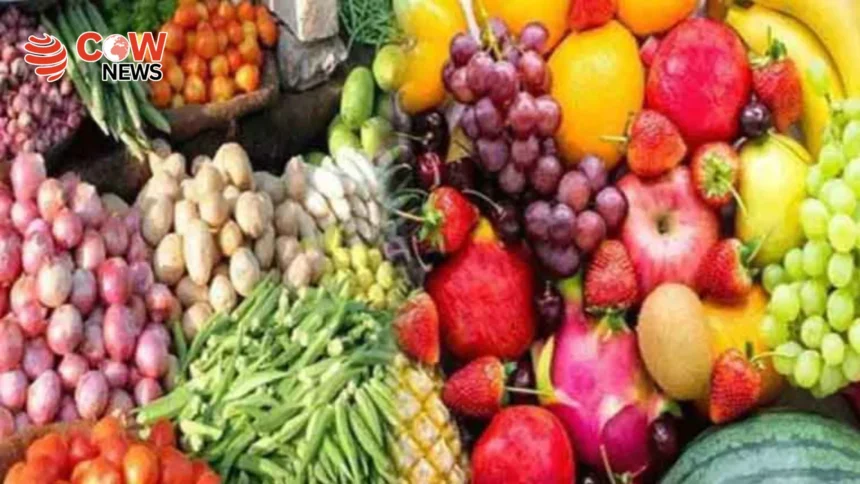
LAHORE(The COW News Digital) A recent increase in petroleum product prices has triggered a sharp rise in the cost of essential food items across markets in Lahore, leaving consumers struggling with yet another wave of inflation.
Soon after the fuel price adjustment, retail markets in various parts of the city witnessed what residents described as an “inflation storm.” Vendors in several neighborhood bazaars reportedly raised the prices of vegetables and fruits beyond officially issued rate lists. The gap between prices in upscale localities and those in inner-city areas has also become more pronounced.
Onion prices have climbed to Rs90 per kilogram, while tomatoes are being sold at Rs120 per kilogram. Garlic has surged to Rs680, and ginger is available at Rs460 per kilogram. Chinese lemons are priced at Rs120, and green chilies have reached Rs200 per kilogram.
Read More:
- Trump Warns Iran, Says Response Does Not Mean Troop Deployment
- US Navy Seizes Russian Vessel Evading Venezuela Blockade
- Trump Hopes Iran Talks Succeed, Warns Against Midnight Hammer
Among seasonal vegetables, spinach is selling for Rs60 per kilogram, cabbage for Rs80, cauliflower for Rs70, and turnips for Rs50. Potatoes are available at Rs40 per kilogram, while cucumbers are priced at Rs70. Eggplant has jumped to Rs160, okra to Rs350, and capsicum to Rs200 per kilogram. Other items such as peas, radish, fenugreek, and bottle gourd have also seen noticeable increases.
Fruit prices have risen sharply ahead of the holy month of Ramadan. Bananas (Grade A) are being sold at Rs250 per dozen, while kinnow has reached Rs420 per dozen. Apples, depending on variety and origin, are priced between Rs370 and Rs575 per kilogram. Guava is available at Rs200, papaya at Rs560, and pomegranate at as high as Rs850 per kilogram.
Consumers say the pattern repeats whenever petrol or diesel prices go up, with transportation costs cited as the main justification for immediate hikes in food prices. However, many residents argue that the increases often exceed the actual impact of fuel adjustments and are driven by opportunistic pricing.
Market observers note that weak enforcement of official price lists allows retailers to set rates independently, particularly during periods of high demand. With Ramadan approaching, citizens fear further increases in the coming weeks unless authorities intensify monitoring and ensure compliance with government-notified prices.