
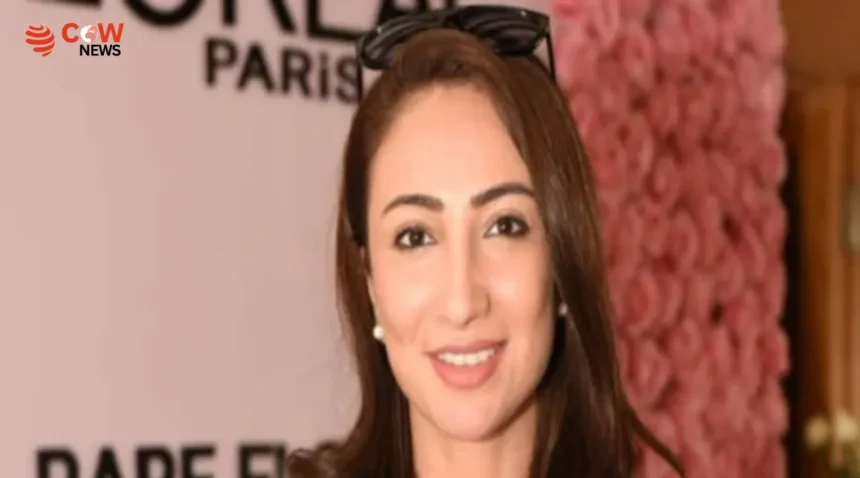
Islamabad (The COW News Digital)Pakistani television host and media personality Anoushey Ashraf has shared a personal account of the social pressure she experienced while remaining unmarried, revealing how her parents encouraged her to make decisions about marriage according to her own happiness and comfort.
During a recent appearance on a private television channel, Ashraf discussed the questions, comments and expectations she faced from people as she approached the age of 40 without getting married. Her experience highlighted the societal pressure many women encounter when they choose to delay marriage or remain single.
Ashraf recalled an emotional incident involving a woman who approached her, held her and began crying while praying for her to get married soon. The unexpected reaction left Ashraf reflecting on the importance society places on marriage, particularly for women who have reached a certain age.
Responding to the woman, Ashraf explained that she was educated, professionally employed, financially independent and satisfied with her life. She questioned why remaining unmarried should be considered a reason for concern when a person is capable of supporting herself and living happily.
Her response reflected her belief that marriage should be a personal decision rather than a social obligation. She suggested that a woman’s achievements, independence and personal satisfaction should not be judged solely by her marital status.
The television host also spoke about the different perspectives her parents had shared with her while she was growing up. According to Ashraf, her father consistently supported her decisions, providing encouragement as she navigated personal and professional choices.
Her mother, meanwhile, offered advice that emphasised the importance of choosing a suitable partner rather than marrying under pressure. Ashraf recalled that her mother had told her never to marry someone she did not genuinely like or consider appropriate for herself.
Her mother’s message was straightforward: if a suitable partner could not be found, remaining unmarried and happy was preferable to entering a marriage through compromise or external pressure.
The advice underscored the importance of compatibility, personal choice and emotional well-being in relationships. It also challenged the traditional expectation that marriage must take priority over an individual’s comfort and happiness.
Ashraf’s account has brought renewed attention to the social expectations surrounding marriage in Pakistan, where unmarried women often face questions from relatives, acquaintances and even strangers about when they intend to settle down.
Although marriage remains an important milestone for many families, Ashraf’s experience illustrates the challenges faced by individuals whose personal timelines differ from conventional expectations. Her remarks also highlight the value of family support in helping people make decisions that align with their circumstances and aspirations.
Despite sharing her mother’s advice about remaining single when the right partner was unavailable, Ashraf eventually married in April 2026. According to the report, the wedding took place in Istanbul, Türkiye.
Her journey offers a reminder that personal choices can evolve over time and that delaying marriage does not necessarily mean rejecting it altogether. Instead, her story emphasises the importance of making such decisions willingly, without allowing societal expectations to dictate one’s happiness.