


Gaza (The COW News Digital) More than 99 per cent of the Gaza Strip has been affected by at least one source of toxic pollution linked to Israeli military operations, according to a joint report by international charity Oxfam and the UK-based Conflict and Environment Observatory.
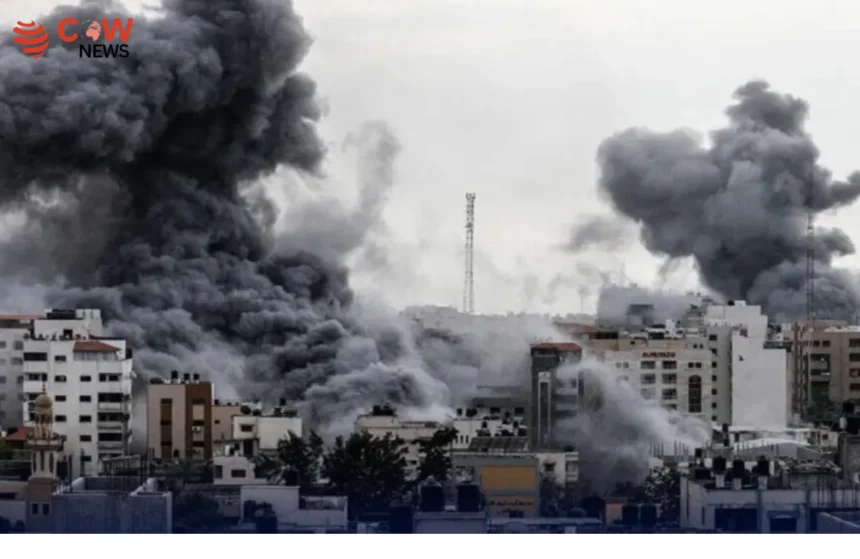
The report, titled Environmental War Crimes, highlights the growing environmental crisis in Gaza, warning that the destruction of buildings, unexploded ordnance, damaged sewage infrastructure and makeshift waste dumps have created widespread contamination.
Researchers used satellite imagery and open-source data to assess the environmental damage across the territory. Their findings indicate that Gaza is now facing serious pollution risks that could have long-term consequences for public health and the natural environment.
According to the report, approximately 61 million tonnes of rubble have accumulated across Gaza, equivalent to around 29 tonnes for every resident. The amount is estimated to be nearly eight times greater than the rubble recorded in Mosul in 2017.
The report warns that workers involved in clearing damaged buildings could be exposed to hazardous substances, including asbestos and silica. Exposure to these materials can cause serious health problems, with some effects potentially emerging years after contact.
The destruction of water and sanitation infrastructure has further intensified the crisis. All six of Gaza’s water treatment plants have reportedly been destroyed, resulting in an estimated 40,000 cubic metres of untreated sewage flowing into the Mediterranean Sea every day.
This discharge poses potential threats to marine ecosystems, water resources and public health, particularly in communities already facing severe humanitarian challenges.
Water contamination is another major concern. Tests conducted in July reportedly detected waste-related bacteria in 19 per cent of wells, compared with just two per cent in 2021.
The findings suggest a substantial deterioration in water quality, raising concerns about the spread of waterborne diseases and the risks facing residents who depend on contaminated water sources.
Lama Abdulsamad, one of the report’s authors, told the BBC that Palestinians could face serious health consequences both now and in the years ahead.
She warned of potential increases in respiratory illnesses, cancer, organ damage, birth defects and stillbirths as a result of prolonged exposure to environmental hazards.
Oxfam Executive Director Amitabh Behar also warned that the environmental destruction could have severe consequences for public health. He highlighted children and pregnant women as particularly vulnerable groups.
The report stresses that the consequences of environmental contamination may extend far beyond the immediate aftermath of the conflict. Hazardous materials, polluted water and damaged sanitation systems could continue affecting communities long after military operations have ended.
The scale of the damage also presents a major challenge for any future reconstruction effort. Clearing millions of tonnes of rubble safely, restoring water treatment facilities and repairing sewage networks will require extensive resources and specialist expertise.
The findings underline the importance of addressing environmental contamination alongside humanitarian relief and reconstruction efforts, as Gaza faces the prospect of a prolonged public health and environmental crisis.