
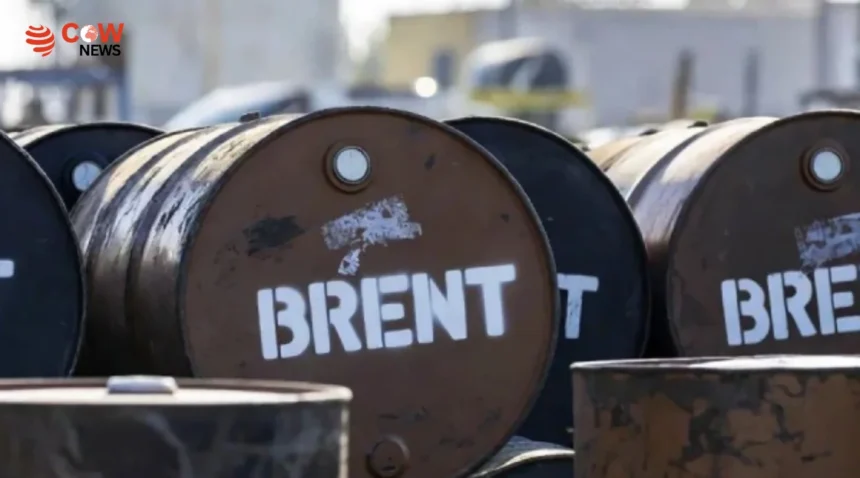
LONDON(The COW News Digital) Global oil prices climbed sharply after US President Donald Trump rejected an Iranian proposal linked to reopening the Strait of Hormuz, reviving concerns among investors about potential disruptions to crude supplies from the Middle East.
During Asian trading, Brent crude rose 3.1% to $107.51 a barrel, while US West Texas Intermediate (WTI) gained 2.1% to $94.32 per barrel, according to the market figures reported in the source material.
The price increase came after Iran proposed reopening the strategically important Strait of Hormuz within seven days under conditions that included a reduction in US military pressure and the lifting of restrictions on Iranian ports. A senior Iranian official previously told Reuters that Tehran was prepared to reopen the waterway if those conditions were met.
The Strait of Hormuz is one of the world’s most important energy transit routes. Any prolonged disruption to shipping through the waterway could affect crude and refined-product supplies and increase uncertainty across global energy markets.
The latest movement in oil prices reflects renewed market concerns that diplomatic efforts may not immediately produce an agreement capable of restoring stable energy flows through the region. Earlier signs of increased oil movement through the strait had helped ease some supply concerns.
Reuters reported last week that oil prices had been influenced by changing expectations over US-Iran diplomacy, while increased flows through Hormuz and the restart of Saudi Arabia’s East-West pipeline had provided some relief to markets.
Saudi Arabia’s East-West pipeline is particularly important because it provides an alternative route for moving crude toward the Red Sea, reducing reliance on the Strait of Hormuz. Reuters reported that the pipeline had resumed operations after being disrupted by a drone attack, although restoring full capacity was expected to take additional time.
The market remains highly sensitive to developments surrounding the conflict and diplomatic contacts between Washington and Tehran. Any indication of progress toward a ceasefire or an agreement allowing more oil to move through the region could influence prices, while renewed military tensions or restrictions on shipping could add further supply concerns.
Iran’s proposal had earlier raised expectations that maritime traffic through Hormuz could gradually return to more normal levels. Reuters reported that Tehran had communicated its proposal through intermediaries and that its delegation attending the United Nations General Assembly had authority to pursue diplomatic discussions with Washington.
However, the continued disagreement between the two sides has kept investors focused on the possibility of further disruptions. The situation is particularly significant for global energy markets because Hormuz handles a substantial share of international oil and liquefied natural gas shipments.
Higher crude prices could also increase costs across the wider economy. Sustained increases in energy prices can raise transportation and production expenses, potentially adding to inflationary pressures in countries that depend heavily on imported fuel.
For now, oil markets remain closely tied to developments around the Strait of Hormuz, US-Iran diplomacy and the security of Middle Eastern energy infrastructure. Traders are expected to continue monitoring diplomatic announcements and shipping activity for signs of whether supply risks are easing or intensifying.