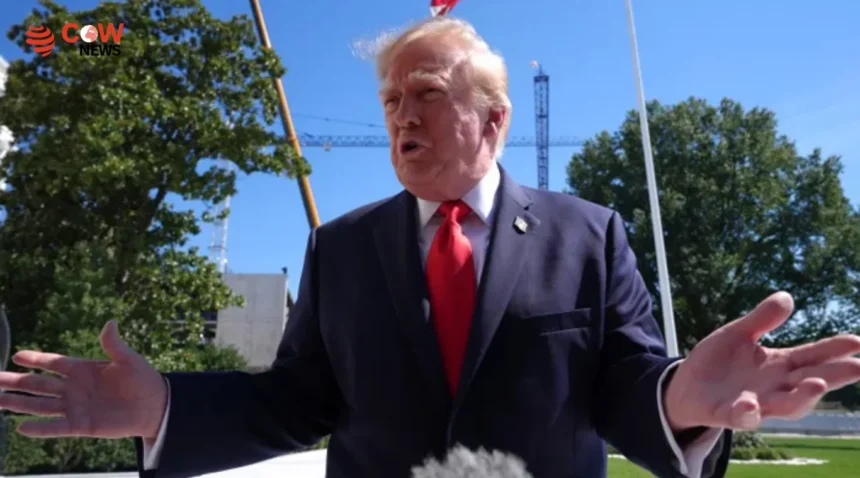
washington(The COW News Digitl): US President Donald Trump has announced that he will not approve any proposal to impose a ban on diesel exports, signaling that Washington intends to maintain fuel supplies amid growing concerns over energy availability and rising prices in international markets.
Trump’s announcement came after G7 countries agreed to provide 100 million barrels of diesel and crude oil from their supplies over the next four months. The move is aimed at easing pressure on global energy markets and ensuring that adequate fuel remains available during a period of heightened uncertainty.
The US president had earlier warned European countries that Washington could halt diesel supplies to them if they failed to release fuel from their strategic reserves. His latest statement appears to ease those concerns, at least for now, as countries work to increase the availability of diesel and crude oil in the international market.
Energy prices have been under significant pressure, with disruptions to global supply chains and concerns Washiover future availability contributing to higher fuel costs in several countries. Diesel remains particularly important for transportation, logistics, agriculture and industrial activity, making any major disruption to its supply a potential threat to economic activity.
The decision by G7 countries to release or supply 100 million barrels of diesel and crude oil over the coming four months is expected to provide additional supplies to the market. The move could help address short-term shortages and reduce some of the pressure created by rising demand and limited availability.
The situation has also had a direct impact on consumers in Europe. Diesel prices in the United Kingdom have reportedly reached a record level of £2 per litre for the first time, highlighting the growing impact of international energy market pressures on household and transportation costs.
The rise in diesel prices is particularly significant because the fuel plays a central role in the movement of goods across Europe. Higher diesel costs can increase transportation expenses, which may eventually affect the prices of food, manufactured products and other essential goods.
Trump’s refusal to approve a diesel export ban is therefore being closely watched by energy markets and European consumers. A restriction on US diesel exports could have placed additional pressure on international supplies, particularly if other producers were unable to compensate for the potential shortfall.
However, the additional supplies pledged by G7 countries could help stabilize the market in the short term. Market conditions will continue to depend on production levels, consumption, strategic reserve policies and geopolitical developments affecting global energy supplies.
For now, Trump’s announcement indicates that the United States will not move toward restricting diesel exports, while the G7 supply commitment provides a parallel effort to strengthen fuel availability over the next four months. The developments are expected to remain a key focus for global energy markets as governments seek to prevent further disruption and manage rising fuel costs.