
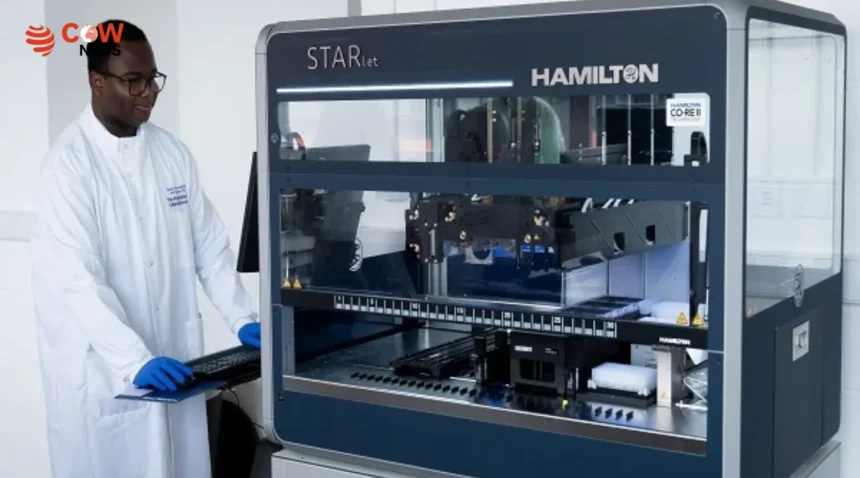
London (The COW News Digital) The United Kingdom has launched an advanced cancer genomics laboratory aimed at improving diagnosis and treatment by tailoring medical care to the individual needs of patients. The initiative is expected to help clinical teams make more informed decisions by combining detailed patient information with modern diagnostic technologies and artificial intelligence.
The Royal Marsden Centre for Cancer Genomics is introducing a testing approach known as composite biomarker testing, described as the first of its kind in the UK. The facility aims to strengthen cancer care across the National Health Service (NHS) by providing doctors and patients with more comprehensive information to guide treatment decisions.
The new approach combines extensive information about patients and their specific tumours with artificial intelligence to develop a more detailed understanding of each cancer case. By examining relevant biological and clinical information, specialists can better assess the characteristics of a tumour and identify potential treatment options suited to an individual’s circumstances.
The initiative reflects growing efforts to move cancer care towards personalised medicine, in which treatment decisions are increasingly guided by the biological features of a patient’s disease rather than relying solely on standard treatment approaches.
According to the project’s objectives, the additional information could help NHS medical teams identify suitable clinical research trials for patients, recommend treatments based on individual needs and explore innovative approaches to ongoing care. These options may be particularly important for patients whose conditions change over time and require their treatment plans to be reassessed.
The facility is also expected to support closer links between diagnostic testing, clinical decision-making and cancer research. More detailed tumour analysis could help specialists evaluate available therapies and consider whether patients may benefit from emerging treatments being investigated through research programmes.
Speaking to the Press Association, Michael Hubenik, scientific director of clinical genomics at The Royal Marsden and professor of translational genomics at the Institute of Cancer Research in London, highlighted the importance of looking ahead to the next generation of cancer diagnostics and treatments.
Hubenik said his team was continually examining what advances could emerge in cancer diagnosis and treatment over the next three to five years. The work focuses on understanding how new technologies and scientific discoveries could improve the way cancer is identified, assessed and managed.
The development comes amid growing international interest in genomic medicine and the use of artificial intelligence in healthcare. Researchers and clinicians are increasingly exploring how advanced analysis of tumour characteristics can support more precise decisions, improve the selection of treatments and help patients access relevant research opportunities.
However, the benefits of such approaches depend on the quality of available data, clinical validation and the ability of healthcare services to translate scientific findings into practical treatment decisions.
By establishing a dedicated centre for advanced cancer genomics, the UK aims to strengthen its capacity for personalised cancer care and support the development of diagnostic methods that respond to the changing needs of patients. The initiative highlights the continuing role of genomic research and emerging technologies in shaping the future of cancer treatment within the NHS.