

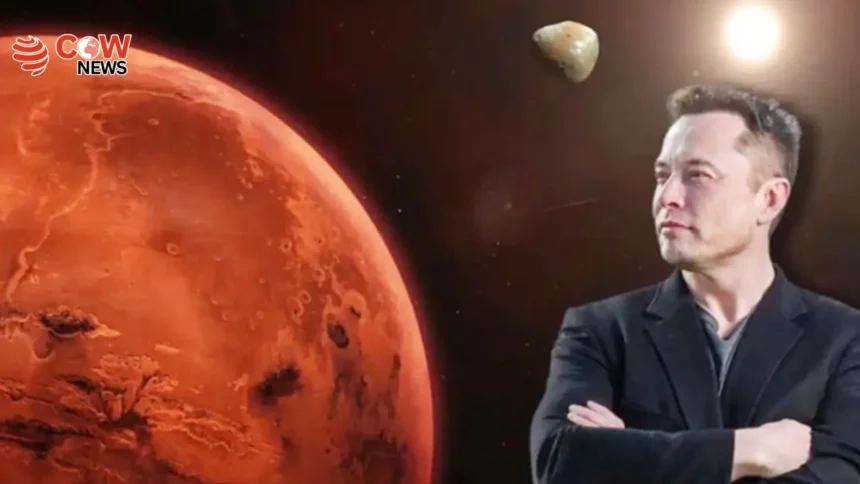
Elon Musk could be entitled to a massive incentive package of up to 200 million special voting shares if his company reaches a valuation of $7.5 trillion and establishes a permanent population of at least one million people on Mars, according to reported information.
The proposed structure is tied to long-term performance and ambitious milestones that extend far beyond Earth-based business growth. Under the terms being discussed, Musk would retain significant influence over corporate decision-making due to the nature of the company’s existing share structure, even before any additional incentives are awarded.
At the time of a potential initial public offering, the company’s valuation is being projected at approximately $1.75 trillion, reflecting expectations of rapid expansion in artificial intelligence, space technology, and advanced computing sectors.
Reports also suggest that further incentives could be granted if the company successfully establishes space-based data centers, enabling large-scale computing infrastructure beyond Earth. Such a development would mark a significant shift in global technology architecture, though experts caution that the feasibility of such projects remains uncertain.
Musk has long advocated for human settlement on Mars, repeatedly describing it as a necessary step for ensuring the long-term survival of humanity. He has previously outlined concepts involving a fleet of up to 1,000 spacecraft designed to transport large populations to the red planet over time.
However, space analysts and scientists widely regard these goals as extremely complex and technologically challenging. They emphasize that sustaining a self-sufficient human colony on Mars would require breakthroughs in life support systems, radiation protection, and long-term habitat sustainability.
NASA, the United States’ space agency, has indicated that the first human landing on Mars is currently expected in the late 2030s or later. Early missions would likely involve small crews conducting short-term exploratory and scientific operations rather than permanent settlement.
Musk himself has acknowledged the extreme difficulty and risks associated with life on Mars, noting that conditions would be harsh, survival uncertain, and return to Earth not guaranteed for early explorers. Despite these challenges, he continues to describe Mars colonization as a historic milestone for humanity’s future expansion into space.
If realized, the combination of corporate expansion and interplanetary settlement would represent one of the most ambitious technological and economic undertakings in modern history.