ISLAMABAD(The COW News Digital) Pakistan Peoples Party (PPP) Chairman Bilawal Bhutto Zardari has urged the federal government and opposition to resume negotiations, stressing that political differences must be set aside to address rising terrorism and security challenges in Khyber Pakhtunkhwa.
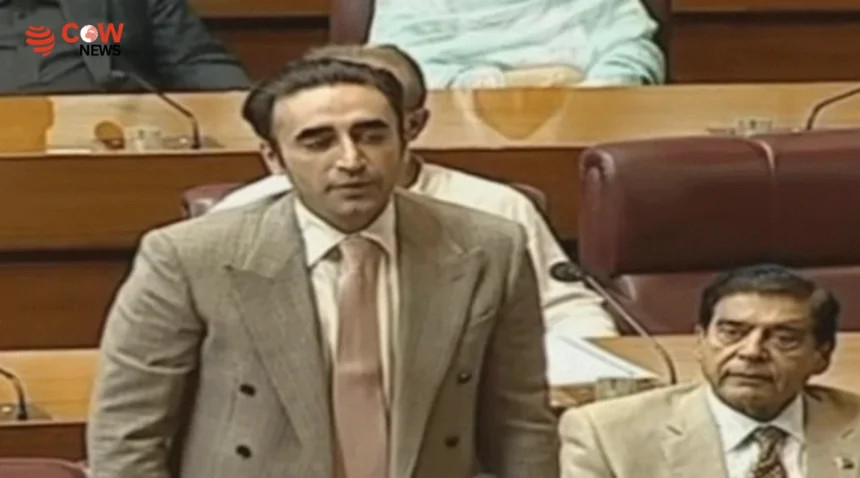
Speaking during a National Assembly debate on the proposed imposition of emergency in the province, Bilawal said dialogue remained necessary despite disagreements between the government and opposition over the constitutional measure.
He said the opposition had the right to oppose the decision but should also accept responsibility for addressing the province’s deteriorating security situation. Bilawal argued that political leadership on all sides needed to work together to confront terrorism rather than engage in mutual accusations.
“The government should extend its hand once again for negotiations,” he said, urging opposition parties to return to the negotiating table and explore a middle ground.
Bilawal indicated that his party intended to support the federal government’s position on the emergency measure, describing the decision as a constitutional step taken under difficult circumstances.
He said the president had considered negotiations before exercising the relevant constitutional powers and that efforts had been made to reach an agreement with the opposition before proceeding.
According to Bilawal, discussions had shown signs of progress, with the possibility that opposition representatives might accept certain measures relating to areas affected by terrorism. However, those efforts did not produce a lasting agreement.
He maintained that the emergency should not be treated as a permanent arrangement and emphasised that Pakistan’s security challenges required a collective political response.
Bilawal also criticised the provincial leadership, arguing that political disagreements should not prevent cooperation with the federal government on counterterrorism.
During the debate, Federal Law Minister Azam Nazeer Tarar defended the government’s decision, saying the deteriorating security situation, cross-border infiltration and internal political instability had raised serious national security concerns.
He told lawmakers that the government had considered the matter extensively before moving forward with the emergency proposal.
Tarar claimed that more than 3,700 terrorist incidents had occurred during 2026, underscoring the scale of the security challenge. He also referred to negotiations held between government and opposition representatives, saying discussions had continued late into the night but ultimately failed to resolve key differences.
According to the minister, disagreements over the treatment and facilities of Pakistan Tehreek-e-Insaf (PTI) founder Imran Khan had complicated the negotiations. He argued that matters relating to prison facilities were governed by applicable rules and judicial authority.
The law minister further maintained that constitutional requirements called for parliamentary approval of an emergency declaration within the prescribed period.
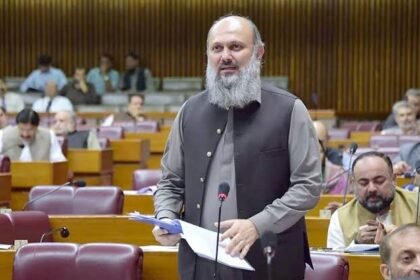
Opposition Leader Mahmood Khan Achakzai criticised the government’s approach, questioning its record on security and governance. He argued that successive administrations had failed to establish lasting peace and called for greater accountability over the country’s security policies.
Achakzai also raised concerns about the treatment of political leaders and restrictions on meetings with Imran Khan. He said he was willing to sit down with the prime minister to discuss the country’s problems, despite his objections to the government’s legitimacy.
Bilawal reiterated that terrorism could not be defeated through political divisions alone. He called on both government and opposition leaders to set aside partisan interests and develop a coordinated response to the security threat.
He warned that Pakistan could not afford to maintain emergency measures indefinitely and stressed that a united national effort was necessary to restore stability.
The parliamentary debate highlighted deep divisions over the proposed emergency in Khyber Pakhtunkhwa, while Bilawal’s appeal for renewed negotiations offered a possible path towards political engagement.