


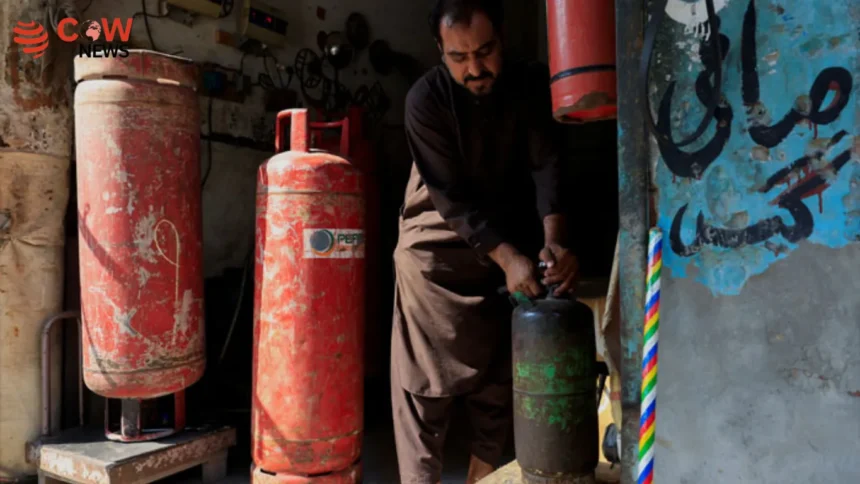
ISLAMABAD (The COW News Digital): The government has failed to rein in the alleged LPG mafia, with liquefied petroleum gas (LPG) being sold at exorbitant rates across Pakistan despite efforts to regulate prices and ensure affordable supplies for consumers.
LPG prices have reportedly reached Rs570 to Rs650 per kilogram in Quetta and surrounding areas, while consumers in Lahore, Rawalpindi, Multan and Sargodha are paying between Rs550 and Rs600 per kilogram.
In Karachi, LPG is being sold at prices ranging from Rs530 to Rs580 per kilogram, while the price in Ghotki has reportedly reached Rs600 per kilogram.
The widespread overpricing has raised concerns among consumers, particularly households that rely on LPG for cooking and other essential domestic needs. The continued sale of the fuel at arbitrary rates has also highlighted challenges in enforcing government price regulations.
In response to the situation, the government has decided to introduce a transparent auction mechanism for 90 per cent of locally produced LPG in an attempt to improve price control and distribution.
Under the proposed system, local LPG-producing entities will reserve 10 per cent of their daily production for government marketing companies. The remaining 90 per cent will be auctioned publicly in the presence of the media to ensure transparency.
The new mechanism will also impose a daily procurement limit, allowing each company to acquire a maximum of 20 metric tonnes of LPG.
Petroleum Minister Ali Pervaiz Malik said the auction-based system would promote fair distribution, strengthen the supply chain and contribute to the country’s energy security.
He said the government’s primary objective was to ensure a consistent supply of LPG to consumers at reasonable prices while eliminating irregularities in the distribution process.
The petroleum minister further stated that the government would closely monitor daily LPG production and compile relevant data for submission to the prime minister.
The proposed auction mechanism is expected to bring greater transparency to the LPG market and help authorities monitor supply and distribution more effectively.
However, consumers continue to face high prices in several parts of the country, with the effectiveness of the government’s measures likely to depend on enforcement, market monitoring and the prevention of excessive pricing by distributors.
The government has yet to demonstrate whether the proposed changes will translate into immediate relief for consumers struggling with rising household energy costs.