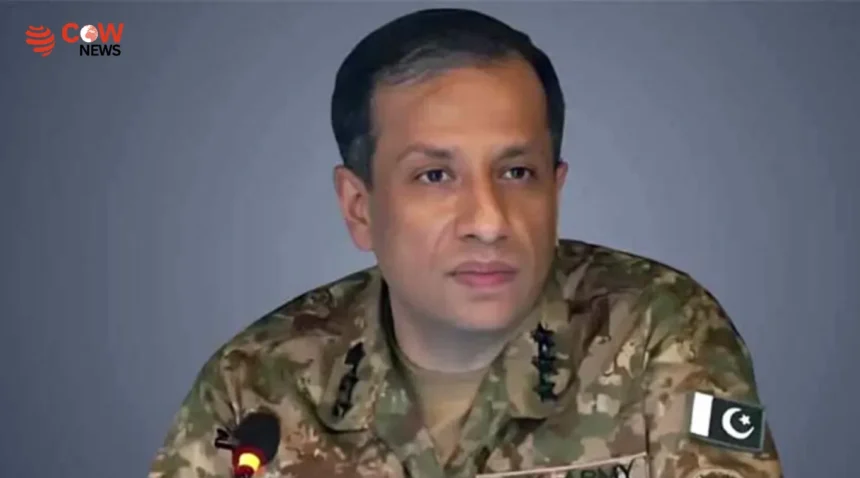
Rawalpindi (The COW News Digital) Pakistan’s military spokesperson, Lieutenant General Ahmed Sharif Chaudhry, has stressed that diplomatic negotiations are essential to resolving the ongoing Middle East conflict, warning that the Mecca Alliance’s collective deterrence could come into play if negotiations fail and military confrontation escalates.
the Director General of Inter-Services Public Relations (DG ISPR) said the Mecca Joint Defence Agreement had progressed rapidly and reflected the shared vision of three countries. He emphasized that the alliance was intended to promote regional peace, stability and security rather than target any particular state.
Chaudhry said protecting Saudi Arabia’s sovereignty, territorial integrity and the two holy mosques remained a top priority for Pakistan. He described the protection of the holy sites as a matter on which Pakistan would make no compromise, adding that Islamabad’s position had already been communicated through the country’s political leadership and Field Marshal.
The military spokesperson said attacks on sacred sites had triggered deep anger among the public and political and military leadership. He warned that expanding the conflict or intensifying hostilities at any level would not benefit any country.
According to Chaudhry, the military confrontation in the Middle East must not spread further, as escalation would undermine the interests of countries across the region. He reiterated that reaching a negotiated settlement was essential and said the alliance’s collective deterrence could become relevant if diplomatic efforts failed and military confrontation continued.
He also clarified that the Mecca Alliance had no aggressive intentions. Its leadership and strategic direction, he said, were clear, with the objective of strengthening regional security rather than pursuing confrontation.
Chaudhry further stated that Pakistan, Saudi Arabia and Türkiye shared a commitment to peace, stability and prosperity in the region. He said the alliance was not directed against any specific country and was instead intended to encourage cooperation and prevent further instability.
The DG ISPR also called for greater unity among Muslim countries, arguing that they should work together rather than become embroiled in conflicts with one another. He stressed that cooperation and dialogue were crucial to addressing regional challenges and safeguarding shared interests.
His remarks come amid heightened concern over the possibility of a wider military confrontation in the Middle East. Pakistan’s stated emphasis on negotiations reflects its call for a diplomatic outcome, while the reference to collective deterrence signals the importance Islamabad attaches to the security commitments associated with the Mecca defence arrangement.
The situation remains sensitive, with regional leaders facing pressure to prevent further escalation and pursue a settlement through dialogue. Chaudhry’s comments underline Pakistan’s position that protecting sacred sites, maintaining regional stability and avoiding a broader conflict must remain central priorities.