



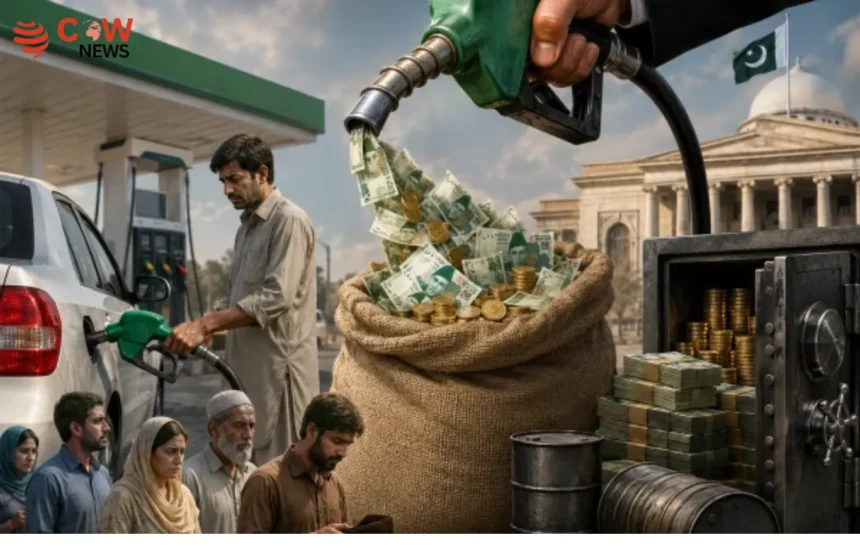
Islamabad (The COW News Digital) Pakistan’s federal government collected more than Rs1.126 trillion in petroleum levy revenues during the first nine months of 2026, adding to the financial burden on consumers already facing rising living costs.
the government received Rs1,126.34 billion through petroleum levies imposed on petroleum products between January and September 2026.
The collection exceeded the Rs1.1 trillion mark, highlighting the substantial revenue generated through charges imposed on fuel consumed across the country.
Petroleum levies are collected on various petroleum products, including petrol and diesel, and form an important source of government revenue. These charges are reflected in the prices consumers pay at fuel stations, contributing to the overall cost of transportation and other economic activities.
The figures also reveal that the government collected approximately Rs47 billion through the Climate Support Levy during the same nine-month period.
The additional levy was imposed on petroleum products, creating another stream of revenue alongside the existing petroleum levy.
Together, the two charges generated approximately Rs1.173 trillion for the government between January and September 2026.
Economic observers have raised concerns about the financial implications of these collections for ordinary citizens, particularly households and businesses already dealing with inflation and higher operating expenses.
Higher fuel-related charges can have consequences beyond the petrol pump, as petroleum products play a significant role in transportation, agriculture, manufacturing and the distribution of essential commodities.
An increase in fuel costs can therefore place additional pressure on businesses, potentially affecting the prices of goods and services throughout the economy.
Transport operators, commercial businesses and industries that rely heavily on petroleum products may also face higher operating costs, which can ultimately affect consumers.
The latest revenue figures highlight the government’s continued reliance on petroleum-related levies as a source of public income.
However, the collection figures alone do not establish how much of the additional burden has translated into higher consumer prices or how the revenue has been allocated within the federal budget.
The January-September figures provide an indication of the scale of petroleum-related revenue collected during the first three quarters of 2026, with petroleum levies accounting for the overwhelming majority of the reported amount.
The issue of fuel taxation remains particularly important for Pakistan’s economy, where changes in petroleum prices can influence household budgets, transport fares and the cost of essential goods.
The substantial collections have once again drawn attention to the relationship between government revenue generation and the financial pressure faced by ordinary consumers.