Islamabad (The COW News Digital) Pakistan’s government has rejected claims that the country has become the largest center of extreme poverty in the region, describing the latest World Bank classification as an administrative decision rather than a reflection of Pakistan’s economic decline.
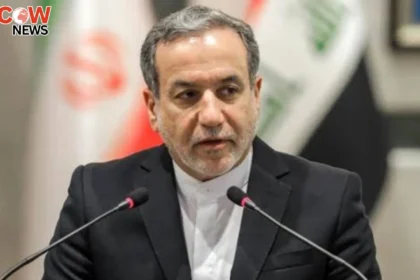
Khurram Shehzad, economic adviser to Finance Minister Muhammad Aurangzeb, challenged the interpretation of a World Bank analysis that reportedly places Pakistan among the Middle East, North Africa, Afghanistan and Pakistan (MENAAP) grouping.
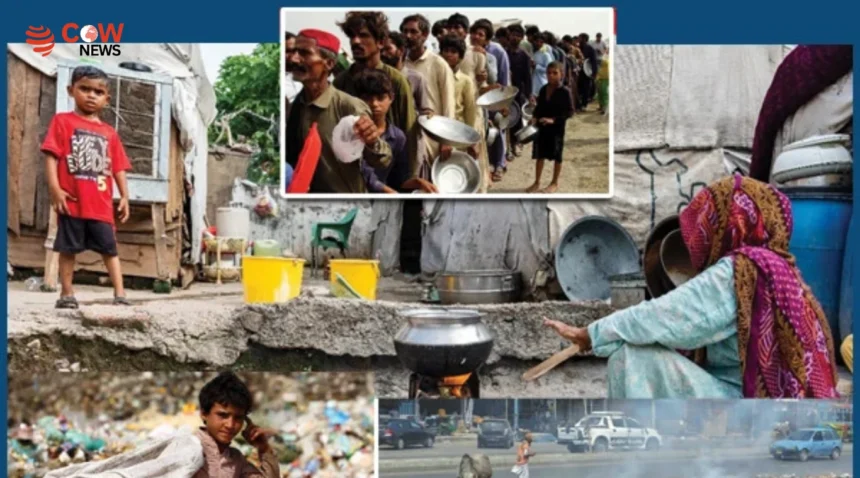
According to the report cited in the debate, Pakistan accounts for around 48 percent of people in the MENAAP region living on less than $3 a day. The analysis also indicated that Pakistan’s poverty rate increased by 6.4 percentage points between 2018-19 and 2024-25.
Shehzad, however, argued that presenting these figures as evidence that Pakistan has become the region’s main poverty hotspot is misleading. In a post on social media titled “Economic Experts’ Analysis, World Bank’s New Classification and Poverty Figures,” he said the recent increase in poverty in Pakistan should be viewed within a broader global trend.
He pointed to countries including Lebanon, Argentina, Syria, Iran and Brazil, arguing that several of these economies have experienced poverty increases that are more severe than those recorded in Pakistan.
The adviser also rejected the suggestion that Pakistan was moved into the MENAAP grouping because of worsening economic conditions. He described the World Bank’s classification as an administrative and institutional decision designed to facilitate its operations and said the change did not alter Pakistan’s underlying economic indicators.
Shehzad compared the World Bank’s classification system with that of the World Health Organization, which places Pakistan in its Eastern Mediterranean regional structure for administrative purposes, despite Pakistan geographically belonging to South Asia.
He argued that changing a country’s position on an institutional list does not change conditions on the ground or automatically indicate an economic downgrade.
The adviser also disputed comparisons based solely on the number of poor people across MENAAP countries. He noted that Pakistan has a substantially larger population than most countries in the grouping and accounts for more than 30 percent of the region’s total population.
According to Shehzad, Pakistan’s population is roughly twice that of the region’s second-largest country, making comparisons based only on the absolute number of people living below a particular poverty threshold potentially misleading.
The government’s response comes amid continuing debate over Pakistan’s poverty levels, household incomes and the impact of inflation and economic pressures on living standards.
While the government disputes the interpretation of the World Bank figures, the reported rise in Pakistan’s poverty rate remains an important economic concern. The disagreement primarily centers on how the World Bank’s regional classification and poverty statistics should be interpreted, rather than whether economic hardship exists in the country.