


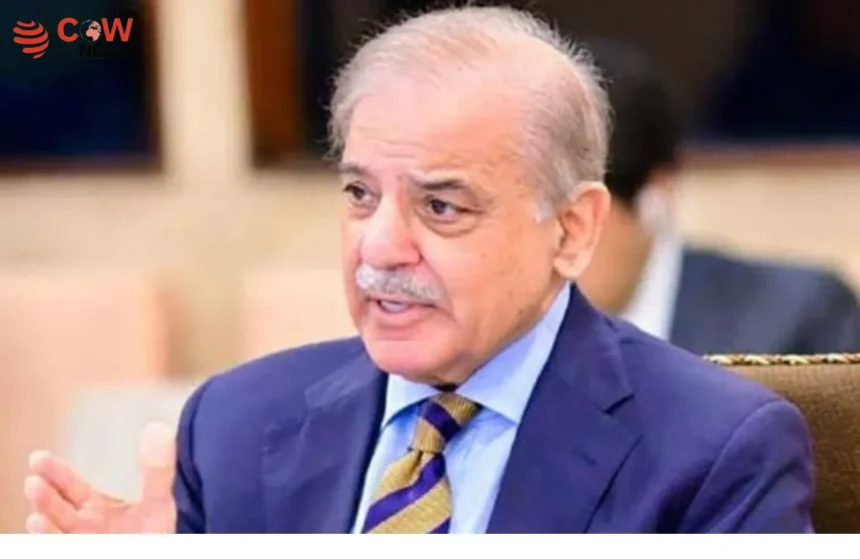
Islamabad (The COW News Digital) Prime Minister Shehbaz Sharif has stressed the need for national consensus and dialogue on all major national issues, saying Pakistan must turn its diplomatic and defence achievements into economic progress and public prosperity.
Addressing participants of the National Security Workshop, the prime minister said the country had achieved important successes on the defence and diplomatic fronts, but the next priority should be translating those gains into tangible benefits for the people.
He described bringing Iran and the United States to the negotiating table in Islamabad after 47 years as an extraordinary diplomatic achievement.
Shehbaz Sharif said Field Marshal Syed Asim Munir and Deputy Prime Minister and Foreign Minister Ishaq Dar had made tireless efforts to promote peace in the region. He added that the diplomatic process had resulted in the signing of the Islamabad Memorandum of Understanding.
The prime minister said Pakistan remained committed to sincere efforts for restoring regional peace. He described Iran as a neighbouring and brotherly country and said Pakistan also maintained strong relations with the United States and Gulf countries.
Discussing regional security, Shehbaz Sharif referred to Pakistan’s strategic defence agreement with Saudi Arabia and a trilateral defence arrangement involving Pakistan, Türkiye and Saudi Arabia.
He said Pakistan’s relations with Saudi Arabia were based on mutual trust and respect, adding that defence cooperation had further strengthened the strategic partnership between the two countries.
According to the prime minister, Türkiye’s participation would help promote regional security, development and prosperity. He emphasised that the trilateral arrangement was not directed against any country and had no aggressive objectives.
He also credited the nation’s support and the armed forces’ role for Pakistan’s achievements during what he described as Marka-e-Haq, saying the country should now focus on converting its successes into economic gains.
The prime minister highlighted reforms introduced in the Federal Board of Revenue (FBR) over the past two and a half years.
He said long-pending reforms had been advanced and claimed that action had been taken against corrupt elements within the institution.
According to Shehbaz Sharif, measures introduced during the 2025-26 financial year helped recover Rs900 billion that would otherwise have been lost through tax evasion and corruption.
He also referred to a meeting with the International Monetary Fund’s managing director in New York, recalling her description of Pakistan as a changed country.
On economic performance, the prime minister said Pakistan’s GDP growth was expected to reach 3.5 per cent during the current year. However, he stressed that the country needed to achieve growth of at least six per cent in the near future.
He also highlighted an increase in foreign exchange reserves and said exports had grown by eight per cent during the first quarter of the current financial year.
Pakistan’s IT exports, he added, had reached $4.6 billion, compared with approximately $1.5 billion three years earlier.
Shehbaz Sharif described agriculture as the backbone of Pakistan’s economy and said the sector needed comprehensive modernisation.
He identified livestock as another major area with considerable economic potential, adding that agricultural development remained among the government’s key priorities.
The prime minister also highlighted the importance of Pakistan’s young population, saying around 60 per cent of the country’s population consisted of young people.
He described this demographic trend as both a challenge and an opportunity, stressing the need to equip young people with modern technology, technical education and productive employment.
He said information technology, artificial intelligence, vocational education and skills training would be essential for creating employment opportunities over the coming years.
Federal Minister for Information Technology and Telecommunication Shaza Fatima Khawaja briefed participants on initiatives under the Green Youth Movement, while Prime Minister’s Youth Programme Chairman Rana Mashhood Ahmed Khan presented details of youth development projects.
The prime minister also announced progress on Daanish Schools in Azad Jammu and Kashmir. He said the first school in Bhimber was expected to be completed in December, while another was being established in Bagh.
He said talented and deserving students would receive admission on merit.
During the question-and-answer session, the prime minister identified population growth and the country’s debt burden as major challenges.
He said the government had established a task force to address population-related issues and that a meeting of the relevant apex committee would be held soon.
On public finances, Shehbaz Sharif said Pakistan could not afford expensive borrowing and that difficult decisions would be required to reduce the burden of debt.
He argued that tax evasion placed additional pressure on the national economy, forcing the government to borrow money or print currency to cover financial shortfalls.
The prime minister also defended the closure of certain loss-making public institutions, including Pakistan Public Works Department and Utility Stores, saying they had placed a financial burden on the national exchequer.
He said the government had used the Benazir Income Support Programme’s database to provide financial assistance to deserving families through digital wallets during Ramadan, reducing the need for beneficiaries to stand in long queues.
He further maintained that merit, transparency and accountability were essential for sustainable economic progress.
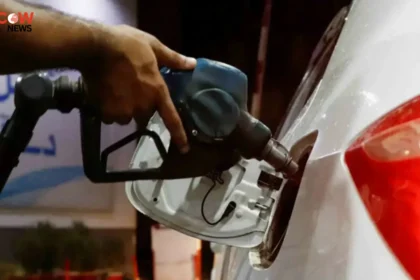
Discussing the energy sector, the prime minister said Pakistan remained heavily dependent on imported LNG, LPG, crude oil, petroleum products and gas, resulting in significant annual expenditure.
He said the government had introduced a mechanism to manage energy-related challenges and had provided Rs28 billion in subsidies during the initial weeks of the crisis.
According to him, total fuel subsidies across the four provinces, Azad Jammu and Kashmir and Gilgit-Baltistan had reached Rs50 billion.
On mineral resources, Shehbaz Sharif said illegal gold mining in Khyber Pakhtunkhwa had been stopped and that action had been taken against groups involved in unauthorised mining.
He said Pakistan aimed to move beyond extracting raw minerals by developing local processing and manufacturing capabilities before exporting value-added products.
The prime minister also referred to the sacrifices made by security forces in the fight against terrorism and discussed the government’s decisions concerning governance and security challenges.
He said the country’s economic and social objectives could not be achieved through individual efforts alone.
Concluding his address, Shehbaz Sharif called for greater cooperation between the federal government and provincial administrations, saying national dialogue, collective wisdom and unity were essential to resolving the country’s challenges and strengthening national cohesion.