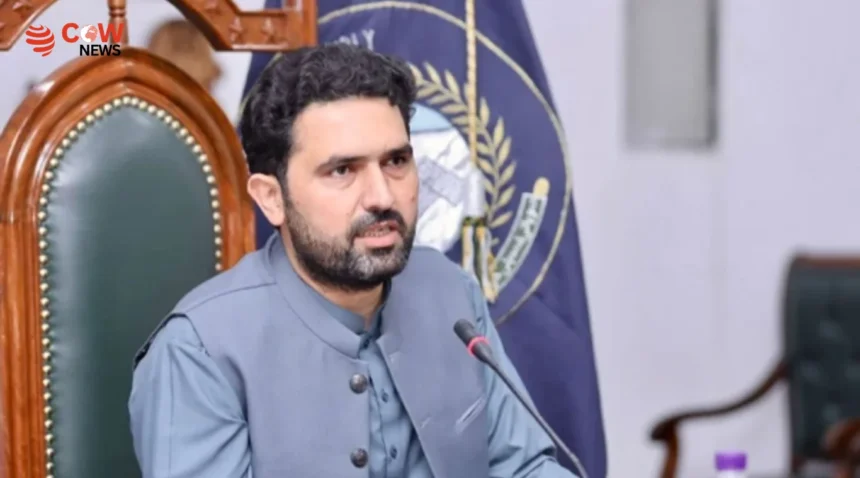
Peshawar (The COW News Digital) Khyber Pakhtunkhwa Chief Minister Sohail Afridi has warned that the provincial government will take action if the federal government uses police forces for what he described as political victimisation, while stressing that the provincial police must remain focused on counterterrorism operations.
Addressing a meeting on law and order in Peshawar on Thursday, Afridi said the police would not be allowed to shift its attention from fighting terrorism towards targeting any political party. He also said police officers should refuse to follow orders that they consider unlawful.
His remarks came a day after the KP cabinet approved the proposed Khyber Pakhtunkhwa Police Act 2026, which seeks to replace the existing 2017 law and give the provincial government greater oversight over the police command structure. Under the proposed legislation, operational, administrative and financial decisions of the provincial police chief would be subject to policy or directions from the provincial government or chief minister.
Afridi said the provincial government could introduce further amendments to the police law when it is presented before the KP Assembly. He maintained that the primary responsibility of the police was to protect citizens and counter terrorism rather than become involved in political disputes.
The chief minister highlighted the sacrifices of the KP Police and residents during years of militancy. He said the provincial government had increased funding for the police and provided additional resources for equipment and the welfare of police personnel.
Afridi also raised concerns about the availability of armoured personnel carriers, jammers and anti-drone equipment for the KP Police. He claimed that payments had already been made to relevant organisations for some of the equipment and called for its delivery to the province.
The chief minister further alleged that the police could face pressure to act against political workers ahead of the Pakistan Tehreek-e-Insaf’s planned September 27 long march. He said his government would not permit the police’s counterterrorism role to be replaced by political activity.
Afridi said that since taking office, he had not issued unlawful instructions to police officers or directed them to target individuals for political or personal reasons. He argued that if a police officer receives an unlawful order from any authority, the officer should have the ability to refuse it.
The KP government’s proposed police reforms have already triggered criticism from the federal government. Minister of State for Interior Talal Chaudhry has argued that the proposed changes could weaken the police command structure and said provincial legislation could not override federal Police Service of Pakistan rules.
The federal government has indicated that it is considering legal options over the proposed law, setting the stage for a constitutional and legal dispute between Islamabad and the KP government over police administration and the distribution of authority.
Afridi also reiterated his position that peaceful protest is a constitutional right. His comments come as tensions rise ahead of the September 27 PTI long march, with authorities in Punjab seeking additional security deployments in several districts to maintain law and order.
The dispute over the proposed Police Act is therefore unfolding alongside a broader political confrontation, with both sides presenting different views about police autonomy, provincial authority, command structure and the role of law-enforcement agencies during political protests.