National ( The cow news digital ) Federal Minister for Energy Awais Leghari has announced that electricity subsidies for eligible consumers using less than 200 units per month will continue, reaffirming the government’s commitment to supporting protected category users amid ongoing reforms in the power sector.
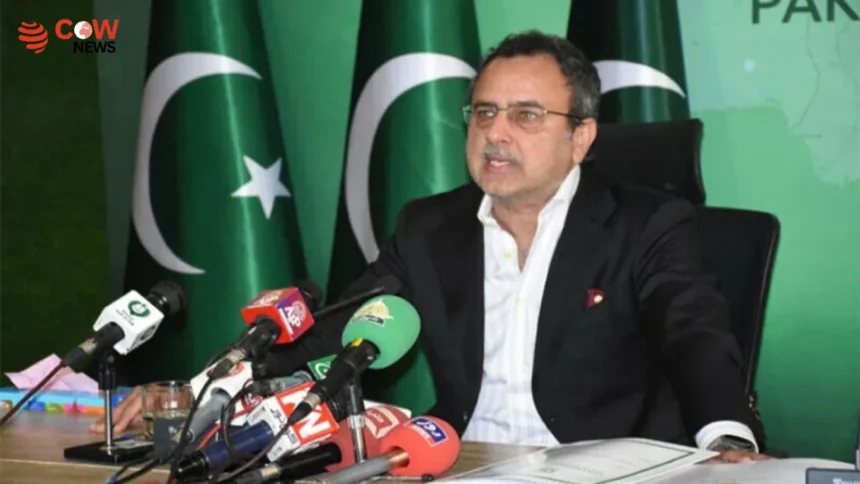
Speaking at a press conference in Islamabad, the minister clarified that the government is not withdrawing subsidies for protected consumers. He said that around 21.5 million electricity users currently benefit from subsidized tariffs, and efforts are underway to better target these benefits through improved data verification.
According to the minister, electricity meters are being linked with QR codes to create a more transparent system for identifying eligible households. He explained that subsidy decisions will be based on verified information collected through this digital system, which aims to ensure that only genuine beneficiaries receive financial support.
Awais Leghari noted that some consumers who have installed large solar systems have managed to reduce their grid consumption below 200 units, potentially affecting the subsidy burden. He argued that such cases place additional financial pressure on households that continue to rely solely on grid electricity and pay full tariffs.
He added that the total subsidy allocation for the power sector has increased significantly, rising from Rs 199 billion to Rs 423 billion. The government is also providing substantial support to agricultural and domestic users, with overall subsidies exceeding Rs 527 billion.
The minister highlighted several ongoing reforms in the energy sector, claiming that revisions in independent power producer (IPP) agreements have generated savings of around Rs 3,500 billion. He also stated that reduced losses in distribution companies (DISCOs) have saved an additional Rs 193 billion, while circular debt decreased by Rs 780 billion during the 2024–25 period.
Leghari further claimed that electricity prices have decreased across all consumer categories between March 2024 and May 2026. He stated that protected consumers have seen a 31% reduction in tariffs, while domestic users experienced a 16% decrease. Industrial, commercial, and agricultural tariffs have also been reduced, according to the ministry.
The minister emphasized that renewable energy expansion remains a priority, stating that Pakistan’s energy mix is shifting toward cleaner sources. He projected that by 2035, clean energy could account for up to 90% of total generation, compared to around 55% at present.
He also clarified that net metering has not been abolished but restructured to improve transparency. Small-scale solar systems up to 25 kW have been exempted from licensing requirements, while reforms aim to balance the interests of solar users and grid consumers.
Responding to criticism on social media, the minister said that misinformation often spreads regarding power sector policies. He stressed that reforms are designed to improve efficiency, reduce financial burden on the national exchequer, and ensure fair treatment for all categories of consumers.